
Understanding Modern Posture Challenges

Our bodies face posture challenges that were largely unknown to previous generations. The way we work, relax, and interact with technology puts unprecedented strain on our musculoskeletal system. Take smartphone use, for example – many of us spend hours each day looking down at screens, creating what experts call "tech neck." This forward head position, with a rounded upper back and protruding head, often leads to neck pain, headaches, and nerve issues. The problem gets worse when you consider that the average American now sits for about 6.5 hours daily, often in poorly designed chairs that weaken core muscles and throw off spinal alignment.
Identifying the Root Causes of Poor Posture
Simply telling someone to "sit up straight" misses the bigger picture. Poor posture stems from multiple sources that we encounter throughout our daily lives. Getting to the heart of these issues is essential for making real improvements.
- Technology Use: Extended screen time pulls the head forward, straining neck and shoulder muscles
- Sedentary Habits: Long periods of sitting reduce core strength needed for good spine support
- Workplace Setup: Most desks and chairs aren't set up properly, leading to slouching
- Daily Stress: Mental tension shows up as physical muscle tightness
By understanding these everyday factors, we can develop better ways to address posture problems.
The Impact of Forward Head Posture (FHP)
The growing problem of Forward Head Posture deserves special attention. When your head shifts ahead of your shoulders, it puts extra weight on your spine – much like holding a bowling ball away from your body. This misalignment creates a chain reaction of issues:
- Muscle Problems: Chest muscles get tight while upper back muscles become weak
- Joint Issues: The neck and spine don't move properly, causing stiffness and pain
- Breathing Difficulties: Poor head position can actually restrict how well your lungs work
Addressing Posture Challenges Holistically
The good news is that you can improve your posture through several practical approaches. Instead of quick fixes, focus on building better habits over time. For instance, regular stretching can loosen tight chest muscles while specific exercises strengthen your back. Making small changes to your workspace, like adjusting your chair height or screen position, creates an environment that supports good alignment. Success comes from consistent practice of these methods rather than searching for an overnight solution. When you combine targeted exercises, proper setup of your workspace, and mindful attention to how you hold yourself throughout the day, you can overcome modern posture challenges and develop healthier patterns that stick.
Evidence-Based Exercises That Actually Work
Ever wondered why some exercises work brilliantly for posture while others fall flat? Let's explore the science-backed movements that physical therapists recommend most often. Rather than generic stretches that might not address your specific needs, we'll focus on exercises proven to strengthen key muscles, improve alignment, and create lasting posture changes.
Targeting Key Muscle Groups for Posture Correction
Think of your posture like the strings of a musical instrument – some need tightening while others need loosening to create perfect harmony. Take forward head posture, for example. This common problem develops when chest muscles become tight while upper back muscles weaken, pulling the head forward into that familiar slouch. To fix this, we need to focus on:
- Strengthening: Rhomboids (between shoulder blades), trapezius (upper back), erector spinae (along the spine), and deep neck flexors (front of the neck)
- Stretching: Pectoralis major and minor (chest), anterior deltoids (front of shoulders), and upper trapezius (neck and shoulders)
Core Exercises: The Foundation of Good Posture
Your core muscles work like a natural back brace, supporting your spine and keeping everything aligned. When these muscles are weak, you're more likely to slouch, putting extra stress on your spine. Here are three exercises that physical therapists swear by:
- Plank: Get into a push-up position, keeping your body straight from head to heels. This engages all your core muscles at once.
- Side Plank: Lie on your side and lift your body, supporting yourself on your forearm. This targets those important side muscles that prevent spinal twisting.
- Bird Dog: Start on hands and knees, then reach out with your right arm and left leg while keeping your back straight. This builds balance and stability.
Targeted Exercises for Specific Posture Issues
Different posture problems need different solutions. If you spend long hours looking at screens, chin tucks and neck retractions can help strengthen those deep neck muscles that keep your head balanced. For more detailed guidance, check out our article about How to master these and other posture correction exercises. Shoulder blade squeezes work wonders for upper back strength, while doorway stretches can help open up a tight chest that's pulling your shoulders forward.
Building a Routine and Progressing Safely
The key to better posture isn't doing everything at once – it's about steady progress over time. Start with just a few repetitions of each exercise, focusing on proper form. As you get stronger, gradually add more reps and sets. If you're unsure about technique, working with a physical therapist can help you nail the basics and create a program that fits your needs. Remember that lasting change takes time – celebrate small improvements and keep building on them. By sticking with these proven exercises, you'll develop better posture while building strength and flexibility that benefit your whole body.
Professional Techniques for Lasting Change
Basic exercises and stretches are important, but long-term posture improvement requires more advanced methods. Professional techniques used by physical therapists and posture experts dig deeper to fix the root causes of poor posture. When you work with a specialist, you're not just temporarily propping yourself up – you're teaching your body new ways to align itself properly.
Myofascial Release: Addressing Muscle Tension and Restrictions
Think of your body's fascia like a tight sweater wrapped around your muscles and bones. When this connective tissue gets stiff or bound up, it can pull your posture out of whack. Myofascial release is a hands-on method where therapists work to loosen and smooth out these restrictions. For instance, if you have chronic shoulder tension from hours at a desk, targeted myofascial work can help restore normal movement patterns. The goal is to get your fascia functioning smoothly again so your body can find its natural alignment.
Neural Retraining: Re-Educating Your Body's Posture Blueprint
Your brain plays a huge role in posture – it's like having an internal GPS for how you carry yourself. The problem is, years of poor habits can scramble those signals. Neural retraining helps reset your body's positioning system through focused exercises and movement patterns. If you've been slouching for years, your brain starts to think that's normal. These techniques teach your nervous system what good posture actually feels like. This includes exercises to build body awareness, specific movements to wake up dormant muscles, and mental practice to reinforce proper alignment.
Combining Approaches for Maximum Effectiveness
The best results often come from using multiple techniques together. A specialist might pair myofascial work with gentle joint movements to improve flexibility and reduce stiffness. Tools like biofeedback devices can show you exactly which muscles you're using (or not using) when standing or sitting. This real-time information helps you understand how small adjustments affect your whole posture. Throughout the day, simple awareness exercises help lock in these improvements so they become natural habits.
Case Studies: Demonstrating the Power of Specialized Techniques
Real patient stories show how these methods work in practice. Take Sarah, a software developer who struggled with constant neck pain from hunching over her computer. After three months of combined myofascial release, neural retraining, and targeted exercises, her pain improved dramatically and her posture naturally became more upright. Or consider James, a violinist whose back pain was affecting his performances. Working with a specialist on joint mobility and posture awareness got him back to playing comfortably. These examples show that when you address both symptoms and underlying causes, lasting change is possible. The key is finding the right mix of techniques for your specific situation.
Smart Solutions: Choosing Effective Tools
While exercises and professional guidance form the foundation of good posture, having the right tools can make a big difference in your daily routine. Think of these tools as helpful companions on your journey to better posture – they support your efforts and make it easier to maintain proper alignment throughout the day.
Ergonomic Office Equipment: Setting Up for Success
Poor workspace setup is often the culprit behind posture problems. Just like wearing ill-fitting shoes can hurt your feet, using the wrong office equipment can strain your body and encourage bad habits. Here's what to look for when setting up your workspace:
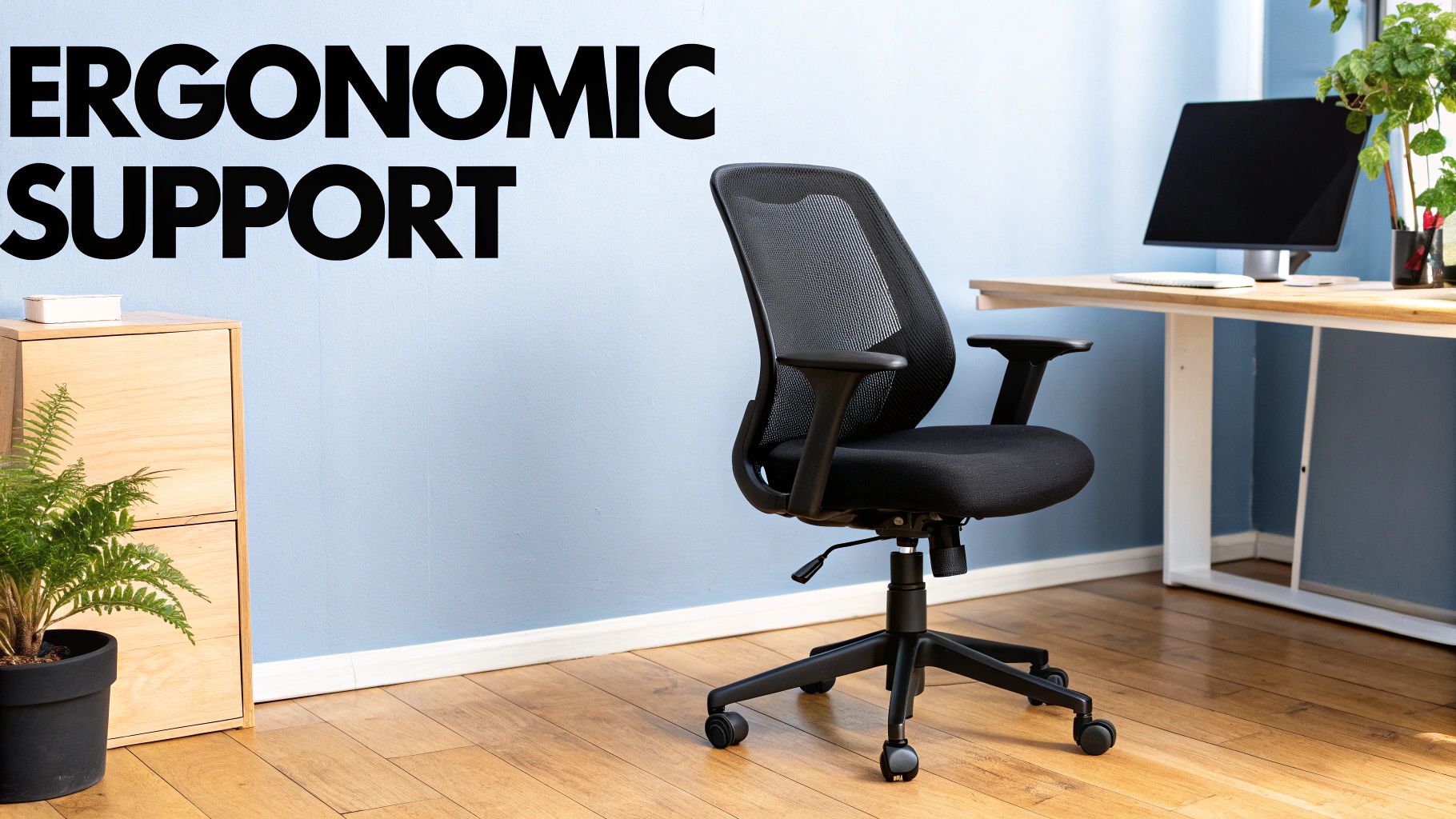
- Ergonomic Chairs: Pick a chair you can adjust – height, back support, and armrests should all move to match your body's needs. Getting these settings right helps your spine stay in its natural curve.
- Standing Desks: Mix up your day by switching between sitting and standing. Having a desk that moves up and down lets you change positions when your body needs it.
- Monitor Placement: Your screen should sit at eye level – this keeps your neck happy and prevents that "tech neck" forward lean we all tend to do.
- Keyboard and Mouse Placement: Keep these close to your body, about elbow-distance away. This prevents reaching and shoulder tension.
Wearable Tech and Posture Correction Devices: A Closer Look
These days, there are lots of gadgets promising perfect posture. Some really help, while others… not so much. It's like shopping for running shoes – you need to know what actually works for you. Here's what different tools can offer:
| Feature | Benefit | Example |
|---|---|---|
| Posture Reminders | Gentle nudges when you start to slouch | Electronic posture trainers |
| Support Braces | Extra help keeping your alignment right | Shoulder braces, back braces |
| Biofeedback | Shows you how you're doing in real time | Smart clothing or device sensors |
Remember – these tools work best when used alongside exercises and expert advice. They're helpers, not miracle workers. The growing market for posture tools (expected to hit $2.4 billion by 2030) shows many people are looking for support. Read also: Explore more insights and resources about posture.
Choosing the Right Tools for Your Needs: A Personalized Approach
Everyone's posture journey is different. What helps your coworker might not work for you. Think about your daily routine, specific challenges, and budget when picking tools. For example, if you work from home, focus on creating an ergonomic workspace. If you're always on the move, a simple posture reminder device might make more sense.
The key is finding tools that fit naturally into your life and support the changes you're trying to make. When you combine the right tools with consistent practice and proper technique, you're setting yourself up for lasting improvement in your posture and overall comfort.
Building Better Posture Habits

We've explored many ways to fix poor posture through exercises and professional help. But the real challenge lies in making these changes stick. It's about moving beyond just doing exercises to naturally maintaining good posture all day long. Let's look at practical ways to build lasting posture habits, drawing from both psychology research and real people's experiences.
Cultivating Posture Awareness
Most of us don't notice when we're slouching. Take a moment right now – how are you sitting? If you're like most people, your shoulders might be rounded forward and your head tilted down. The key is catching these moments throughout your day. Try setting simple phone reminders or putting sticky notes on your desk as posture check-ins. Each time you notice poor posture becomes a chance to reset and sit up straight. These small nudges help train your body's natural alignment.
Designing Your Environment for Success
Your workspace setup directly impacts how you hold yourself. A poorly arranged desk practically forces bad posture, while thoughtful ergonomics naturally encourage good alignment. Check if your screen sits at eye level and your keyboard allows your arms to rest comfortably. Beyond furniture, build movement into your day. Even quick stretch breaks every half hour can prevent your muscles from settling into poor patterns. These small workspace tweaks add up to big posture improvements over time.
Implementing Effective Reminder Systems
Good intentions aren't enough – we need consistent prompts to maintain proper posture. Find what works for you, whether it's a posture-tracking device that vibrates when you slouch or strategically placed mirrors that let you check your alignment. The goal isn't to rely on these reminders forever. Think of them like training wheels – helpful at first, but eventually your body will naturally know how to stay upright. Start with external cues while building that internal body awareness.
Learning from Success Stories and Avoiding Relapse
Other people's posture journeys offer valuable lessons and motivation. Their stories show common pitfalls to watch for, like how stress or tiredness can make us fall back into old habits. Build a toolbox of solutions – maybe deep breathing when you're tense, or gentle stretches when you're tired. Understanding your personal posture triggers helps you stay on track even during challenging times. By combining smart environment design, reliable reminders, and strategies to handle setbacks, you can turn good posture from a conscious effort into an automatic habit.
Tracking Progress and Maintaining Success

You've started working on improving your posture – but how do you know if your efforts are paying off? Tracking your progress helps you stay motivated and lets you fine-tune your approach for the best results. Let's explore practical ways to monitor your posture improvements through both self-checks and professional guidance.
Self-Assessment Techniques: Becoming Your Own Posture Detective
Simple checks at home can tell you a lot about your posture changes. The "wall test" is a great place to start – stand with your back against a wall, heels a few inches away. Check if the back of your head, shoulder blades, and buttocks make contact with the wall. Any gaps point to areas that need work. Taking regular photos from the front, side and back also helps track subtle changes you might miss day-to-day. Looking back at these photos over weeks and months gives you clear evidence of your progress.
Professional Evaluation: The Expert's Eye
While home tracking is useful, getting checked by a professional gives you deeper insights. Physical therapists and chiropractors use specialized tools to measure specific aspects of your posture – like joint angles with goniometers or detailed analysis with posture software. These precise measurements help catch issues you might miss on your own and let your healthcare providers adjust your program based on hard data. Even small improvements they detect can add up to big changes in how you feel and move.
Setting Realistic Milestones and Recognizing True Improvement
Good posture takes time – trying to rush it only leads to frustration. Focus on steady progress toward specific goals you can reach. Rather than chasing "perfect" posture, pay attention to practical improvements like less pain, better flexibility, and smoother movement. Real progress shows up in how you feel – reduced stiffness in the morning, fewer aches during the day, and more energy overall are all signs you're on the right track. You might be interested in: Explore more insights and resources about posture.
Maintaining Long-Term Success: Making Posture a Habit
Once you see clear improvements, the key is making them stick. Good posture needs to become as natural as brushing your teeth – something you do without thinking. Build regular posture checks into your daily routine. Set phone reminders or put sticky notes where you'll see them. Keep up with your exercises even after reaching your initial goals. This ongoing practice turns your hard-won improvements into lasting habits that support your health and comfort for years to come.
Struggling with sleep apnea, TMJ, or other myofunctional disorders affecting your posture and overall well-being? Myohab offers personalized therapy exercises and expert guidance to help you regain control. Visit myohab.com today and discover how myofunctional therapy can help you feel better.

