
Understanding Tongue Thrust: Why It Matters
Let's explore tongue thrust, a condition that can affect both children and adults. While it’s often associated with childhood, understanding its impact is crucial for overall health and well-being.
What Is Tongue Thrust?
Tongue thrust, sometimes called reverse swallow or immature swallow, happens when the tongue pushes forward against the teeth during swallowing, speaking, or even at rest. Instead of resting against the roof of the mouth (the palate), the tongue exerts pressure on the front teeth. This seemingly small difference can have significant consequences.
This forward tongue posture can disrupt normal oral development and function, impacting both oral health and overall well-being.
The Impact of Tongue Thrust
The effects of tongue thrust go beyond just dental concerns.
-
Misaligned Teeth (Malocclusion): The constant pressure can push teeth out of alignment, causing issues like an open bite or an overbite, often requiring orthodontic intervention.
-
Speech Difficulties: Clear speech relies on proper tongue placement. Tongue thrust can impact pronunciation, particularly sounds like "s," "z," "t," "d," "n," and "l."
-
Mouth Breathing: A forward tongue position can obstruct the airway, making nose breathing difficult. This can lead to dry mouth, increased risk of infections, and even sleep-disordered breathing.
Myofunctional Therapy and Its Importance
Tongue thrust is a common orofacial myofunctional disorder, frequently linked to malocclusion and changes in facial structure. Myofunctional therapy helps correct abnormal tongue movements and postures through targeted exercises.
The following table highlights the common signs and potential consequences of tongue thrust across different age groups:
Signs and Symptoms of Tongue Thrust
This table outlines the common indicators that may suggest tongue thrust is present in different age groups.
| Age Group | Common Signs | Potential Consequences |
|---|---|---|
| Infants/Toddlers | Difficulty latching during breastfeeding, prolonged thumb sucking | Difficulty transitioning to solid foods, speech delays |
| Children | Open mouth posture, lisp, difficulty swallowing | Orthodontic problems (malocclusion), social impact due to speech difficulties |
| Adolescents/Adults | Difficulty with certain sounds, persistent open bite, mouth breathing | Temporomandibular joint (TMJ) pain, sleep apnea, continued orthodontic issues |
As the table shows, early intervention is key. Addressing tongue thrust in childhood can prevent long-term issues. Studies, like one published in Karger, demonstrate the effectiveness of myofunctional therapy in improving orofacial function and tongue strength. It's estimated that 50% of school-aged children receiving speech therapy exhibit signs of orofacial myofunctional disorders.
Normal Swallowing vs. Tongue Thrust
Understanding the difference between a normal swallow and a tongue thrust is fundamental. In a normal swallow, the tongue presses against the palate. With tongue thrust, it protrudes forward against the teeth.
This difference in tongue positioning is critical for diagnosis and treatment. Myofunctional therapy focuses on retraining the tongue muscles for correct swallowing. Correcting these movements can significantly improve overall health and well-being.
Understanding Neuromuscular Principles
Myofunctional tongue thrust therapy is built on the science of neuromuscular retraining. It's not a quick fix, but a way to address the root causes of a tongue thrust. Think of your tongue as any other muscle. Repeated incorrect movements, like those in a tongue thrust, create ingrained muscle memory.
Myofunctional therapy works by re-educating these muscles to develop healthier movement patterns. This involves both strengthening weaker muscles and encouraging relaxation in overactive ones. It’s similar to physical therapy after an injury, where you rebuild strength and coordination.
How Exercises Drive Change
The exercises used in myofunctional tongue thrust therapy are strategically designed to target specific muscle groups. They are carefully selected to address the individual needs of each person. Here are a few examples:
-
Tongue Elevation Exercises: These exercises strengthen the muscles that lift the tongue. Imagine gently holding a small piece of candy against the roof of your mouth with your tongue. This mimics the correct resting position.
-
Swallowing Exercises: These exercises retrain the swallowing pattern. They help the tongue move correctly without pushing forward against the teeth. Swallowing should be a coordinated effort between the tongue, jaw, and throat.
-
Oral Motor Exercises: These exercises improve overall oral muscle function. They work on lip closure, jaw stability, and the coordination of all the oral muscles.
This targeted approach allows therapists to create a personalized treatment plan, addressing each individual's unique challenges.
Milestones and Progression
Myofunctional therapy is a gradual process. Progress is measured by looking for improvement in several areas: tongue posture at rest, swallowing patterns, and speech clarity. Therapists closely monitor these changes to ensure the treatment is working effectively.
Just like learning any new skill, consistent practice is key. Over time, the new muscle movements become automatic, replacing the old tongue thrust habit. This consistent effort is what creates long-term change. The goal is not just a temporary fix, but a permanent improvement in oral function. With dedicated practice and the support of a qualified therapist, individuals can see significant and lasting positive changes in their oral health and overall well-being.
Transforming Speech With Myofunctional Therapy
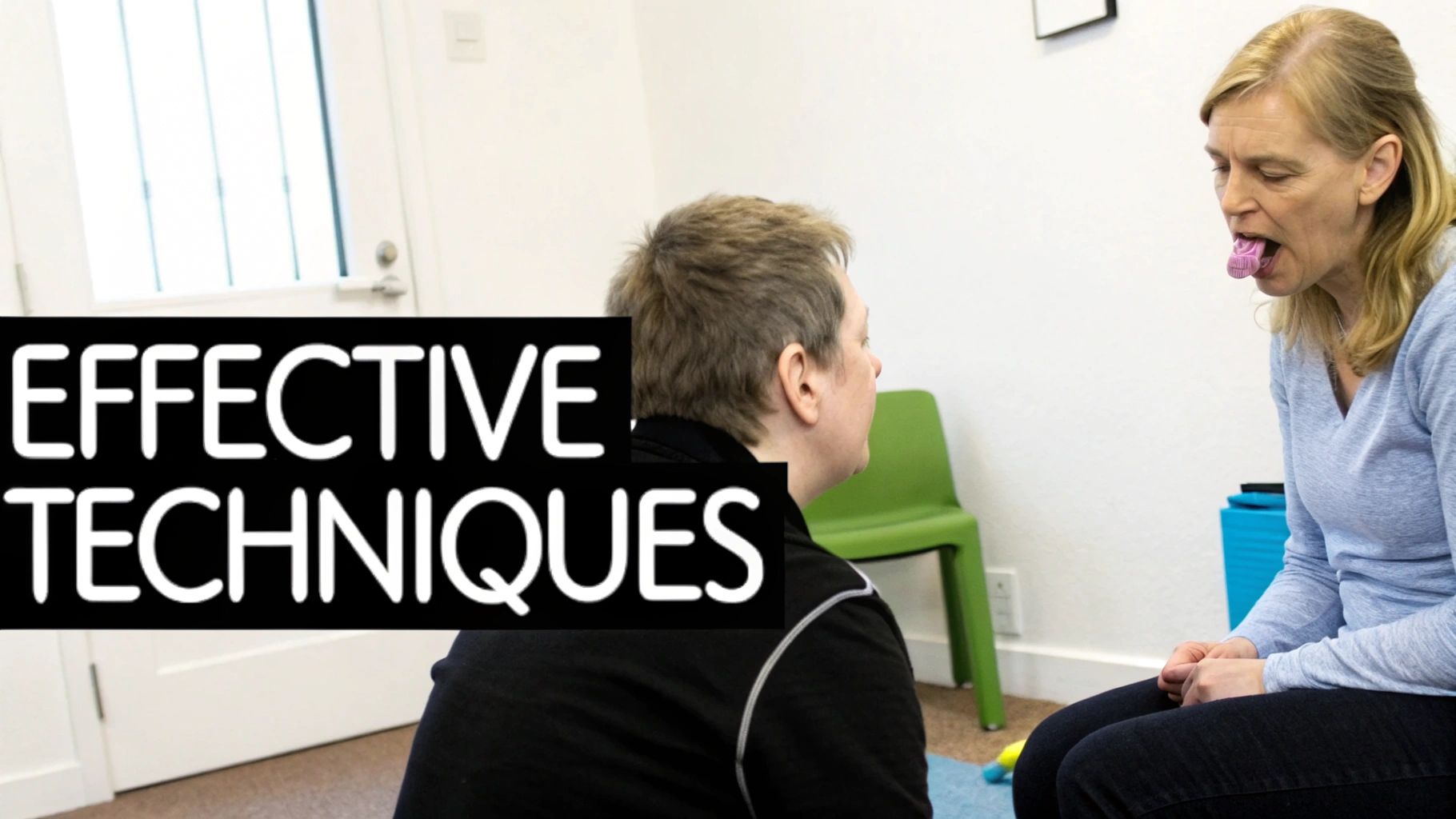
The position of your tongue plays a crucial role in forming clear sounds. This connection between tongue thrust and speech is significant, particularly for consonants requiring precise control. This section explores how myofunctional therapy can help address these speech challenges.
How Tongue Thrust Impacts Speech
Tongue thrust can significantly affect the clarity of certain sounds. Consonants like /s/, /z/, /t/, /d/, /n/, and /l/ often become distorted. This is because the tongue pushes forward against the teeth, preventing proper articulation. This can result in a lisp or other speech impediments.
This forward tongue posture disrupts the complex movements needed for clear speech. It can also impact the development of oral structures, further affecting speech development.
Children with a persistent tongue thrust may experience delays in reaching speech milestones. Addressing tongue thrust early on is essential for optimal speech development. These difficulties can affect communication and self-esteem.
The Role of Myofunctional Therapy
Myofunctional tongue thrust therapy aims to retrain the tongue and surrounding muscles. It strengthens weak muscles and improves coordination through targeted exercises. These exercises help establish correct tongue positioning during speech and swallowing.
This retraining process improves tongue precision and control, leading to clearer speech. Myofunctional therapy addresses the root cause of the speech problem – the dysfunctional tongue movements. This is a different approach than traditional speech therapy which often focuses on treating the symptoms.
Myofunctional Therapy and Orofacial Dysfunctions
Myofunctional therapy has been widely used to treat various speech disorders. These include articulation disorders, voice disorders, stuttering, and apraxia of speech. Research suggests that myofunctional therapy can significantly improve articulation in individuals with orofacial dysfunctions.
One study found that myofunctional therapy led to normal articulation for 66% of patients with orofacial dysfunctions. Learn more about orofacial myofunctional therapy. This success highlights the therapy's effectiveness in correcting abnormal oral and facial muscle functions. Speech-language pathologists often use myofunctional exercises to target specific sounds that are difficult to articulate.
Measuring Progress and Achieving Results
Progress in myofunctional therapy is usually gradual. Much like learning a new skill, consistency and practice are key. Improvements can be observed in clearer pronunciation, better tongue control, and improved swallowing patterns.
While individual timelines vary, noticeable changes typically appear within a few months of consistent therapy. Dedicated practice with a qualified therapist leads to meaningful progress.
Signs of Improvement
-
Improved Articulation: Previously difficult sounds become clearer.
-
Increased Tongue Control: The tongue moves with more precision and coordination.
-
Correct Resting Tongue Posture: The tongue rests against the palate, not against the teeth.
Consistent effort and dedicated practice are crucial for significant improvements. These positive changes can boost confidence and communication skills. By targeting the root cause of speech issues, myofunctional therapy helps individuals communicate effectively and confidently.
Essential Exercises for Successful Tongue Thrust Correction

This section explores practical exercises essential for effective myofunctional tongue thrust therapy. We'll delve into techniques, proper execution, and common pitfalls to avoid. The goal is to understand how to assess your technique and make adjustments for lasting change.
Foundational Exercises: Building Awareness and Control
Myofunctional tongue thrust therapy begins with awareness of tongue position. This is the foundation upon which retraining is built. Consciously holding your tongue against the roof of your mouth, just behind your front teeth, helps establish the correct resting posture.
Building on this awareness, exercises then focus on strengthening the swallowing muscles. Practicing swallowing while maintaining this tongue position reinforces the correct movement. Additionally, exercises that strengthen the muscles around the mouth, such as gentle lip closure and opening, contribute to overall oral motor control.
Intermediate Exercises: Refining Coordination and Strength
As awareness and muscle control improve, exercises become more complex. Moving your tongue from side to side while maintaining contact with the palate strengthens lateral tongue muscles and improves coordination.
Holding a small, flat object like a button or piece of paper against the palate with your tongue further promotes tongue elevation and strength. Remember to avoid excessive pressure, which can hinder progress.
Advanced Exercises: Integrating Correct Swallowing Patterns
Advanced exercises focus on integrating the correct swallowing pattern into daily life. Practicing swallowing with various food textures and consistencies helps generalize the learned skills. This makes the correct swallowing pattern automatic, even during meals.
Practicing specific speech sounds while maintaining proper tongue posture reinforces the connection between correct placement and clear articulation. This is especially important for sounds like "s," "z," "t," and "d," often affected by tongue thrust.
Exercise Progression and Frequency
Myofunctional tongue thrust therapy follows a structured progression, from simple awareness exercises to complex movements. The following table provides a general overview of this progression.
Myofunctional Therapy Exercise Progression
This table outlines the typical progression of exercises in myofunctional tongue thrust therapy, from basic to advanced.
| Phase | Exercise Type | Purpose | Duration/Frequency |
|---|---|---|---|
| Initial | Tongue awareness and resting posture | Establish correct tongue position | Several times a day for short periods (e.g., 30 seconds) |
| Intermediate | Tongue strengthening and coordination | Improve muscle control and range of motion | 5-10 repetitions, several times daily |
| Advanced | Swallowing integration and speech exercises | Automate correct swallowing and speech patterns | Practice with meals and during conversation |
The frequency and duration of exercises are key to success. Multiple short practice sessions throughout the day are generally more effective than long, infrequent ones. This consistent practice builds muscle memory and helps establish correct tongue positioning as a habit.
Consistency is key, especially with a busy schedule. Even a few minutes of practice several times a day can produce significant results. Myofunctional tongue thrust therapy requires dedicated practice and consistent effort for lasting change. With guidance from a therapist and commitment to the exercises, you can achieve improvements in your oral health and well-being.
Life-Changing Benefits of Myofunctional Tongue Thrust Therapy
Myofunctional tongue thrust therapy offers a range of benefits that go beyond simply correcting how you swallow. It can truly improve your overall quality of life. Let's explore the potential improvements you can expect.
Preventing Future Orthodontic Expenses
One key advantage of myofunctional tongue thrust therapy is its ability to potentially minimize the need for extensive orthodontic treatment. By addressing the tongue's resting position and swallowing pattern, the therapy can help prevent further misalignment of teeth. This can mean avoiding costly braces or other orthodontic appliances down the line.
This proactive approach can potentially save you thousands of dollars.
Improved Breathing and Sleep Quality
Correct tongue position is crucial for clear airways. Myofunctional tongue thrust therapy promotes nasal breathing, which offers several important advantages. Nasal breathing filters, warms, and humidifies the air, leading to better respiratory health. It's also essential for quality sleep.
By optimizing breathing patterns, myofunctional therapy can contribute to more restful sleep, less daytime fatigue, and improved overall well-being. This improved breathing can also boost athletic performance by increasing oxygen intake. For those experiencing snoring or sleep apnea, myofunctional therapy can offer substantial relief.
Reducing TMJ Pain and Headaches
Many individuals with tongue thrust also experience temporomandibular joint (TMJ) issues. Because a tongue thrust can contribute to TMJ problems, correcting it through myofunctional therapy can often lessen jaw pain and discomfort. Some people also report fewer and less intense headaches after therapy.
The therapy's focus on relaxing and strengthening jaw muscles can reduce tension in the head and neck. This can minimize TMJ discomfort and contribute to fewer headaches. Studies show that persistent tongue thrusting can affect dental and speech development. Research on 225 children found a correlation between persistent tongue thrust and changes in speech sounds. This highlights the value of early intervention with myofunctional therapy.
Enhancing Facial Aesthetics and Posture
Surprisingly, tongue position can influence facial development and posture. Myofunctional tongue thrust therapy can subtly improve facial aesthetics by promoting proper jaw alignment and growth. It can also lead to better posture.
By strengthening the muscles of the mouth, face, and neck, the therapy supports proper head and neck alignment. These changes can often boost confidence and self-esteem. Correcting a tongue thrust may enhance facial symmetry, improve profile appearance, and support a more upright posture.
Realistic Timelines and Long-Term Success
The benefits of myofunctional tongue thrust therapy are not instant. It takes consistent work and dedicated practice. Noticeable improvements typically emerge within a few months of consistent therapy, though individual results vary.
Factors influencing success include age, severity of the tongue thrust, commitment to exercises, and the guidance of a qualified therapist. Long-term success hinges on maintaining the correct tongue posture and swallowing patterns. Continued practice and follow-up care with a myofunctional therapist are vital for lasting results. The ultimate goal is a permanent improvement in oral function and overall health.
Finding Your Ideal Myofunctional Tongue Thrust Therapist

Choosing the right myofunctional tongue thrust therapist is essential for successful treatment. This guide will help you find a qualified professional who understands your needs. We'll explore different provider types and key questions to ask.
Understanding Provider Qualifications
Several professionals offer myofunctional therapy. Speech-language pathologists (SLPs) often specialize in this area, focusing on how tongue function affects speech. The American Speech-Language-Hearing Association (ASHA) provides resources on finding qualified SLPs.
Dental professionals can also provide therapy. Dental hygienists and dentists with specific myofunctional training concentrate on the impact of tongue thrust on oral health. The American Dental Association (ADA) can offer information on finding dentists in your area. Additionally, certified orofacial myologists (COMs) focus specifically on the muscles of the face and mouth.
Verifying a therapist's credentials and tongue thrust experience is vital. Look for relevant certifications and a strong track record. While some certifications may seem impressive, prioritize those directly related to myofunctional therapy. A therapist’s practical experience is as important as their credentials.
Key Questions To Ask Potential Therapists
Before choosing a therapist, ask questions to understand their approach and experience.
- What is your experience treating tongue thrust?
- How do you assess and diagnose it?
- What treatment methods do you employ?
- How long does treatment typically last?
- What are the expected results?
- What are your fees, and is insurance accepted?
These questions offer insights into the therapist's expertise and treatment philosophy. They help you determine if their approach matches your goals.
Evaluating Treatment Plans and Costs
A good therapist creates a personalized treatment plan addressing your needs. This plan outlines therapy goals, the exercises involved, and the expected timeline. Understanding the costs and insurance coverage is also important.
Be cautious of therapists promising quick fixes or guaranteed outcomes. Myofunctional therapy requires time and dedication. Realistic expectations are key for success. Compare costs from different providers to ensure fair pricing. Discuss payment options and insurance coverage upfront.
Recognizing Red Flags
While most therapists are dedicated, be aware of potential warning signs.
- Lack of clear communication or reluctance to answer questions
- Pressure to begin treatment before a full assessment
- Promises of unrealistic results or extremely fast progress
- Overemphasis on costly appliances or devices
If you see these red flags, seek a second opinion. Choose a therapist who makes you feel comfortable and confident.
Building A Strong Therapeutic Relationship
Myofunctional therapy is a collaborative effort. Openly discussing concerns, progress, and challenges leads to better results. A strong therapeutic relationship builds motivation and helps you stay committed.
Your therapist should be a supportive partner in improving your oral health. They should empower you with the knowledge and tools for long-term success.
Myohab offers personalized myofunctional therapy exercises to address various issues, including tongue thrust, TMJ disorders, sleep apnea, and breathing problems. We connect you with expert therapists and provide guided exercises for at-home practice. Learn more about myohab and start your journey towards better oral health.

