
The Science Behind Myofunctional Therapy for Sleep Apnea

Myofunctional therapy for sleep apnea isn't just about strengthening your tongue. It's about retraining the intricate network of muscles in your face and mouth that control your breathing. This approach tackles a core issue behind many sleep apnea cases: airway obstruction. A weak tongue, for instance, might collapse backward during sleep, blocking the airway and disrupting breathing.
Understanding the Neurological Connection
The link between oral muscles and sleep lies in the complex neurological pathways that govern breathing. These pathways connect tongue position, oral muscle tone, and breathing patterns. A correct tongue posture, supported by strong oral muscles, keeps the airway open. Weakened muscles, however, can upset this delicate balance, contributing to obstructive sleep apnea (OSA).
How Myofunctional Therapy Works
Myofunctional therapy strengthens and re-educates these essential muscles. Think of it as physical therapy, but for your face and mouth. Targeted exercises improve tongue strength, positioning, and coordination, directly impacting sleep quality. By keeping the airway open, these exercises reduce or eliminate apnea episodes.
Myofunctional therapy has been shown to significantly reduce the severity of OSA in both adults and children. Studies indicate a reduction in the apnea-hypopnea index (AHI) by roughly 50% in adults, going from an average of 24.5 events per hour to 12.3. Improvements have also been seen in lowest oxygen saturation levels, snoring, and daytime sleepiness. This makes myofunctional therapy a valuable complement to other OSA treatments. You can explore more detailed statistics in this study: https://pmc.ncbi.nlm.nih.gov/articles/PMC4402674/
Real Patient Transformations
The benefits of myofunctional therapy can be significant. Many patients report a noticeable decrease in apnea episodes, leading to more restful sleep and improved daytime function. This translates to increased energy, sharper concentration, and a greater overall quality of life. These exercises, while seemingly simple, can have a remarkable effect on complex sleep disorders.
Breaking Down Orofacial Exercises That Transform Breathing
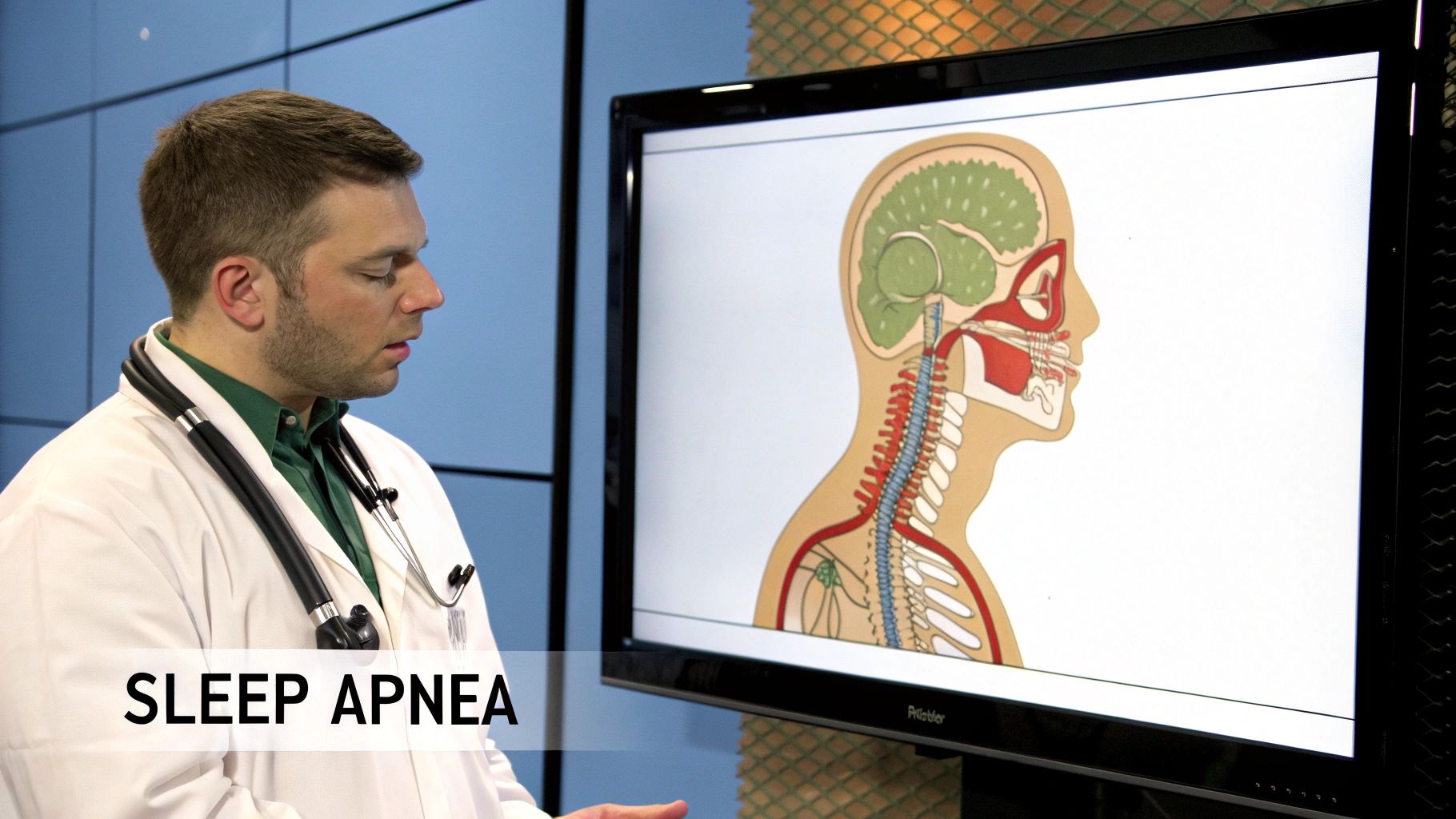
Myofunctional therapy for sleep apnea is more than simple tongue exercises. It's a comprehensive system of neuromuscular retraining designed to improve breathing patterns and strengthen key airway muscles. Let's explore the specific exercises that make a real difference.
How Targeted Movements Reshape Breathing
These exercises are strategically designed to address the root causes of airway obstruction during sleep. A weak tongue that collapses backward and blocks the airway is a common issue in sleep apnea. Targeted exercises strengthen the muscles responsible for tongue positioning, helping to maintain an open airway.
These exercises also improve coordination between the tongue, mouth, and throat muscles. This coordinated muscle action is essential for proper breathing and swallowing, further enhancing sleep quality. With consistent practice, these initially conscious movements become automatic, developing muscle memory that keeps the airway open throughout the night.
Orofacial myofunctional therapy (OMT) focuses on the muscles of the face, mouth, and tongue, and has shown impressive results. OMT can reduce the Apnea-Hypopnea Index (AHI), a measure of sleep apnea severity, by approximately 50% in adults and 62% in children. It also leads to better sleep quality, reduced snoring, and improved daytime function. Additionally, OMT can even improve adherence to CPAP therapy. For more detailed statistics, see this article: How Orofacial Myofunctional Therapy Can Aid in the Treatment of Sleep-Disordered Breathing
Exercise Variations for Different Needs
Not all exercises are the same. Different anatomical issues call for specific approaches. Someone with a tongue tie, for example, will need different exercises than someone with a recessed jaw. Myofunctional therapists create personalized exercise programs to meet individual needs for the best results. For further information on myofunctional exercises, check out this resource: How to Master Myofunctional Exercises
Mastering Proper Technique and Progression
Correct form is crucial for maximizing benefits and avoiding injury. Here’s why:
- Targeted Muscle Engagement: Proper technique ensures you're working the correct muscles effectively.
- Injury Prevention: Incorrect form can strain or injure oral muscles.
- Optimal Results: Using the correct technique maximizes the exercises' effectiveness.
As your muscles strengthen, the exercises will progress to more challenging variations. This progressive approach ensures continuous improvement and helps maintain motivation. The initial exercises will evolve as your oral muscles adapt and become stronger.
Myofunctional Therapy vs. CPAP: Finding Your Ideal Solution
When it comes to treating sleep apnea, two primary treatments often come up: myofunctional therapy and CPAP (Continuous Positive Airway Pressure). Each has its own set of pros and cons, making the decision a personal one. This section explores the realities of both treatments, helping you decide which path might be best for you.
Understanding the Core Differences
Myofunctional therapy focuses on strengthening and retraining the muscles of the face, mouth, and tongue. It aims to address the root causes of airway obstruction. It's a proactive approach, like building a stronger foundation for your breathing. CPAP, conversely, delivers a steady stream of air to keep the airway open while you sleep. This reactive solution directly manages the symptoms of sleep apnea.
CPAP therapy is often the go-to for managing sleep apnea symptoms. It addresses the problem directly by ensuring continuous airflow.
Benefits and Drawbacks of Each Approach
Myofunctional therapy is non-invasive and drug-free. It empowers patients to manage their sleep apnea through specific exercises. However, it requires consistent effort and might not be suitable for all sleep apnea cases. CPAP therapy is highly effective in lowering your AHI (Apnea-Hypopnea Index), a critical measure of sleep apnea severity. Some people, however, find the mask uncomfortable or disruptive, which can make it hard to stick with the treatment.
You might be interested in: Myohab's Sitemap of helpful posts
The following table summarizes the key differences between these two approaches:
To help you compare these two therapies, we've compiled a table highlighting the key differences and similarities:
Myofunctional Therapy vs. CPAP for Sleep Apnea
| Factor | Myofunctional Therapy | CPAP Therapy |
|---|---|---|
| Invasiveness | Non-invasive | Minimally invasive |
| Treatment Approach | Addresses underlying muscle weakness | Manages symptoms directly |
| Comfort | Generally comfortable | Can be uncomfortable due to mask |
| Convenience | Requires daily exercises | Requires wearing a mask during sleep |
| Cost | Lower overall cost | Higher initial cost and ongoing expenses |
| Effectiveness | Can improve AHI but may not be as effective as CPAP alone | Highly effective in reducing AHI |
| Long-term Benefits | Potential to improve airway structure and function | Treats symptoms but does not address underlying muscle weakness |
This table highlights the core distinctions between myofunctional therapy and CPAP therapy. While CPAP is often more effective at reducing AHI in the short term, myofunctional therapy offers a more holistic approach by addressing the underlying muscle weakness.
Combining Therapies for Optimal Results
Sometimes, the best solution involves combining both therapies. Myofunctional therapy can strengthen the airway muscles, potentially making CPAP therapy more comfortable and effective. This combined approach may even allow for lower CPAP pressure settings, further enhancing comfort and compliance. This can lead to better overall outcomes and improve the quality of your sleep.
Research on this topic continues to evolve: Research on Myofunctional Therapy and CPAP
Choosing the Right Path for You
The ideal treatment depends on individual factors, including the severity of your sleep apnea, your anatomy, lifestyle, and personal preferences. It's important to consult with both a sleep specialist and a myofunctional therapist. They can help you evaluate your situation and create a personalized treatment plan. When making your decision, consider your commitment to daily exercises, how comfortable you are with wearing a mask, and your overall health goals.
Sustaining Results: The Long-Term Success Roadmap

Achieving initial improvements with myofunctional therapy for sleep apnea is a significant step. However, maintaining these positive changes requires a dedicated long-term approach. This section explores strategies for sustaining your improved breathing and enjoying restful sleep every night.
Integrating Myofunctional Therapy into Daily Life
Successfully integrating myofunctional therapy means making it a part of your everyday routine. Think of it like brushing your teeth – a necessary habit. Consistent practice reinforces muscle memory, ensuring your airway stays open during sleep.
You might be interested in: Myohab's Category Sitemap
Recognizing Warning Signs and Adapting Your Routine
Pay attention to subtle shifts in your sleep or breathing patterns. Increased snoring or daytime sleepiness could be early warning signs. These signals indicate a need to either adjust your exercise routine or consult your myofunctional therapist. This proactive approach helps you stay ahead of potential setbacks.
Long-Term Physiological Adaptations
Myofunctional therapy offers promising long-term benefits for Obstructive Sleep Apnea (OSA). Studies have shown sustained improvements in sleep quality and fewer OSA symptoms over time. One study, where patients used both myofunctional therapy and CPAP therapy, showed increased CPAP adherence in the combined treatment group. However, more research is needed to fully understand the long-term effects and establish myofunctional therapy as a standard additional treatment. Learn more here: Long-term benefits of myofunctional therapy
Consistent myofunctional exercises strengthen and improve coordination in your airway muscles. This creates a more stable airway, allowing your body to maintain open airways during sleep, without conscious effort. This physiological change is essential for preventing recurring sleep apnea symptoms.
Staying Motivated and Overcoming Plateaus
Just like any health journey, maintaining motivation is key. You might experience periods where progress plateaus. During these times, remember your initial progress and focus on the overall health benefits. Connecting with a support group or your myofunctional therapist can provide valuable encouragement and help you overcome these challenges. By using these strategies, you can maintain your improved sleep and breathing long term.
Master These Powerful Myofunctional Exercises
Building upon the foundation of myofunctional therapy for sleep apnea, let's explore the practical exercises. These techniques aim to reshape your breathing and strengthen the muscles supporting your airway.
Essential Exercises for Improved Airway Function
Before we dive into the exercises, let's look at a practical guide. The table below outlines key exercises, their target muscles, the proper technique, recommended repetitions, and the benefits you can expect.
To understand its purpose, here's a brief introduction to the table below: This table provides a clear overview of essential myofunctional exercises, offering a roadmap for improved airway function in individuals with sleep apnea.
| Exercise Name | Target Area | Technique | Repetitions | Benefits |
|---|---|---|---|---|
| Tongue Push-Ups | Tongue strength and endurance | Press your tongue against the roof of your mouth, behind your front teeth. Hold, then release. | 10-15 reps, several times a day | Strengthens tongue muscles, improving airway maintenance. |
| Tongue Slides | Tongue mobility and range of motion | Slide your tongue tip along the roof of your mouth, from front to back. | 10-15 reps, several times a day | Improves tongue mobility and strengthens swallowing/speech muscles. |
| Lion's Breath | Facial and throat muscles | Open your mouth wide, stick out your tongue, and exhale forcefully, making a "ha" sound. | 5-10 reps, several times a day | Stretches and strengthens facial and throat muscles, improving airflow. |
| Chin Tucks | Neck and throat muscles | Gently tuck your chin towards your chest and hold. | 10-15 reps, several times a day | Strengthens airway support muscles, aiding in keeping it open during sleep. |
| Soft Palate Exercises | Soft palate and throat muscles | Say "ah" and hold, then yawn widely. Repeat. | 10-15 reps, several times a day | Strengthens soft palate and throat muscles, improving airflow and reducing snoring. |
In summary, this table highlights the targeted approach of myofunctional exercises, emphasizing the importance of consistent practice for optimal results. Each exercise contributes uniquely to strengthening and coordinating the muscles essential for maintaining an open airway.
Proper Form and Progression for Optimal Results
Just like any exercise program, correct form is crucial in myofunctional therapy. Proper technique ensures you effectively engage the right muscles, preventing strain and maximizing benefits. For example, with tongue push-ups, make sure your entire tongue, not just the tip, presses against your palate.
As you progress, you'll gradually increase repetitions and move to more advanced exercises. This progressive approach keeps your training challenging and helps you achieve your goals. This may involve holding exercises longer, increasing repetitions, or incorporating more complex movements.
Modifications for Individual Needs
Every individual's anatomy and condition are unique. Skilled myofunctional therapists tailor exercises to address specific needs. For instance, someone with a tongue tie will require different exercises than someone with a recessed jaw. The severity of sleep apnea also influences exercise selection and intensity.
Troubleshooting and Addressing Challenges
Discomfort or difficulty with certain exercises are normal. Myofunctional therapists can pinpoint the source of these issues and offer solutions. They may adjust your technique, modify the exercise, or suggest additional strategies. Open communication with your therapist is vital for overcoming challenges and staying motivated on your path to better sleep. By understanding these exercises and collaborating with a qualified therapist, you can fully utilize the potential of myofunctional therapy for sleep apnea.
Is Myofunctional Therapy Right for Your Sleep Apnea?
Not all sleep apnea sufferers benefit equally from myofunctional therapy. This section will help you determine if you're a good candidate. We'll explore the factors that indicate successful treatment outcomes, considering your condition, anatomy, and lifestyle.
Factors Influencing Myofunctional Therapy Success
Sleep specialists consider several factors when recommending myofunctional therapy. These include your age, the structure of your mouth and throat, and the severity of your sleep apnea. Younger patients with mild to moderate sleep apnea often respond well to therapy. Specific anatomical features, like tongue tie or a recessed jaw, can also impact the effectiveness of the exercises.
Talking to Your Healthcare Provider
Open communication with your healthcare provider is essential. Discuss your interest in myofunctional therapy and share your sleep history, including any previous treatments. Your doctor can assess whether myofunctional therapy aligns with your overall treatment plan. This collaborative approach ensures you receive the most appropriate care.
When Additional Interventions May Be Necessary
Myofunctional therapy can be very helpful, but it isn't a standalone solution for everyone. In cases of severe sleep apnea, you may need additional treatments. These could include CPAP therapy, oral appliances, or even surgery. Your doctor can help determine the best combination of therapies for your individual needs. For example, myofunctional therapy can complement CPAP therapy, potentially improving comfort and effectiveness. Understanding these factors empowers you to make informed decisions about your sleep apnea treatment.
Recognizing Your Candidacy
So, how can you tell if myofunctional therapy is a good fit for you? Consider these questions:
- Severity: Is your sleep apnea mild, moderate, or severe?
- Anatomy: Do you have any anatomical issues affecting your airway, such as a tongue tie or recessed jaw?
- Commitment: Are you prepared to dedicate time to daily exercises?
- Current Treatments: Are you currently using other treatments, like CPAP?
If you're still unsure, a consultation with a myofunctional therapist is the best way to get a personalized assessment. They can evaluate your specific situation and recommend the most suitable treatment approach.
Ready to explore how myofunctional therapy can improve your sleep? Learn more about personalized exercises and expert guidance at myohab.

