
Understanding The Progress of Myofunctional Therapy

Once a specialized treatment, myofunctional therapy has grown into a proven approach for addressing various oral and facial conditions. Research shows that the muscles in our face, mouth and jaw work together in complex ways that affect our overall health. Many patients see clear improvements when comparing their before and after results from this therapy.
Origins and Key Early Developments
The story of myofunctional therapy began in the early 1900s with pioneers like Dr. Alfred Rogers, an American orthodontist born in 1873. Rogers noticed how problems with soft tissues affected the bones and structure of the mouth. He created specific exercises to help strengthen these muscles and introduced the term "Myofunctional Therapy in Orthodontics" in his presentations at dental conferences starting in 1918. Learn more about the history of myofunctional therapy.
Early experts found that habits like incorrect tongue position, breathing through the mouth, and improper swallowing could lead to problems with:
- Teeth alignment
- Speech development
- Breathing during sleep
This understanding led them to develop targeted exercises to retrain these muscles and restore normal function.
Current Methods Based on Research
Today's myofunctional therapy uses proven exercises backed by scientific studies and clinical experience. Therapists guide patients through specific movements like tongue slides, tip touches, and roof pushes to build tongue strength and improve positioning. They also teach proper nasal breathing and swallowing techniques.
By carefully tracking progress, therapists can now create personalized plans that deliver measurable results for each patient's unique needs.
Growing Uses and Team Approach
Myofunctional therapy now helps with much more than orthodontic issues. Sleep apnea, TMJ disorders, and certain speech problems can all benefit from this treatment. Therapists regularly work alongside:
- Dentists
- Orthodontists
- Speech pathologists
- Sleep specialists
This team approach leads to better outcomes as different experts combine their knowledge to help patients. As research continues and more healthcare providers recognize its value, myofunctional therapy keeps proving itself as an essential tool for improving oral and facial health.
Finding Your Expert: Professional Standards in Modern Practice

Finding the right myofunctional therapist takes careful consideration. The success of your treatment depends heavily on working with someone who has the proper training and expertise. Let's explore what you should look for when choosing a qualified professional. You might also want to check out our sitemap of user content for additional resources.
Understanding Professional Qualifications
The field of myofunctional therapy has well-established certification paths through several respected organizations. The International Association of Orofacial Myology (IAOM) leads the way in setting professional standards. Many therapists come from backgrounds in speech-language pathology, dental hygiene, or dentistry, bringing valuable expertise to their practice.
Since the 1970s when the IAOM was founded, the field has grown more structured and professional. The organization trains and certifies practitioners from various healthcare fields, helping to standardize treatment approaches. For more background, see this article on the history and development of orofacial myology.
What to Look for in a Therapist
When evaluating potential therapists, focus on these key factors:
- Experience: Check their track record with before and after cases
- Patient Testimonials: Read reviews from previous patients
- Personalized Care: Make sure they customize treatment plans
- Communication: Choose someone who explains things clearly and makes you feel comfortable
Collaborative Approach and Its Benefits
The best outcomes often come from therapists who work closely with other healthcare providers. For example, treating sleep apnea might involve coordinating with a sleep specialist. Similarly, patients with orthodontic issues benefit when their therapist partners with their orthodontist.
This team approach helps address all aspects of your condition. A therapist might consult with speech pathologists for patients working on speech problems, or coordinate with dentists on bite-related issues. By drawing on different areas of expertise, your treatment plan becomes more complete and effective.
Starting Your Journey: What to Expect Before Treatment
Starting myofunctional therapy is similar to beginning a new exercise routine – but for your face and mouth muscles. Just like working with a personal trainer, you'll go through a detailed assessment to understand your needs and create an effective plan. This first phase lays the groundwork for your therapy journey.
Understanding the Initial Assessment
Your first appointment focuses on examining how your facial muscles work together. Your therapist will check your tongue position, swallowing patterns, breathing habits, and facial structure. You may be asked to perform simple tasks like extending your tongue or drinking water so they can observe your muscle movements. This detailed evaluation helps identify underlying issues related to sleep apnea, tongue tie, or other oral-facial concerns.
Developing Your Personalized Treatment Plan
After your assessment, your therapist will design exercises specifically for your needs. If you have a tongue tie, for example, they may include pre-surgery movements to help prepare your tongue for better range of motion. You might want to learn more about: How to master…. Your unique plan targets your specific challenges to help you get the best possible results.
Preparing for Your Myofunctional Therapy Journey
Getting ready for therapy is much like preparing to start a new workout routine. Success requires dedication to regular practice and setting aside time for exercises.
Here's what you need to know:
- Mental Preparation: Come with an open mind and positive attitude. Remember that consistent practice leads to improvement.
- Daily Routine: Plan specific times to do your exercises, just like you would schedule workouts at the gym.
- Clear Communication: Share any concerns with your therapist and ask questions when needed. Good dialogue helps ensure you understand each step.
Setting Realistic Expectations and Goals
While myofunctional therapy can bring great improvements, it's important to understand that progress takes time. Each person advances at their own pace – some see changes quickly while others need more time. Your therapist will help track your progress and set achievable milestones along the way. By celebrating small wins and staying consistent with your exercises, you'll be well on your way to lasting positive changes.
Inside the Treatment Room: Evidence-Based Results
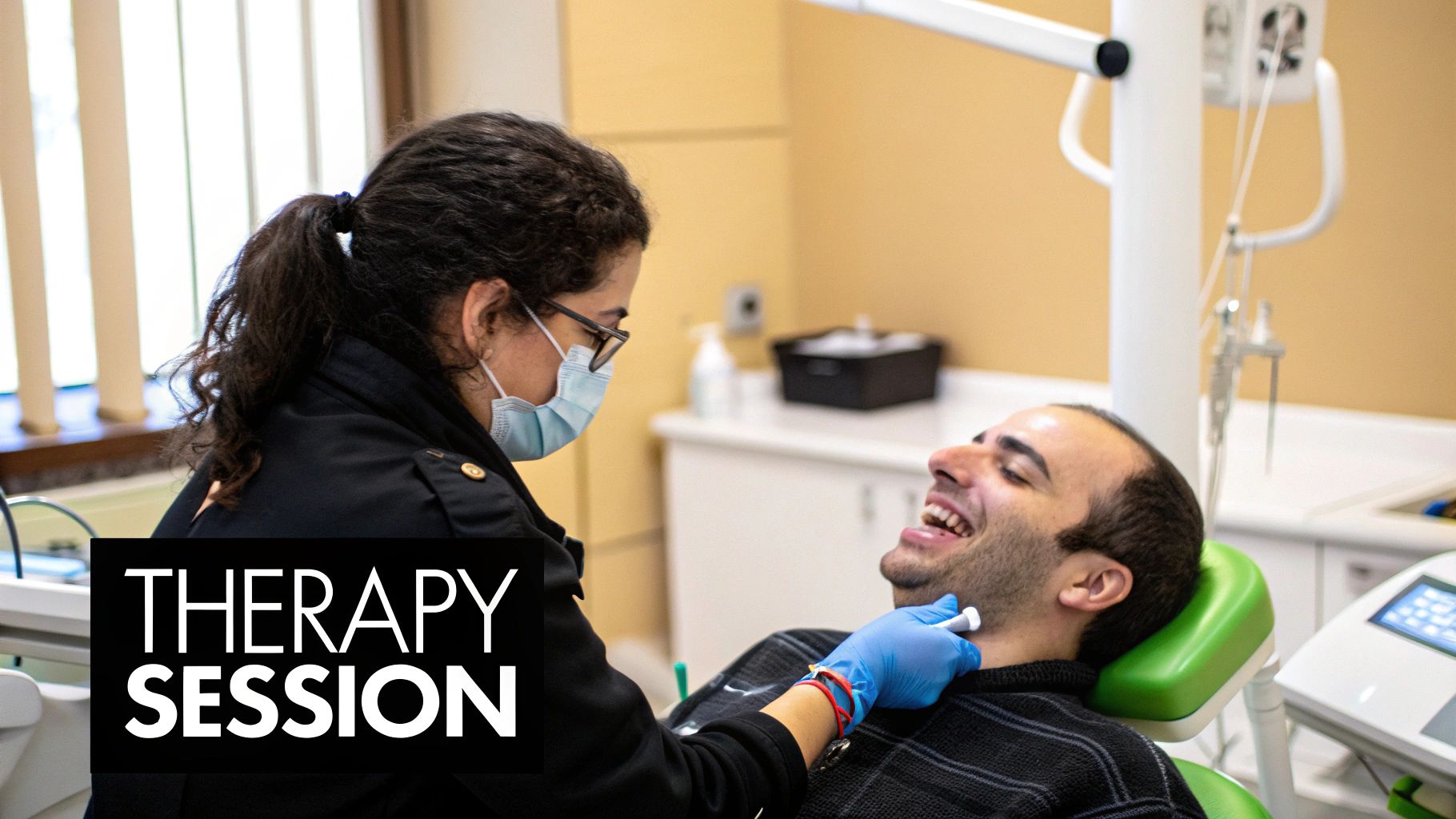
What happens when patients start myofunctional therapy? The results speak for themselves. Patients with malocclusions often see major improvements in both function and appearance. For example, those with Class II Division 1 malocclusions benefit from specific exercises combined with dental devices. Research shows that prefabricated functional appliances (PFAs) work just as well as traditional options while costing less, though getting patients to use them consistently can be tricky. Read the full research here.
The Science Behind Myofunctional Techniques
Think of myofunctional therapy like a gym workout for your mouth and face. Each exercise targets specific muscles to build strength and control. Regular practice helps position your tongue correctly and breathe through your nose – crucial skills for dealing with sleep apnea and jaw problems.
Key Exercises Include:
- Tongue Slide: Gets your tongue more flexible
- Tongue Tip Touch: Makes swallowing smoother
- Tongue Roof Push: Builds tongue strength
- Tongue Rolling: Improves precise movements
- Tongue Extension: Helps tongue reach further
Documenting Progress and Success
How do we know the therapy works? We track both numbers and patient experiences. We look for clear signs like less snoring or better bite patterns. This helps make sure each patient gets exactly what they need. Remember – regular practice is what gets results. Want to learn more? Check out our guide to How to master myofunctional therapy exercises.
Real-World Outcomes
The real proof comes from patient stories. People don't just notice physical changes – they feel different too. Many sleep better, worry less, and feel more confident. These improvements go way beyond just looks, showing how the therapy can change daily life.
By keeping track of both clinical measures and personal goals, patients can see exactly how their hard work in therapy pays off.
Mastering Treatment Challenges: Your Success Strategy

Let's be honest – myofunctional therapy isn't always smooth sailing. There will be ups and downs along the way. But with the right mindset and proven strategies, you can turn those challenges into stepping stones toward success. Let's look at practical approaches that have helped real patients achieve their myofunctional therapy before and after goals.
Maintaining Motivation Through Challenges
We all start therapy excited and determined. But keeping that energy up week after week? That's where things get real. The key is breaking down your journey into bite-sized pieces. Instead of a vague goal like "fix my tongue position," focus on something specific like "do my exercises for 10 minutes each morning." Small wins add up to big changes.
Motivation Boosters That Work:
- Take progress photos to see your changes over time
- Use a simple habit tracker on your phone or calendar
- Make exercise time more fun by listening to your favorite podcast
Establishing Consistent Practice Routines
Think of your therapy exercises like brushing your teeth – it needs to become a non-negotiable part of your day. Pick times that naturally fit into your existing schedule. Maybe it's right after your morning coffee or while watching the evening news.
Make It Stick:
- Choose a consistent time that works for your schedule
- Set a daily reminder on your phone
- Create a dedicated practice space free from distractions
Overcoming Temporary Setbacks
Bad days happen to everyone. Maybe you missed some practice sessions or feel stuck with a particular exercise. The key is not letting temporary setbacks become permanent roadblocks. Remember – progress isn't always linear.
When Things Get Tough:
- Talk to your therapist about adjusting your approach
- Review your technique to ensure you're doing exercises correctly
- Look back at how far you've already come
Building Lasting Habits and Seeing Results
Real change happens when new behaviors become automatic. Start by connecting your exercises to things you already do every day. This "habit stacking" approach makes it easier for your brain to form new patterns that stick.
Tips for Long-Term Success:
- Do your exercises while making breakfast
- Practice tongue placement during your commute
- Get an accountability buddy to check in with weekly
Tracking Progress Effectively
Keeping tabs on your journey does more than just document changes – it helps you stay motivated when things get challenging. Whether you use photos, notes, or an app, having concrete evidence of your progress makes a huge difference.
Smart Ways to Track:
- Take weekly progress photos from the same angle
- Keep a simple log of daily exercises completed
- Schedule regular check-ins with your therapist
Remember, every patient's journey looks different. Focus on your own progress rather than comparing yourself to others. By staying consistent with these strategies and being patient with yourself, you'll be amazed at what you can achieve.
Securing Long-Term Success: Beyond Active Treatment
Successfully completing active myofunctional therapy is a milestone worth celebrating. But like any significant health journey, the real work lies in maintaining those hard-earned gains. Your success depends on integrating new habits into your daily routine and staying alert to potential setbacks.
Maintaining Your Progress: Lifestyle and Habits
Think of myofunctional exercises like brushing your teeth – they need to become an automatic part of your daily routine. Just as you wouldn't skip brushing for a week, keeping up with your tongue and facial muscle exercises is essential for lasting results. Try doing your exercises during natural breaks in your day, like when you're stopped at traffic lights or watching your favorite show.
Good habits extend beyond exercises alone. Quality sleep, balanced nutrition, and stress management all affect how well your facial muscles and breathing patterns function. When you take care of your overall health, you support the positive changes you've made through therapy.
Monitoring and Addressing Potential Challenges
Being mindful of changes in your breathing or facial muscle function helps catch small issues before they grow. For example, if you notice more mouth breathing or snoring creeping back in, it's like a check engine light coming on – a signal to take action. Going back to specific exercises from your therapy program can help correct these small shifts before old habits take hold again.
Regular visits with your myofunctional therapist provide expert guidance to keep you on track. These check-ups work like routine car maintenance – they help catch potential issues early and ensure everything continues working smoothly. Your therapist can adjust your maintenance plan based on your progress and needs.
Long-Term Success Indicators and Strategies
You'll know you're maintaining success when breathing through your nose feels natural, your tongue rests comfortably on the roof of your mouth, and you're sleeping better at night. These improvements show that your new habits are becoming second nature.
To build on your progress, consider adding more challenging exercises to your routine. Just as an athlete varies their training to improve performance, mixing up your practice helps strengthen weak areas and prevents plateaus. This proactive approach helps lock in your gains and builds resistance against falling back into old patterns.
Are you ready to transform your orofacial health and experience the long-term benefits of myofunctional therapy? Visit myohab today to learn more and begin your journey towards a healthier, happier you!

