
The Science Behind Mewing Tongue Posture

Have you ever wondered how a simple change in tongue position could potentially reshape your face? Mewing has become wildly popular online, with countless before-and-after photos circulating on social media. But beyond the hype, there's some interesting science worth exploring about how tongue posture might affect facial structure.
Let's dive into what's actually happening in your mouth when you practice mewing, and what science says about its potential effects.
Understanding the Core Principles of Mewing
At its most basic, mewing involves pressing your entire tongue against the roof of your mouth (the palate). The tricky part for most people is controlling that back third of the tongue, which doesn't typically get much conscious attention. When you place your tongue in this position, you're applying gentle pressure to the maxilla (upper jawbone).
Many mewing enthusiasts believe this pressure can gradually influence bone development, potentially leading to a more defined jawline and better facial symmetry. The technique also emphasizes breathing through your nose rather than your mouth, which has its own set of potential health benefits for your respiratory system.
The Role of the Maxilla in Facial Structure
Your maxilla isn't just any bone—it's a major player in how your face looks. This bone supports your mid-face and determines how prominent your cheekbones appear and how wide your palate is.
The theory behind mewing suggests that consistent tongue pressure against the palate might stimulate bone growth and remodeling, especially during childhood and adolescence when bone is still developing. According to proponents, these small changes could add up to noticeable differences in facial structure over months or years of consistent practice.
Mewing and Its Origins
Mewing gets its name from British orthodontists John and Mike Mew, who pioneered this approach through their work in orthotropics. Despite limited scientific validation from peer-reviewed studies, the technique gained massive traction on platforms like YouTube and Reddit around 2019. By January of that year, Google Trends showed a significant spike in searches for the term "mewing" as curious individuals began exploring this facial exercise. For more detailed information, you can learn more about mewing from Medical News Today.
The Importance of Long-Term Practice
If you're considering trying mewing, know that it's not a quick fix. Like building muscle at the gym, the muscles involved in maintaining proper tongue posture need time to strengthen and adapt. Any potential bone changes would happen even more gradually.
This explains why dedicated mewers emphasize consistency and patience—changes, if they occur at all, might take months or even years to become visible. Understanding this time frame is crucial for setting realistic expectations about what mewing might accomplish for your facial appearance and oral health.
In the next section, we'll look more closely at what benefits you might reasonably expect from mewing, and where some claims might be exaggerated.
Master the Perfect Mewing Tongue Posture Technique
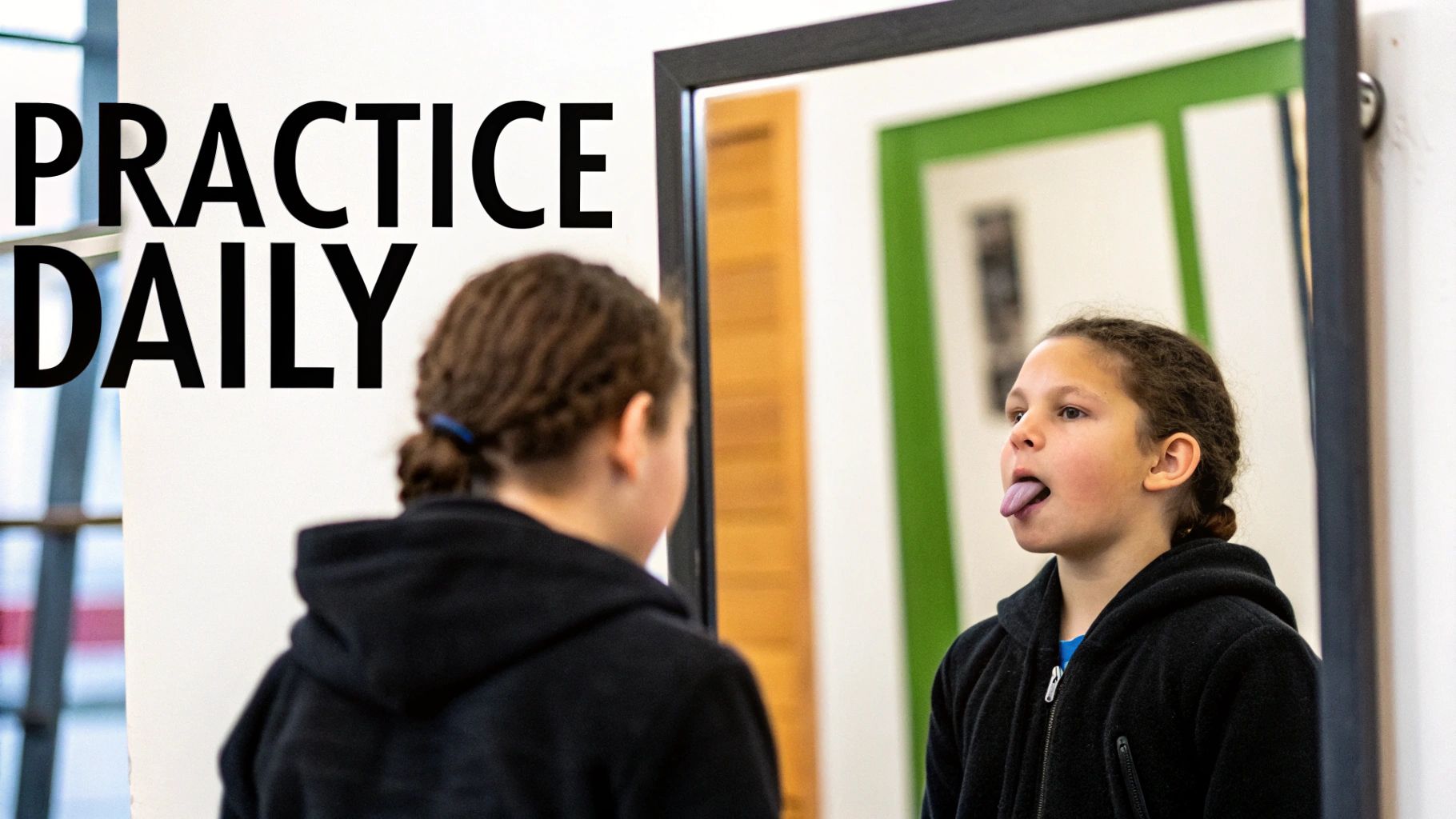
Getting your mewing tongue posture right can be tricky at first. Many people struggle with the details, which is why I've put together this comprehensive guide. Proper mewing involves three main elements: correct tongue placement, proper lip seal, and aligned teeth – each playing a crucial role in the technique's effectiveness.
Proper Tongue Placement: The Key to Effective Mewing
The heart of successful mewing lies in where you position your tongue. You need to press your entire tongue against the roof of your mouth – not just the tip. Think of creating a suction-cup effect with your tongue fully adhering to your palate.
Many beginners miss the crucial back third of the tongue, which must also make contact with the soft palate. This complete connection ensures you're applying gentle, even pressure across the entire roof of your mouth, which is what makes mewing work.
Achieving a Proper Lip Seal and Teeth Alignment
Your mouth position matters just as much as your tongue placement. Keep your lips lightly touching without forcing them closed or creating tension. Your teeth should rest naturally together in their normal bite position.
This trio of positions – tongue on the palate, closed lips, and lightly touching teeth – creates the foundation you need for effective mewing. When these three elements come together, you'll know you're on the right track.
Breathing and Mewing: A Synergistic Relationship
How you breathe directly impacts your ability to maintain proper mewing form. Nasal breathing is essential, as it naturally supports the correct tongue position and helps keep your mouth closed.
Mouth breathing, on the other hand, makes mewing impossible and can lead to other oral health problems over time. If you've been a habitual mouth breather, training yourself to breathe through your nose might take time but is worth the effort for successful mewing.
Building Muscle Memory for Consistent Practice
Like learning any new skill, mastering mewing requires developing muscle memory. At first, holding your tongue against your palate will likely feel strange and even tiring – that's completely normal!
Start with short practice sessions of just a few minutes. As your muscles strengthen, gradually increase how long you hold the position. Remember that consistency trumps duration when you're beginning. Five minutes several times daily will build better habits than an hour once a week.
Let's look at the correct technique compared to common mistakes:
Correct vs. Incorrect Mewing Technique
This table compares proper mewing tongue posture techniques with common mistakes and misconceptions:
| Aspect | Correct Technique | Common Mistakes |
|---|---|---|
| Tongue Placement | Entire tongue pressed against the roof of mouth, including the back third | Only pressing the tip of the tongue up; leaving gaps between tongue and palate |
| Pressure | Gentle, even pressure throughout | Excessive force; uneven pressure; pushing against teeth |
| Lip Position | Lightly sealed without tension | Forced tight closure; leaving mouth open |
| Teeth Position | Lightly touching in natural bite | Clenching; forcing teeth together; keeping teeth apart |
| Breathing | Through nose only | Mouth breathing; mixed breathing |
| Duration | Consistent practice building to constant posture | Sporadic practice; giving up when tired |
The most significant difference between success and failure with mewing comes down to engaging that back third of your tongue and breathing exclusively through your nose.
Overcoming Common Mewing Roadblocks
Many newcomers struggle to engage the back of their tongue properly. If you're having trouble, try visualizing your tongue as a single muscle unit pressing upward rather than thinking of it in sections.
Another common challenge is maintaining the position throughout the day. Setting phone reminders or using small physical cues like a tiny dot on your phone case can remind you to check your tongue position. Some people even place a small piece of Mastic Gum on their palate as a physical reminder of where their tongue should rest.
Gradual Progression: From Minutes to Hours
Don't rush the process. Start with short, focused mewing sessions – perhaps while reading or working at your desk. As your muscles adapt, you'll naturally hold the position for longer periods without thinking about it.
The ultimate goal is making mewing your default resting position, where your tongue naturally sits against your palate throughout the day. This takes time – weeks or even months – but the potential benefits for your facial structure and breathing are worth the patience. Remember that proper form is always more important than pushing yourself too quickly.
What Research Really Says About Mewing Tongue Posture

Now that we've covered how to perform mewing correctly, let's tackle the million-dollar question: does this technique actually deliver results? It's time to cut through the internet hype and examine what science really tells us about mewing.
Separating Fact From Fiction
The internet is flooded with before-and-after mewing photos showing dramatic jawline transformations. But here's the catch – these images often lack proper controls and documentation. Many don't account for weight loss, natural development during puberty, or even concurrent orthodontic treatment that might explain the changes.
Even more concerning is the lack of solid scientific evidence supporting mewing's claims about facial restructuring. Many dental professionals remain skeptical about its effectiveness. It's worth noting that Mike Mew, one of the technique's creators, was expelled from the British Orthodontic Society following misconduct charges. You can read more about this controversy on Wikipedia). This history should prompt us to approach mewing claims with healthy skepticism rather than blind faith.
The Theoretical Basis of Mewing
Despite limited scientific backing, mewing does have some theoretical foundation in orthotropics – a branch of orthodontics that examines how oral posture affects facial development.
The basic premise makes some anatomical sense: consistent pressure from the tongue against the palate might influence the shape of the upper jaw over time. This pressure could potentially affect broader facial structure. This theory holds more weight during childhood and adolescence when bones are still growing and more responsive to pressure. For adults with completed skeletal development, the potential for significant change becomes much more questionable.
The Need for More Research
The gap between mewing theory and proven results remains wide. Current research simply isn't robust enough to make definitive claims about mewing's effectiveness, especially for adults.
Future studies would need to include:
- Larger sample sizes: Most existing observations involve too few people to draw meaningful conclusions
- Control groups: Proper comparison between mewing practitioners and non-practitioners to isolate the technique's specific effects
- Objective measurements: Standardized, quantifiable facial measurements instead of subjective photo comparisons
Until we have this research, it's best to maintain realistic expectations about mewing. Minor improvements in posture and breathing may occur, but dramatic facial transformations as seen in viral posts are unlikely for most people, particularly adults. If you're interested in professional guidance for myofunctional therapy, resources like MyoHab offer more structured approaches backed by trained professionals.
Realistic Benefits of Proper Mewing Tongue Posture
So you've heard about mewing and all its supposed magic, but what can you actually expect from this practice? Let's cut through the hype and look at the real, science-backed benefits you might experience when adopting proper tongue posture.
Aesthetic Improvements: Subtle Changes Over Time
Those dramatic before-and-after photos flooding social media? Take them with a grain of salt. While consistent mewing can lead to some visible changes, they're typically subtle and develop gradually. Younger practitioners often report a more defined jawline and improved facial symmetry since their facial structures are still developing.
For adults, don't expect dramatic reshaping. Think of it like training any muscle group – consistent effort brings gradual toning, not complete transformation. Your facial muscles can strengthen and slightly reshape with dedicated practice, but your bones won't drastically change position once you're fully grown.
Functional Benefits: Breathing and Swallowing
The perks of mewing extend beyond just looks. By encouraging nasal breathing, proper tongue posture may help reduce common issues like dry mouth, bad breath, and snoring. Improved swallowing mechanics is another practical benefit many practitioners report.
These functional improvements can make a real difference in your daily life. Nasal breathing naturally filters, warms, and humidifies the air you breathe, which can lead to better respiratory health. Plus, when your tongue rests in the correct position, you're setting yourself up for better oral health overall.
Age and Mewing: Impact on Potential Results
Your age significantly affects what you can achieve with mewing. Adolescents and teenagers stand to gain the most since their facial bones are still growing and can be influenced by proper tongue posture. The earlier you start, the more noticeable the potential results.
Adults shouldn't feel discouraged though. While bone changes will be minimal, improvements in muscle tone, tongue posture, and breathing habits can still lead to positive changes. Many adults report feeling better and breathing more easily, even if the mirror doesn't show dramatic differences.
Here's a comprehensive look at what you might realistically expect from mewing:
Claimed Benefits of Mewing
This table summarizes the various claimed benefits of mewing tongue posture and the current level of evidence supporting each claim:
| Claimed Benefit | Target Group | Evidence Level | Timeframe |
|---|---|---|---|
| Defined jawline | Adolescents | Moderate | 6-12 months |
| Defined jawline | Adults | Limited | 1-2+ years |
| Better breathing | All ages | Strong | 1-3 months |
| Reduced snoring | All ages | Moderate | 2-6 months |
| Improved swallowing | All ages | Strong | 1-3 months |
| Forward facial growth | Children/Teens | Moderate | 1+ years |
| Forward facial growth | Adults | Very limited | 2+ years |
| Improved facial symmetry | Adolescents | Limited | 1+ years |
| Better sleep quality | All ages | Moderate | 2-6 months |
Measuring Progress Beyond Appearance
While taking regular photos can help you track visual changes, don't make this your only measure of success. Pay attention to functional improvements like easier nasal breathing, better swallowing patterns, or reduced snoring. These changes often happen before any visible facial transformation.
For those seeking more structured guidance, resources like MyoHab offer personalized myofunctional therapy programs. These can provide expert support and specific exercises tailored to your needs, helping you track meaningful progress beyond just what you see in the mirror.
Hidden Risks of Improper Mewing Tongue Posture

Mewing offers potential facial structure benefits, but there's a catch – doing it wrong can cause real problems. Just like poor form at the gym can lead to injuries, incorrect mewing technique might create issues ranging from minor discomfort to more significant complications. Getting the technique right from the start is absolutely essential.
Potential Physical Risks
One of the most common issues that improper mewing can trigger is TMJ disorders. When you apply excessive pressure or position your tongue incorrectly, you're essentially putting strain on your jaw joint. This can result in pain, annoying clicking sounds, and difficulty opening or closing your mouth. Pushing your tongue against your teeth instead of your palate is a classic mistake that can worsen existing TMJ problems.
Your dental alignment can also suffer from incorrect technique. While some mewing enthusiasts claim it can straighten teeth, forcing your tongue against your teeth can actually push them out of alignment. This might make existing bite problems worse or create entirely new orthodontic challenges. Uneven pressure across the palate can lead to asymmetrical facial development, especially in younger people whose facial structures are still growing.
Though mewing is often portrayed as a harmless DIY technique, it comes with risks when done incorrectly. Forcing your tongue into unnatural positions can disrupt tooth alignment, create bite problems, and even affect your speech. Fixing these complications might require expensive and complex dental treatments. Explore this topic further. Another issue to watch for is muscle fatigue and pain. Holding your tongue in an unfamiliar position, particularly when you first start, can exhaust your tongue and nearby muscles, potentially causing headaches, neck pain, and general discomfort.
The Psychological Impact
The physical risks aren't the only concern – improper mewing can affect your mental health too. The intense focus on achieving specific facial aesthetics can create unrealistic expectations and lead to disappointment when results don't appear quickly or dramatically enough. This is particularly problematic given how many edited photos and exaggerated claims circulate on social media.
The pursuit of facial changes through mewing can sometimes contribute to body dysmorphia, where people become fixated on perceived flaws in their appearance. This fixation might lead to obsessive practicing and a distorted view of your own face. It's important to approach mewing with a balanced mindset and reasonable expectations about what it can and cannot do.
Recognizing Warning Signs
You need to watch for warning signs that indicate you might be mewing incorrectly or experiencing negative effects. These include ongoing jaw pain, frequent headaches, changes in your bite, trouble chewing or speaking, or increasing anxiety about your appearance. If you notice any of these symptoms, stop mewing immediately and consult with a dental professional or a qualified myofunctional therapist, such as those available through MyoHab.
A professional can properly assess your situation, identify any underlying issues, and recommend appropriate next steps. Remember, proper guidance isn't just helpful – it's essential for safe and effective mewing practice.
When to Choose Professional Care Over DIY Mewing
Mewing tongue posture has been getting a lot of attention lately as a way to improve facial structure. But it's important to know when this DIY approach is enough and when you should seek professional help. While mewing works well for some people, there are times when a qualified orthodontist is your best bet. Let's look at how to make this decision based on your specific needs.
Identifying Cases Where Mewing Alone Is Insufficient
Mewing focuses primarily on tongue position and how it might shape facial development. However, it simply can't fix major skeletal problems or specific dental issues like severe overbites, underbites, or crossbites. If your jaw misalignment affects how you bite or causes pain, mewing by itself probably won't solve the problem. This is where professional orthodontic treatment becomes necessary. Braces or clear aligners can apply precise forces to move teeth and reshape the jaw in ways that mewing cannot match.
The Role of Orthodontics in Addressing Complex Issues
Certain conditions demand professional expertise. Impacted teeth, severe crowding, and jaw deformities require an orthodontist's knowledge and tools. These specialists are trained to diagnose and treat complicated problems affecting your bite, jaw alignment, and overall oral health. Unlike mewing's subtle and unpredictable results, orthodontic treatments offer controlled outcomes you can count on. Also, if you have certain medical conditions or TMJ disorders, attempting mewing without proper guidance might actually make things worse.
Integrating Mewing With Professional Treatment
In many cases, mewing can work alongside professional orthodontic care. Good tongue posture can support the changes that braces or aligners are making, potentially improving your overall results. For example, if you're getting orthodontic treatment for an overbite, practicing proper mewing techniques can help reinforce correct tongue position, contributing to a more balanced outcome.
Questions to Ask Your Orthodontist About Mewing
When you're considering orthodontic treatment, bring up mewing with your potential orthodontist. Ask whether they're familiar with the technique and if they think it could help your specific situation. Even if they don't know the term "mewing," you can still discuss proper tongue posture and its importance for oral health and facial development. Don't be shy about expressing your interest in combining mewing with your treatment plan. A good orthodontist will assess your individual needs and advise you accordingly. If finding a practitioner who understands tongue posture is important to you, and your current orthodontist dismisses the idea completely, consider getting a second opinion. Resources like MyoHab can connect you with qualified myofunctional therapists who specialize in oral posture and can provide additional guidance.
Navigating Mewing Tongue Posture in Digital Culture
The popularity of mewing tongue posture has spread like wildfire across social media platforms, creating a mix of useful information and misleading claims. This guide will help you develop the critical thinking skills needed to separate fact from fiction in the online mewing community.
Identifying Red Flags in Transformation Claims
Be wary of misleading before-and-after photos that populate mewing forums and social media. Many of these images use photography tricks like flattering angles, strategic lighting, and sometimes even photo editing to make results appear more dramatic than they actually are.
Time manipulation is another common issue, with posts suggesting rapid changes that simply aren't possible given the slow nature of physiological transformation. Many posts also fail to mention other factors contributing to visible changes, such as weight loss or orthodontic work, incorrectly attributing all improvements solely to mewing.
Evaluating Online Communities and Resources
The quality of mewing communities varies dramatically across the internet. The best groups emphasize evidence-based approaches, realistic expectations, and proper technique. These communities welcome critical discussion and acknowledge the current limitations of research on mewing.
Less reputable forums tend to promote unrealistic transformations that can contribute to disappointment or even body image issues. When seeking information, look for resources that include input from medical professionals or reference credible research when making claims about effectiveness or techniques.
Understanding the Influence of Algorithms
Social media algorithms significantly shape how mewing is presented online. Platforms like TikTok and YouTube prioritize engaging content—often meaning the most dramatic transformation videos—regardless of accuracy.
The viral nature of mewing content means you're more likely to see extraordinary claims than moderate, realistic results. Learn more about mewing here. To counter this algorithm bias, actively seek diverse perspectives and consult credible sources outside social media to form a balanced view of what mewing can realistically achieve.
Ethical Content Creation for Your Mewing Journey
If you share your own mewing experience online, do so responsibly. Be honest about your timeline and any challenges you've faced. Avoid exaggerating results or making claims that aren't supported by evidence.
Clearly disclose if you're using other interventions alongside mewing, such as weight changes, exercise, or orthodontic treatments. By maintaining transparency and promoting realistic expectations, you help create a healthier, more honest mewing community online.
Ready to try a structured approach to myofunctional therapy? MyoHab offers personalized programs designed to improve your breathing, posture, and oral health. Discover the benefits of MyoHab today.

