
The Science Behind Proper Tongue Positioning

Getting your tongue position right is at the heart of effective mewing. While it may seem simple to press your tongue up against the roof of your mouth, achieving the proper form takes understanding and practice. Let's break down exactly what happens in your mouth during mewing and why positioning matters so much for getting results.
The Ideal Mewing Tongue Position
Picture your tongue as a muscle that needs to lay flat against the roof of your mouth – and not just the tip, but the whole thing. The back third of your tongue should make full contact with your palate, while the tip rests gently behind your front teeth without pushing on them. You'll want to keep this position whether you're talking, eating, or just sitting still. Think of your palate like a workout space for your tongue – it's where all the strengthening happens.
Many people find this position feels awkward at first since we're often used to letting our tongues rest wherever they want. Getting comfortable with proper positioning takes time and conscious effort. While you're working on tongue placement, remember to breathe through your nose with your lips closed. This breathing pattern supports the right tongue position and helps you maintain it.
Impact on Facial Muscles
Your tongue doesn't work alone – it's connected to a whole network of facial muscles. For instance, the muscles under your chin (called the suprahyoid muscles) help hold your tongue in the right spot. These muscles connect to the hyoid bone in your neck, which acts like an anchor point for your tongue and links to several other facial muscles.
When you keep your tongue pressed properly against your palate, it may gradually influence how your upper jaw (maxilla) develops. The steady pressure from your tongue can potentially reshape bone structure over time. While researchers are still studying exactly how much change is possible, the connection between tongue position and facial development is a key principle of mewing.
The Role of Oral Posture
Think of oral posture as a complete package – it's not just about your tongue, but also keeping your lips together, teeth lightly touching, and your whole tongue engaged with the roof of your mouth. Just like good posture helps your spine stay healthy, proper oral posture sets up your face for optimal function and development.
This total approach is what makes mewing different from simply pushing your tongue up. Every part of your mouth plays a role, from your teeth to your jaw to your facial muscles. When all these elements work together in the right position, they create balance in your mouth and face. That's why taking time to learn proper positioning is so important for anyone wanting to try mewing effectively.
Mastering Your Mewing Technique
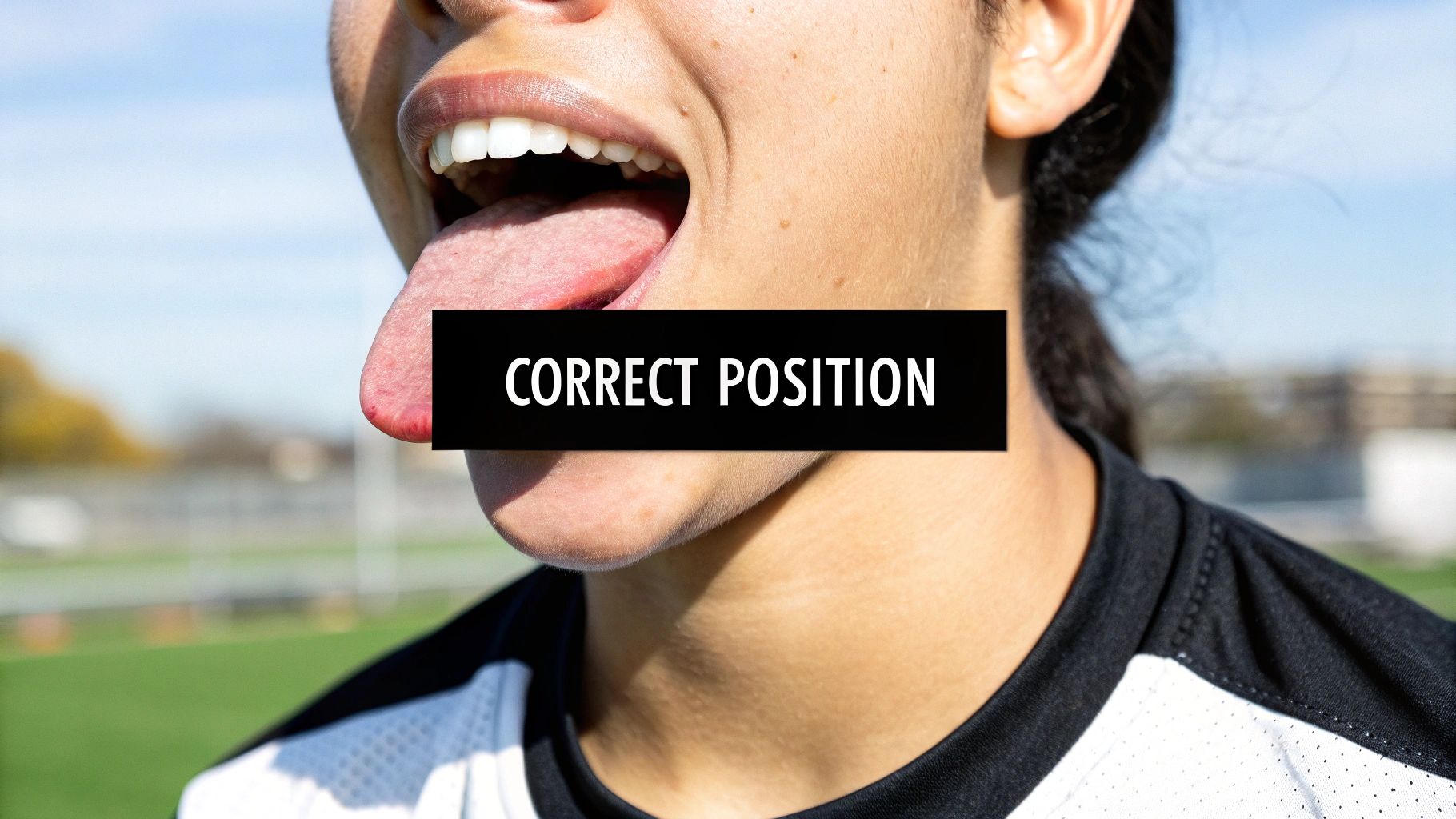
Let's explore how to properly position your tongue and maintain correct form when mewing. Getting the technique right isn't just about pressing your tongue up – it's about finding and keeping the right position that engages all the right muscles. I'll walk you through exactly how to do this, step by step.
Finding the Correct Mewing Tongue Position
Think of your tongue and palate like two pieces that need to fit together perfectly. Your entire tongue, from tip to back, should rest comfortably against the roof of your mouth. Many people forget about the back third of the tongue, but making contact with the soft palate there is key. Place the tip right behind your front teeth without pushing hard – similar to how a suction cup gently sticks to a surface. When your whole tongue maintains this light contact, it properly engages the muscles needed for effective mewing.
Breathing Coordination and Maintaining Proper Form
Breathing correctly plays a big role in keeping good mewing form. Make sure to breathe through your nose with your lips closed. Let your teeth touch lightly but don't clench them. When you get all these elements working together – tongue suctioned up, lips closed, teeth touching gently, breathing through your nose – you create the foundation for successful mewing. Each breath you take while maintaining this position helps reinforce the proper form.
Practical Exercises and Diagnostic Tests
Like any new skill, proper mewing takes practice. Here are some exercises to build your tongue awareness and control:
- The Suction Hold: Practice suctioning your whole tongue to your palate. Start by holding for 10-20 seconds and work up to holding for a minute or longer.
- The Swallow Test: Try swallowing while keeping your tongue in the mewing position. This helps make the position feel more natural and builds strength.
- The Click Test: Make clicking sounds with your tongue against your palate to learn the right placement and strengthen those muscles.
These exercises do more than build strength – they help you check your technique. If you struggle to maintain suction or feel discomfort, you may need to adjust your form. Keep practicing and it will start to feel more natural.
Tips From Experienced Practitioners
It takes focus and dedication to maintain good mewing form throughout your day. Here's what experienced mewers recommend:
- Mindful Reminders: Use phone alerts or sticky notes to remind yourself to check your tongue position regularly.
- Incorporate into Daily Activities: Practice while reading, working, or watching shows. Making it part of your routine helps it become automatic.
- Consistency is Key: Short periods of correct form throughout the day work better than long stretches followed by completely dropping it.
Understanding proper mewing mechanics, practicing these exercises regularly, and following advice from those with experience will help you progress on your mewing journey. Remember – staying consistent matters more than perfection. With patience and practice, you'll master this technique.
Navigating Common Challenges and Solutions

Like any new technique, getting your tongue position right while mewing takes practice. Let's look at the main challenges people face and how to overcome them, so you can avoid common pitfalls and make steady progress.
Asymmetrical Tongue Position
Ever noticed your tongue pressing harder on one side of your palate than the other? This is a common issue that often stems from existing jaw imbalances or favoring one side while chewing. When one side of your tongue applies more force, it can affect how evenly your face develops over time.
Here's a helpful visualization: think of your palate as a tabletop and your tongue as a cloth that should lay perfectly flat across it. Start by checking which side you naturally favor. Then practice evening out the pressure by gently pressing your tongue against each cheek in turn. This simple exercise helps build awareness and control of your tongue position.
Excessive Pressure and Tension
Many people make the mistake of pressing too hard when they start mewing. Remember – this isn't about forcing your tongue up with all your might. Using too much pressure often leads to headaches, jaw pain, and neck strain.
Think of it more like a gentle suction cup effect – your tongue should softly stick to your palate without straining. If you're feeling tense, try taking some deep breaths while maintaining this light contact. This helps your muscles relax while keeping proper form.
Inconsistent Form
The biggest challenge? Simply remembering to keep proper tongue position throughout your busy day. It's all too easy to slip back into old habits when you're focused on work, conversations, or other activities. This stop-and-start practice makes it harder to develop the muscle memory you need.
Make it easier on yourself by setting regular reminders to check your tongue position. Try linking mewing to daily activities you already do, like checking email or watching TV. This helps build the habit naturally. When you notice your tongue has dropped, gently guide it back up without getting frustrated. With time and practice, the correct position will start to feel like second nature. Remember, slow and steady progress beats perfect form for just an hour a day.
Understanding What Science Really Says

When it comes to mewing and proper tongue positioning, separating scientific facts from online hype is essential. While many social media posts showcase dramatic before-and-after photos, the real science tells a more measured story. Let's explore what research actually reveals about this technique's effects on facial structure and oral health.
Examining the Evidence for Mewing
The practice of mewing stems from the work of two dental professionals – Dr. John Mew and his son Dr. Mike Mew. Their research focused on how tongue placement affects facial development through a field called orthotropics. The core idea is that correct tongue position can influence how facial features develop over time. However, many dental experts remain uncertain about these claims, especially for adults whose facial bones are fully developed. For instance, the American Association of Orthodontists has noted that facial structure depends on multiple factors like genetics and natural bone growth patterns, not just tongue position. They recommend proceeding carefully with any self-directed attempts to change jaw alignment.
The Impact of Tongue Position on Muscle Activity
Scientific studies have found interesting connections between tongue placement and facial muscle engagement. Research measuring muscle activity shows that when the tongue presses against the roof of the mouth during mewing, it activates several important muscle groups around the face and neck. The suprahyoid muscles, which help with swallowing and support facial structure, become particularly engaged. This increased muscle activity might help tone these areas over time, though more research is needed to confirm the long-term effects.
Mewing's Effectiveness: Separating Hype From Reality
While some people report seeing changes in their facial appearance from mewing, it's important to set realistic expectations. The science suggests that proper tongue positioning may help improve oral posture and muscle tone, but dramatic changes to bone structure are unlikely in adults. Some individuals even experience headaches or jaw discomfort when attempting mewing incorrectly. For these reasons, checking with a qualified dentist or orthodontist before starting mewing is wise. They can evaluate your specific situation and help you avoid potential problems.
By understanding what current research actually says about mewing, you can make better decisions about whether and how to incorporate this technique into your oral health routine. Remember that facial development involves many factors beyond just tongue position, and changes typically happen gradually over extended periods.
Setting Realistic Goals Based on Your Age
When people first learn about mewing, they often ask what kind of changes they can realistically expect at their age. It's a fair question – after all, our facial structures respond differently to tongue posture techniques depending on our stage of development. Think of it like clay – the younger you are, the more moldable your facial features tend to be, while adult faces are more like hardened pottery.
Mewing in Childhood and Adolescence
Kids and teens have a natural advantage when it comes to mewing. Their facial bones are still growing and changing, much like a tree that's easier to guide while it's young and flexible. During these formative years, proper tongue posture can help guide facial development in a healthy direction. For instance, when children maintain good tongue position, it may help prevent issues like a narrow palate or crowded teeth from developing in the first place. But parents and teens should keep in mind – changes happen slowly, like watching grass grow. Expecting overnight transformations will only lead to disappointment.
Mewing in Adulthood
Once we hit adulthood, our facial bones are more set in their ways. Think of it like trying to reshape a piece of furniture – the older the wood, the harder it is to bend. This doesn't mean mewing is pointless for adults though. Many find it helps strengthen their facial muscles and improve basic functions like breathing and swallowing. Some adults notice subtle changes in how their face looks over time, but it's best to focus on the health benefits rather than hoping for major structural changes.
Personalized Approaches for Optimal Results
No matter your age, success with mewing comes down to two things: doing it correctly and sticking with it consistently. It's like learning to play an instrument – practicing the right way for a few minutes each day beats hours of incorrect technique. Getting guidance from a myofunctional therapist can help ensure you're on the right track. Tools like myohab offer customized exercises to support your mewing practice based on your specific needs and goals. This kind of personalized support can make a big difference, whether you're a teen hoping to guide your facial development or an adult working on improving oral function. The key is to set goals that make sense for your age while staying patient and consistent with your practice.
Building Lasting Mewing Habits
Getting mewing right is one thing – making it a natural part of your daily life is another challenge entirely. Like learning any new skill, transforming mewing from a conscious action into an automatic habit takes dedication and the right approach. Let's explore practical ways to make mewing feel natural and effortless over time.
Integrating Mewing Into Your Daily Routine
The best way to build a new habit is to connect it to things you already do each day. Try focusing on your tongue position during quiet moments like reading or watching TV. Set a few gentle phone reminders to check your tongue placement throughout the day. By linking mewing to existing habits and using helpful prompts, you'll find it becomes more automatic with each passing week.
Mewing While Speaking and Eating
Speaking and eating with proper tongue posture can feel awkward at first. It's similar to when you first learned to type – initially requiring intense focus but eventually becoming second nature. During conversations, notice how your tongue moves and work on keeping light contact with your palate whenever possible. While eating, practice swallowing with your tongue pressed up. Though challenging initially, these motions will start to feel more natural with regular practice.
Maintaining the Mewing Tongue Position During Sleep
Getting your tongue to stay in position during sleep is often the trickiest part since we can't consciously control it while sleeping. However, sleeping on your back tends to help maintain proper tongue placement naturally. Focus on breathing through your nose during the day, as this habit often carries over into sleep. Remember that even partial success during sleep is progress – small improvements add up significantly over time.
Tracking Progress and Staying Motivated
Keeping track of your mewing journey helps maintain motivation. Consider starting a simple journal to note daily progress and any challenges you encounter. Take occasional photos to document potential changes in your facial structure, while keeping in mind that visible results vary between individuals and take time. Connect with others practicing mewing through online communities where you can share experiences and support each other. Having this support system makes it easier to stay committed when facing obstacles.
To ensure you're practicing mewing correctly and make steady progress, consider working with a myofunctional therapist. Tools like myohab provide targeted exercises matched to your specific needs and goals. With consistent practice and the right guidance, you can turn mewing from a conscious effort into an automatic part of your daily life, leading to better oral posture and overall wellness.

