
Understanding Why Tongue Resting Posture Matters
The way your tongue rests in your mouth might seem like a minor detail, but it affects your overall health in surprising ways. Your tongue position influences not just oral health, but also your breathing, sleep quality, and even your body posture. Understanding proper tongue placement is key for preventing various health issues.
The Impact of Incorrect Tongue Posture
When your tongue rests against your lower teeth or on the floor of your mouth instead of against the roof, it can trigger several problems. This poor positioning often leads to malocclusions – misaligned teeth and bite issues. In children especially, incorrect tongue posture can alter how their facial features develop.
A low-resting tongue can prevent the upper jaw from developing properly, often resulting in a narrow palate and crowded teeth. This positioning tends to encourage mouth breathing rather than nasal breathing, which brings its own set of health challenges.
Poor tongue posture has been linked to several conditions beyond just oral health. It can contribute to sleep-disordered breathing and worsen temporomandibular joint (TMJ) problems. Many people are surprised to learn it's also connected to headaches, neck pain, and shoulder tension. These connections show how one small change in position can affect your whole body.
The Importance of Proper Tongue Resting Posture
The right tongue position can make a big difference in your health. Your tongue should rest gently on the roof of your mouth, not touching your teeth, while your lips stay closed and teeth slightly apart. This simple adjustment can improve many aspects of your health.
Correct tongue posture helps shape proper oral and facial development, leading to better tooth alignment and a wider palate. It promotes nasal breathing, which helps you get more oxygen and filter air properly. This positioning can help reduce snoring and sleep apnea symptoms and ease TMJ pain and headaches. Studies show that 50% of Americans have incorrect tongue posture, which affects not just their mouth but also their eyes, nose, head, neck, and shoulders. Explore this topic further
Achieving Optimal Tongue Posture
Breaking old habits and learning proper tongue positioning takes time and practice. While it might feel awkward at first, the health benefits make it worth the effort. Many people find success with myofunctional therapy, which specifically targets the muscles in your face and mouth.
This specialized therapy teaches exercises to strengthen your tongue and surrounding muscles. It's particularly helpful for people who struggle with tongue thrust, mouth breathing, or similar issues. By focusing on proper tongue posture, you can improve your breathing, sleep better, and feel more comfortable overall.
The Science Behind Optimal Tongue Positioning
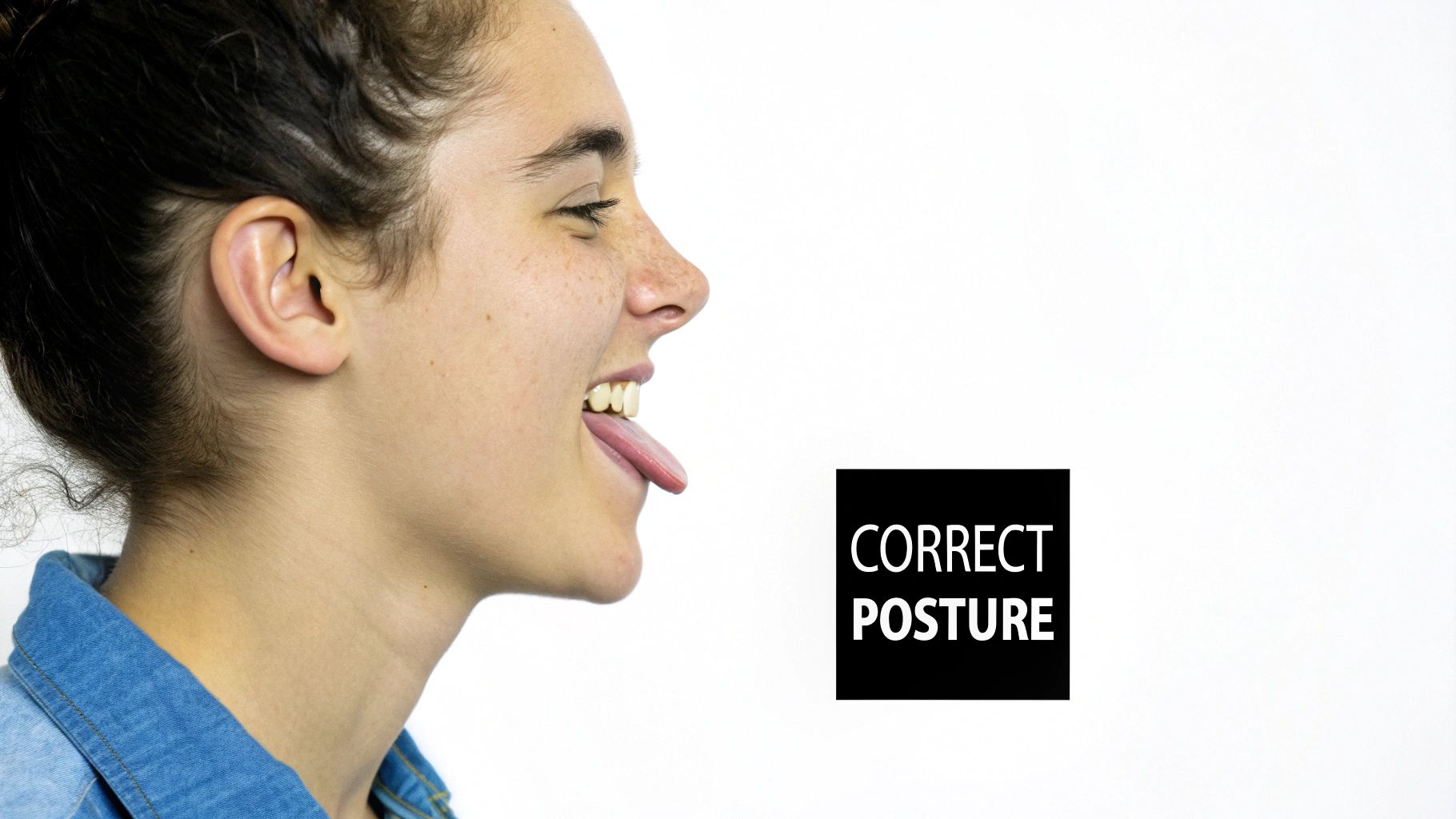
Where you rest your tongue matters more than you might think. The way your tongue sits in your mouth affects everything from how your face develops to how well you breathe and sleep. Let's look at what science tells us about the best way to position your tongue.
The Mechanics of Tongue Posture
Your tongue is a complex muscle that plays a vital role in how your mouth and face develop. The ideal position is against the roof of your mouth (the palate), with the tip resting just behind your upper front teeth. Think of it like a natural suction cup – the tongue should gently stick to the palate.
This position does more than just feel right. In children, the gentle pressure helps shape the upper jaw and creates space for teeth to grow properly. Even in adults, keeping your tongue up maintains good airway space and helps keep teeth aligned.
The Impact of Incorrect Resting Posture
When the tongue rests too low in the mouth, it can create a chain reaction of problems. Poor tongue positioning often leads to crooked teeth, breathing issues like sleep apnea, and even changes in speech. These issues compound over time if not addressed.
The debate around "correct" tongue posture continues in scientific circles. While many dental professionals suggest pressing the tongue against the palate, some research shows this may increase muscle tension. For example, studies measuring muscle activity found higher readings when the tongue pressed up versus when it rested lower. Learn more in this research paper on Tongue Position and Muscle Activity.
The Connection Between Tongue Posture and Breathing
How your tongue sits directly affects your breathing. When it rests too low, it can partially block your airway, forcing you to breathe through your mouth instead of your nose. This switch to mouth breathing isn't just uncomfortable – it can dry out your mouth, make you more likely to get sick, and prevent you from getting good sleep. Over time, it may even change how your face grows and develops.
Breaking Down Common Tongue Posture Problems

The way we position our tongue might seem trivial, but it can significantly impact our oral health. Poor tongue posture can lead to various issues, from misaligned teeth to breathing problems. By understanding these common problems, we can take steps to correct them before they cause lasting damage.
Tongue Thrust
Tongue thrust occurs when the tongue pushes forward against the teeth during swallowing. This common issue is especially concerning in children, as it can create an open bite where the front teeth don't meet properly. Kids with tongue thrust often struggle with speech, particularly when pronouncing certain sounds. The condition can also lead to a narrow palate, making dental problems even more complex.
Low Tongue Posture
When the tongue rests at the bottom of the mouth instead of against the roof, we call this low tongue posture. This position can block proper airflow, often leading to mouth breathing and potential sleep issues like sleep apnea. The muscles in and around the mouth can become weak over time, making it harder to maintain proper posture and potentially causing jaw problems.
Reverse Swallowing
Reverse swallowing, also known as infantile swallowing, happens when someone pushes their tongue forward instead of up while swallowing. Like tongue thrust, this can push teeth out of alignment and create bite problems. Poor swallowing patterns can make eating less efficient and may even affect digestion. Research shows that children with these issues are more likely to develop dental problems. For more details, check out Beware of Unsupported Jaw and Tongue Posture Trends.
Recognizing the Signs
Watch for these key indicators of improper tongue posture:
- Mouth breathing: Consistently breathing through the mouth
- Open bite: Front teeth don't meet when closing the mouth
- Lisping: Trouble making "s" and "z" sounds clearly
- Chronic dry mouth: A sign of regular mouth breathing
- Narrow palate: An unusually high roof of the mouth
Addressing Tongue Posture Issues
The good news is that myofunctional therapy can help fix many of these problems. This specialized treatment teaches people to use their oral and facial muscles correctly, improving tongue position, swallowing, and breathing. It's especially helpful for children since it can guide proper facial development and prevent future dental issues. The therapy includes exercises to build strength in the tongue and surrounding muscles, leading to better function and overall oral health.
Your Practical Guide to Perfect Tongue Positioning
Having covered the issues that come from poor tongue posture, let's explore how to achieve optimal tongue positioning. The core concept is simple – your tongue should rest against the roof of your mouth, or palate. While this may feel awkward at first if you're used to a lower tongue position, consistent practice will make it feel natural over time.
Finding Your Tongue's Sweet Spot
Getting the right tongue position is more about gentle placement than forceful pressure. Think of it as creating a light suction effect, with your tongue softly adhering to the roof of your mouth. The tip of your tongue should sit just behind your upper front teeth, with a small gap between your teeth and your lips closed. Though this position is straightforward, maintaining it throughout the day takes practice and patience.
Step-by-Step Guide to Proper Placement
Follow these practical steps to find and maintain good tongue posture:
- Step 1: The Click Test: Make a clicking sound with your tongue and notice where it touches your palate – this spot is typically the ideal resting place
- Step 2: The Suction Hold: Gently suction your whole tongue to the roof of your mouth, keeping contact with the spot from step 1
- Step 3: The Swallow Test: Swallow while keeping your tongue up – if it drops down, guide it back up
- Step 4: Breathe Through Your Nose: Practice nasal breathing while maintaining tongue position to build the mind-body connection
Exercises for Strengthening Tongue Muscles
Building tongue strength helps maintain proper position. Try these simple exercises:
- Tongue Push-Ups: Press your tongue against your palate and hold for a few seconds
- Tongue Sweeps: Move your tongue front to back along the roof of your mouth
- Tongue Circles: Trace circles around the inside of your lips in both directions
Troubleshooting Common Challenges
Many people struggle to keep good tongue posture throughout the day. Here are practical solutions:
- Build Awareness: Check your tongue position regularly – set phone reminders or place sticky notes where you'll see them
- Take Small Steps: Start with short practice periods and gradually increase duration
- Stay Hydrated: Drink water regularly since a dry mouth makes proper positioning harder
- Get Professional Help: If you're having ongoing difficulties, consider working with a myofunctional therapist. Myohab offers specialized guidance for both adults and children dealing with tongue posture issues, sleep apnea, and tongue ties.
With dedication to these techniques and a patient approach to addressing challenges, you can develop proper tongue posture habits that last. Remember that meaningful change takes time – stay consistent with your practice and you'll gradually build the muscle memory needed for lasting improvement.
Mastering Daily Activities with Proper Tongue Posture

Getting your tongue position right throughout daily activities takes practice and awareness. While it may feel awkward at first, integrating proper tongue resting posture into regular activities like speaking, eating, exercising and sleeping can help create lasting habits. Let's explore practical ways to maintain good tongue placement during these common activities.
Speaking With Proper Tongue Posture
Your tongue moves constantly during speech, making it challenging to maintain ideal positioning. Start by focusing on keeping your tongue lightly touching the roof of your mouth between words and phrases. While this might feel strange initially, with consistent practice it will start feeling more natural. This position also promotes breathing through your nose rather than your mouth.
Eating and Proper Tongue Posture
Meals provide perfect opportunities to practice proper tongue placement. After each swallow, gently guide your tongue back up to rest against your palate. Keep your mouth closed while chewing and avoid tensing your lips or cheeks too much. Pay attention to your swallowing pattern – your tongue should not push forward against your teeth when you swallow.
Exercising and Maintaining Optimal Tongue Position
During workouts, especially intense ones, proper tongue posture often gets forgotten as we start breathing through our mouths. Try to breathe through your nose as much as possible during exercise, which naturally encourages better tongue position. Use rest periods between sets to check and reset your tongue position against the roof of your mouth.
Sleeping and Tongue Resting Posture
Good tongue position while sleeping affects both breathing and rest quality. When your tongue sits too low, it can partially block your airway and lead to snoring or sleep apnea. Regular practice during the day helps train your tongue to stay in a better position at night. Side sleeping can help prevent your tongue from falling backward. For personalized help with tongue posture and breathing issues during sleep, check out Myohab, which offers specialized programs to retrain oral muscles for better breathing and wellness.
"Finding Professional Support and Treatment Options."
Finding Professional Support and Treatment Options

Noticing issues with your or your child's tongue resting posture can be concerning, but effective treatment options exist. Getting professional help early can prevent long-term oral health problems and lead to better outcomes. Let's explore the available support and treatment paths.
Myofunctional Therapy: A Targeted Approach
Myofunctional therapy is one of the most effective ways to address tongue posture problems. This specialized treatment helps retrain facial and oral muscles through targeted exercises. A trained therapist guides patients through movements that strengthen the tongue and surrounding muscles while improving swallowing and breathing patterns. The therapy is especially good for correcting issues like tongue thrust and mouth breathing habits.
Orthodontic Interventions: Addressing Structural Issues
Sometimes improper tongue posture leads to malocclusions, or misaligned teeth. In these cases, orthodontic treatment may be needed alongside other therapies. Braces, aligners, and other dental devices can help correct teeth alignment and bite function. These structural improvements create better conditions for maintaining proper tongue position.
Identifying Qualified Professionals
Finding the right specialist makes a big difference in treatment success. Look for certified myofunctional therapists who specialize in tongue posture issues. You'll also want to work with orthodontists who understand how tongue position affects facial development. Take time to research credentials and experience before choosing your care providers.
Maximizing Treatment Benefits: Questions to Ask
When meeting with potential providers, come prepared with questions to understand your treatment options fully:
- What specific treatment plan would you recommend for my case?
- How long should I expect treatment to take?
- What results can I realistically expect?
- What are the treatment costs and insurance coverage options?
Building a Support Network and Long-Term Maintenance
Improving tongue posture takes time and dedication. Having support from family and connecting with others going through similar treatment can help you stay motivated. Regular check-ins with your therapist allow you to track progress and adjust exercises as needed. With consistent practice and awareness, you can maintain proper tongue position for lasting oral health benefits.
For personalized help improving your tongue posture, check out Myohab. Their myofunctional therapy programs are designed to meet individual needs and help achieve long-lasting improvements in oral function and overall wellness.

