
The Hidden Impact of Tongue Thrusting on Oral Health

Tongue thrusting, the habit of pushing the tongue forward against the teeth while swallowing or speaking, can significantly impact oral health. This seemingly minor action, often beginning in infancy, can cause a chain reaction of problems if it continues into childhood and adulthood. Understanding how tongue thrusting develops is key to recognizing its potential effects.
Initially, tongue-thrust swallowing is a natural reflex for infants, essential for breastfeeding. However, this reflex should naturally fade as a child grows and their oral structures develop.
This shift from infantile swallowing to mature swallowing involves intricate coordination of the tongue, lips, and jaw. If this transition isn't seamless, a persistent tongue thrust can develop. Several factors can contribute to this persistence, including extended pacifier use, thumb sucking, or allergies leading to chronic mouth breathing.
For instance, a child who consistently breathes through their mouth might position their tongue forward to maintain an open airway, unintentionally reinforcing the tongue thrusting habit. Enlarged tonsils or adenoids can also play a role.
The consequences of tongue thrusting on oral health become more noticeable as children get older. The constant forward force of the tongue against the teeth can gradually alter dental alignment. This pressure can lead to an open bite, where the front teeth don't meet, or other malocclusions (misalignments of the teeth).
The frequency of tongue thrusting varies considerably across age groups. In infants, the prevalence is around 97.2%, decreasing to about 25% by the late teens. This indicates that many children naturally outgrow the habit, while others may need intervention. Learn more about the prevalence of tongue thrusting: Prevalence of Tongue Thrusting
Long-Term Effects on Speech and Facial Structure
Beyond dental problems, tongue thrusting can also affect speech development. The tongue is crucial for producing certain sounds, and incorrect positioning can result in lisps or difficulty pronouncing specific consonants.
Moreover, the continuous pressure from the tongue can even influence facial structure development, especially in growing children. This can result in a narrower palate or changes in jaw growth.
Early intervention for tongue thrusting is vital to prevent long-term oral health and speech issues. This highlights the importance of recognizing the signs and seeking professional advice if necessary. Knowing how to identify these signs is the next important step in effectively managing tongue thrusting.
Do You Have a Tongue Thrust? Signs You Shouldn't Ignore
Identifying a tongue thrust involves recognizing specific oral habits and patterns. Some signs are obvious, while others are more subtle. Understanding both is key to accurate self-assessment.
Recognizing the Telltale Signs
One of the most noticeable signs is a visible tongue thrust. This is where the tongue protrudes between the teeth during swallowing or speech. This forward movement is especially noticeable when pronouncing sounds like "s," "z," "t," "d," "n," and "l." An open bite, where the front teeth don't meet even when the mouth is closed, can also indicate a tongue thrust.
Less obvious signs include mouth breathing, difficulty with lip closure, and unusual swallowing patterns. You might notice excessive jaw movement or tension in the facial muscles while swallowing.
Tongue thrusting is common in children. A study from Jaipur found that 18% of children aged 11 to 13 exhibited tongue thrusting. This habit can contribute to malocclusions if not addressed. Learn more about tongue thrusting prevalence. More information on orofacial myofunctional disorders can be found at Myohab.
To help identify potential tongue thrusting, let's look at common signs across different age groups. The following table outlines what to look for and when to seek professional guidance.
Signs of Tongue Thrusting by Age Group
This table will help readers identify age-specific indicators of tongue thrusting across different life stages.
| Age Group | Common Signs | When to Be Concerned |
|---|---|---|
| Infants/Toddlers | Tongue protrusion during swallowing, difficulty latching during breastfeeding | If it interferes with feeding or persists beyond the age of two |
| Children (3-6) | Open bite, lisp, difficulty with certain speech sounds, thumb sucking | If speech is significantly impacted or dental issues develop |
| School-Aged Children (7-12) | Mouth breathing, difficulty swallowing, open mouth posture, dental problems (e.g., crooked teeth) | If it affects social interactions, academic performance, or causes discomfort |
| Teenagers/Adults | Difficulty chewing or swallowing, lisp or other speech problems, jaw pain or clicking | If it causes pain, affects quality of life, or contributes to dental issues |
This table summarizes key indicators of tongue thrusting across various age groups. Remember, a professional evaluation is crucial for an accurate diagnosis.
Self-Assessment Techniques and When to Seek Professional Help
Observing your swallowing patterns is a valuable first step. Try swallowing a sip of water. Does your tongue press against your teeth? Does your jaw move excessively? This simple check can offer helpful insights.
However, professional evaluation is essential. If you suspect a tongue thrust, consult a speech-language pathologist or an orofacial myologist. They can conduct a thorough assessment and recommend appropriate strategies.
These specialists use various techniques to evaluate tongue thrust, including observing swallowing patterns and analyzing speech sounds. They can also identify associated issues like mouth breathing or incorrect resting tongue posture. This ensures a comprehensive understanding of your specific needs.
Myofunctional Therapy: Exercises For Real Results
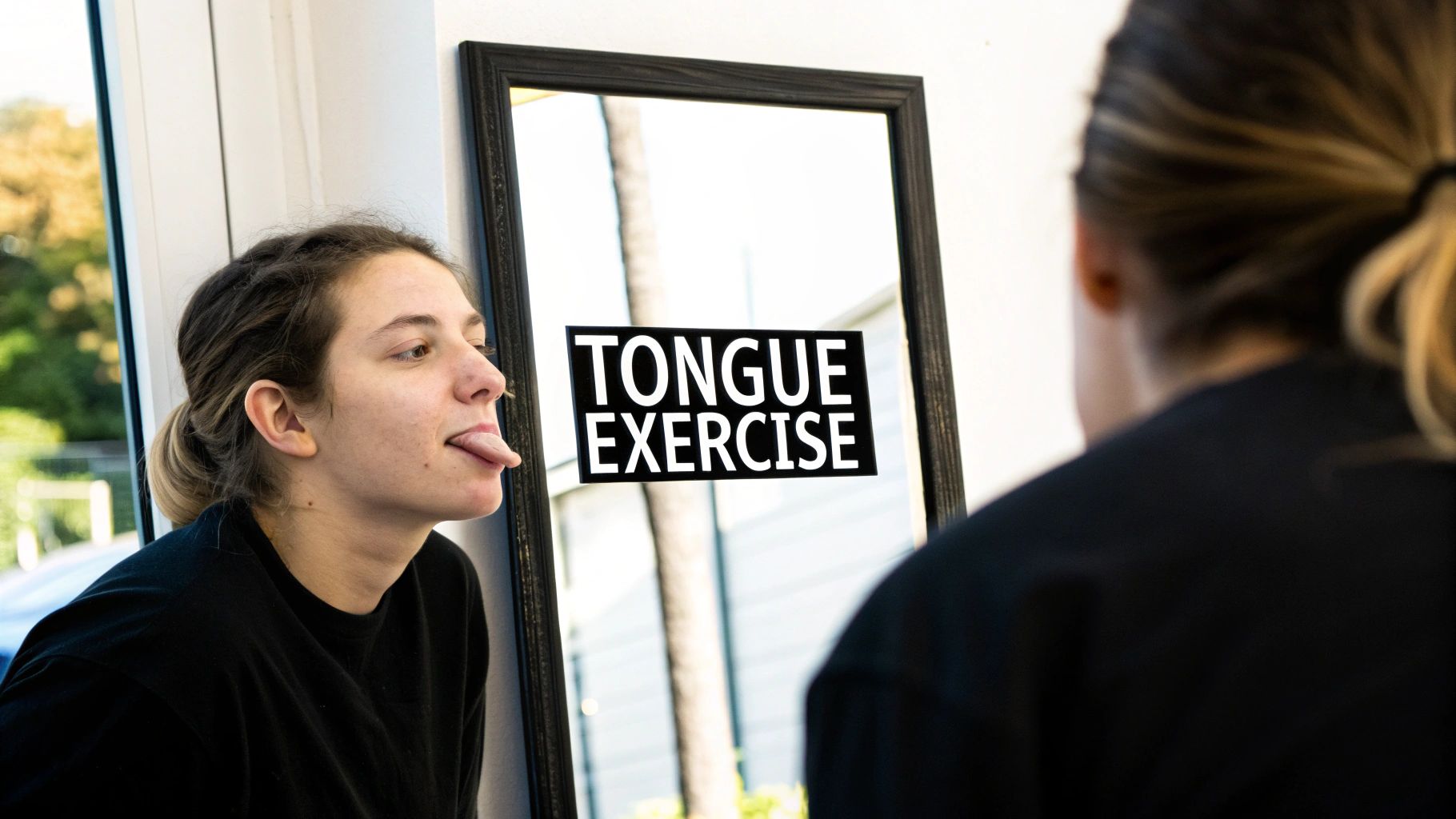
Trying to figure out how to stop tongue thrusting? Myofunctional therapy offers practical exercises with a proven track record. These exercises help retrain your oral muscles, correcting your tongue's position and improving its function. This isn't just quick advice; it's about building new, lasting habits.
Retraining Your Tongue: The How And Why
Myofunctional therapy aims to improve how your oral muscles work. The core idea is that these muscles, like any other muscles, can be trained and strengthened. This is especially important for correcting habits like tongue thrusting, which stem from poor muscle coordination.
The tongue is essential for swallowing, speaking, and even breathing. When your tongue rests incorrectly or doesn't function properly, it can disrupt these processes. This can cause problems like speech impediments or misaligned teeth.
Effective Exercises For Targeted Correction
Myofunctional therapy uses various exercises to focus on specific muscle groups and address different aspects of tongue thrusting. The exercises are designed to be progressive. You'll begin with easier movements, gradually increasing complexity as your muscles get stronger.
-
Tongue Spot Exercises: These involve holding your tongue against a specific spot on the roof of your mouth, usually just behind your front teeth. This trains your tongue to rest in the correct position.
-
Butterfly Presses: Gently pressing your lips together and holding strengthens the muscles around your lips and cheeks. This indirectly improves tongue positioning by balancing the overall oral musculature.
-
Proprioceptive Techniques: These increase awareness of your tongue's position and movement. These might involve using small tools or performing exercises that provide sensory feedback, helping you become more mindful of your tongue habits.
You can learn more about these techniques here: How to master these and other exercises.
Putting It Into Practice: Timeline and Troubleshooting
Each myofunctional exercise has specific instructions to get the best results. Consistency is key. Therapists often recommend practicing these exercises several times a day, for short periods.
While everyone is different, you might see noticeable improvements within a few weeks of consistent practice. However, long-term correction can take several months.
Common challenges include difficulty maintaining the correct tongue posture and forgetting to practice regularly. A practice log and reminders can help. Working with a qualified myofunctional therapist offers personalized guidance and support. They can address your specific needs and adapt the exercises accordingly. Their expertise is essential for lasting results.
Beyond Exercises: Orthodontic Appliances for Tongue Thrust Correction
Sometimes, exercises alone aren't enough to address a tongue thrust. In these situations, orthodontic appliances can be effective tools. These appliances work in various ways, from physically retraining the tongue's position to providing sensory feedback that helps break the habit. Let's explore how orthodontists evaluate tongue thrust and choose the most suitable appliance for each individual.
Evaluating Tongue Thrust and Choosing the Right Appliance
Orthodontists use several methods to assess tongue thrust. These methods often include a visual examination of the mouth and jaw, observing swallowing patterns, and analyzing speech. The orthodontist will also consider the severity of the tongue thrust, the patient's age, and any other dental issues.
This comprehensive evaluation helps determine the most appropriate appliance. For some, a palatal crib might be recommended. This device sits on the roof of the mouth and has a small wire cage that prevents the tongue from pushing forward. It acts as a physical barrier, retraining the tongue to rest in the correct position.
For others, a tongue reminder appliance might be better suited. These appliances are custom-made and typically have a small projection behind the front teeth. When the tongue thrusts forward, it touches this projection, providing sensory feedback that discourages the habit.
Another option is a specialized retainer designed for tongue retraining. These retainers have features that guide the tongue into its proper resting position and encourage correct swallowing patterns even after braces are removed.
Understanding Appliance Types and Their Function
To understand the various approaches to tongue thrust correction, let's compare the features and uses of each appliance type in the table below:
To help clarify the different appliances available, the following table summarizes key information:
Comparison of Tongue Thrust Correction Appliances
This table compares different orthodontic appliances used to correct tongue thrusting, their features, and effectiveness.
| Appliance Type | How It Works | Best For | Treatment Duration | Considerations |
|---|---|---|---|---|
| Palatal Crib | Creates a physical barrier to prevent forward tongue thrusting | Moderate to severe tongue thrust | Varies, typically several months | May initially affect speech; requires regular adjustments by the orthodontist |
| Tongue Reminder Appliance | Provides sensory feedback to discourage the tongue thrusting habit | Mild to moderate tongue thrust; habit breaking | Several months to a year | May cause slight initial discomfort; requires consistent wear |
| Specialized Retainer | Guides the tongue into the correct position during and after orthodontic treatment | Maintaining corrected tongue position after braces | Long-term wear, as needed | Important for relapse prevention; requires diligent oral hygiene |
This table provides a quick overview of the various appliances used in tongue thrust correction, highlighting their mechanisms, ideal applications, typical treatment durations, and important factors to consider.
Adjustments, Comfort, and Treatment Timelines
Adjusting to any orthodontic appliance requires time and patience. With a palatal crib, speaking and eating might feel different at first. Some patients experience increased salivation or difficulty pronouncing certain sounds. Regular adjustments by the orthodontist are essential for ensuring a proper fit and comfort.
Tongue reminder appliances may also cause initial discomfort, though most patients adapt quickly. Consistent wear is essential for the appliance to be effective. Treatment duration varies, but it typically lasts several months to a year, depending on the severity of the tongue thrust.
Specialized retainers are often worn long-term, frequently after braces are removed. This helps maintain the corrected tongue position and prevent relapse. Maintaining good oral hygiene is crucial to prevent plaque buildup around the appliance.
Orthodontic solutions for tongue thrust require commitment, but they offer a significant opportunity to achieve lasting results. When combined with myofunctional therapy, these approaches can greatly improve oral health, speech, and overall well-being.
Speech Therapy Approaches For Correcting Tongue Thrust

Speech therapy offers effective strategies to correct tongue thrust, working with the whole oral-motor system. This approach goes beyond simple exercises. It focuses on retraining the muscles and coordination involved in both speech and swallowing. Let's explore how speech-language pathologists evaluate and treat tongue thrust, highlighting their specialized expertise.
Articulation Therapy: Refining Specific Sounds
Articulation therapy is a cornerstone of addressing tongue thrust. This therapy aims to improve the clarity and precision of speech sounds. Speech therapists guide individuals in correcting the placement, manner, and voicing of sounds affected by the thrust.
For instance, someone with a tongue thrust may struggle with sounds like /s/, /z/, /t/, /d/, /n/, and /l/. These sounds demand precise tongue movements, which can be disrupted by a forward tongue posture.
Articulation therapy uses targeted exercises and activities. This helps individuals learn the correct tongue positions for these sounds. The result is clearer speech and reinforced proper tongue placement during swallowing.
Oral Awareness Exercises: Boosting Sensory Input
Oral awareness exercises are another key element of speech therapy for tongue thrust. These exercises enhance an individual’s awareness of their tongue’s position and movement. This heightened awareness is vital for breaking the habit of tongue thrusting and establishing new, healthy patterns.
These exercises may include holding the tongue against specific points in the mouth. They may also involve moving the tongue in various directions, or practicing different swallowing techniques. For more detailed information, check out How to master these techniques.
Oral awareness exercises offer sensory feedback, training the brain to recognize and maintain the correct tongue position. This promotes lasting changes in tongue habits.
Speech Drills: Developing New Habits
Speech therapists utilize specific speech drills to strengthen and coordinate the muscles used in speech and swallowing. These drills often involve repeating sounds, syllables, words, and phrases. The focus is on targeting the problematic tongue movements linked to tongue thrusting.
These drills build muscle memory and reinforce correct tongue placement. Over time, these new movements become automatic, replacing the old tongue thrusting habit. This leads to improved speech clarity and better oral posture.
Consistent practice solidifies these positive changes in tongue habits. Ultimately, this enhances communication and minimizes the risk of dental problems. Speech therapy provides a valuable avenue for correcting tongue thrust and improving oral health.
The Role of Diet and Eating Habits
Believe it or not, what you eat and how you eat can impact your tongue's position. Chewing firmer foods like crunchy fruits and vegetables strengthens the muscles used for swallowing. This, in turn, encourages proper tongue movement. Think about the difference between biting into a crisp apple and eating a spoonful of yogurt. The apple requires more muscle engagement, giving your tongue a mini-workout.
Focusing on mindful eating can also improve your awareness of your tongue’s position. Mindful eating involves paying close attention to the mechanics of chewing and swallowing. Taking smaller bites, chewing thoroughly, and swallowing deliberately reinforces correct tongue movements. Mealtimes become opportunities to practice what you’ve learned in therapy.
Breathing Habits and Their Impact on Tongue Position
Breathing and tongue position are closely connected. Mouth breathing, often caused by allergies or nasal congestion, can push the tongue forward. This reinforces the tongue thrusting habit. On the other hand, nasal breathing helps the tongue rest correctly against the roof of the mouth.
Making a conscious effort to breathe through your nose throughout the day, even outside of specific exercises, supports proper tongue placement. Try techniques like diaphragmatic breathing or using nasal strips to encourage nasal breathing. This consistent reinforcement is key to correcting your tongue position.
Posture, Sleep, and Stress Management
Maintaining good posture helps align your head and neck, which directly influences tongue position. Sitting and standing upright with relaxed shoulders encourages a neutral head position, benefiting your tongue’s resting place.
Your sleep position matters too. Sleeping on your back with proper neck support helps maintain a neutral tongue posture throughout the night. Try to avoid sleeping on your stomach, as this often forces the tongue forward.
Finally, stress can worsen many habits, including tongue thrusting. Managing stress through techniques like meditation, yoga, or deep breathing exercises can prevent stress-induced relapses. This comprehensive approach considers both the physical and mental aspects of successful tongue thrust correction.
Tracking Your Progress: Long-Term Success

Correcting a tongue thrust is a journey, not a quick fix. Maintaining progress is just as important as the initial improvements. This section outlines how to maintain results for the long haul. We'll explore key progress indicators, self-monitoring strategies, and ways to prevent old habits from creeping back in.
Objective Signs of Improvement
How can you tell if your efforts are making a difference? Several clear signs indicate real progress in correcting a tongue thrust. You might see changes in how you swallow. Your tongue might no longer press against your teeth during swallowing. Improved dental alignment is another positive sign. Teeth that were misaligned may begin shifting back into their correct positions.
Monitoring Techniques and Relapse Prevention
You can actively track your progress with several techniques. Try the water swallowing test discussed earlier. Focus on your tongue's position as you swallow. Another method is to regularly check your tongue’s resting position. Is it resting against the roof of your mouth as it should be? Or is it pressing against your teeth?
Sustaining progress takes consistent work. Old habits can return, particularly during stressful times. If you revert to tongue thrusting when anxious, stress management techniques like deep breathing exercises can be beneficial.
Building Sustainable Habits
Just as athletes stay fit with regular training, maintaining corrected tongue posture requires a consistent routine. Incorporate myofunctional exercises into your daily schedule, much like brushing your teeth. Even short practice sessions spread throughout the day can significantly contribute to long-term success in stopping tongue thrust.
It's also important to recognize when additional support might be needed. If old habits resurface or you're struggling to maintain progress, don't hesitate to contact your speech therapist or orofacial myologist. They can offer personalized guidance and adapt your treatment plan accordingly.
Myohab offers personalized myofunctional therapy exercises to correct tongue thrust and enhance your overall oral health. Learn more about our program and how we can help you achieve lasting results: Myohab: Personalized Myofunctional Therapy.

