
Understanding Sleep Quality Metrics That Actually Matter
Wonder how to tell if you're really getting good sleep? It's not just about counting hours in bed. Real sleep quality involves several key factors that work together to give you truly refreshing rest.
Key Sleep Quality Metrics
Here are the main measurements sleep experts use to evaluate sleep quality:
-
Sleep Efficiency: This shows what percentage of your time in bed is spent actually sleeping. If you're in bed for 8 hours but only sleep 6 hours, that's 75% efficiency. The goal is 85% or higher for good sleep quality.
-
Sleep Latency: This is how long it takes you to fall asleep after going to bed. A healthy range is 10-20 minutes. Taking longer could point to sleep problems like insomnia.
-
Sleep Architecture: This refers to your nightly sleep cycle patterns through light sleep, deep sleep, and REM sleep. Each phase helps with different aspects of recovery – from physical repair to memory and brain function.
-
Wake After Sleep Onset (WASO): This measures how much time you spend awake during the night after initially falling asleep. While brief wake-ups are normal, longer periods of wakefulness can seriously impact your sleep quality.
Objective and Subjective Sleep Measurement
There are two main ways to measure sleep quality. Objective measures use medical equipment to track things like brain waves and eye movements. Subjective measures rely on your own reports about how well you slept.
One common subjective tool is the Pittsburgh Sleep Quality Index (PSQI). Created in 1989, this 19-question survey looks at your sleep over the past month and labels you as either a 'good' or 'poor' sleeper. However, research shows it doesn't always match up well with objective sleep lab measurements. Read the full research here
Looking at all these metrics together gives a much better picture of sleep health than just counting hours. Think of it like checking your financial health – you wouldn't just look at your bank balance while ignoring income and expenses. The same goes for sleep – focusing only on time spent in bed misses important details about the quality of your rest. Understanding these different aspects helps identify problems and find ways to improve your sleep, leading to better overall health.
Professional Sleep Assessment: Inside the Sleep Lab
Getting a professional sleep assessment feels a bit like stepping into a high-tech medical drama. These specialized labs combine advanced monitoring equipment with expert staff to give you detailed insights about your sleep that you just can't get at home.
Polysomnography: The Cornerstone of Sleep Studies
Polysomnography (PSG) is the main tool sleep specialists use to study your sleep patterns. Think of it as creating a detailed map of your body's nighttime activities – from your brain waves to your breathing patterns. This comprehensive test captures key data while you rest.
Here's what PSG monitors during your sleep:
- Brain Activity (EEG): Small sensors on your scalp track different sleep stages, showing when you're in light sleep, deep sleep, or REM sleep
- Eye Movements (EOG): Sensors near your eyes watch for movement patterns that indicate REM sleep and dreaming
- Muscle Activity (EMG): Electrodes on your chin and legs detect muscle relaxation and potential movement disorders
- Heart and Breathing: Special sensors track your heart rate and breathing to spot issues like sleep apnea or irregular breathing
Beyond the Basics: Additional Sleep Lab Tools
Sleep labs often use extra tools to build a complete picture of your sleep health:
- Actigraphy: You wear a special wristband device that records movement and rest patterns. For reliable results, you need at least 2 nights of data to measure sleep percentage, 5 nights for sleep efficiency, and 7+ nights for total sleep time. See the full research here: Journal of Clinical Sleep Medicine
- Sleep Diaries and Surveys: These help doctors understand your sleep habits and how poor sleep affects your daily life
What Happens During a Sleep Study?
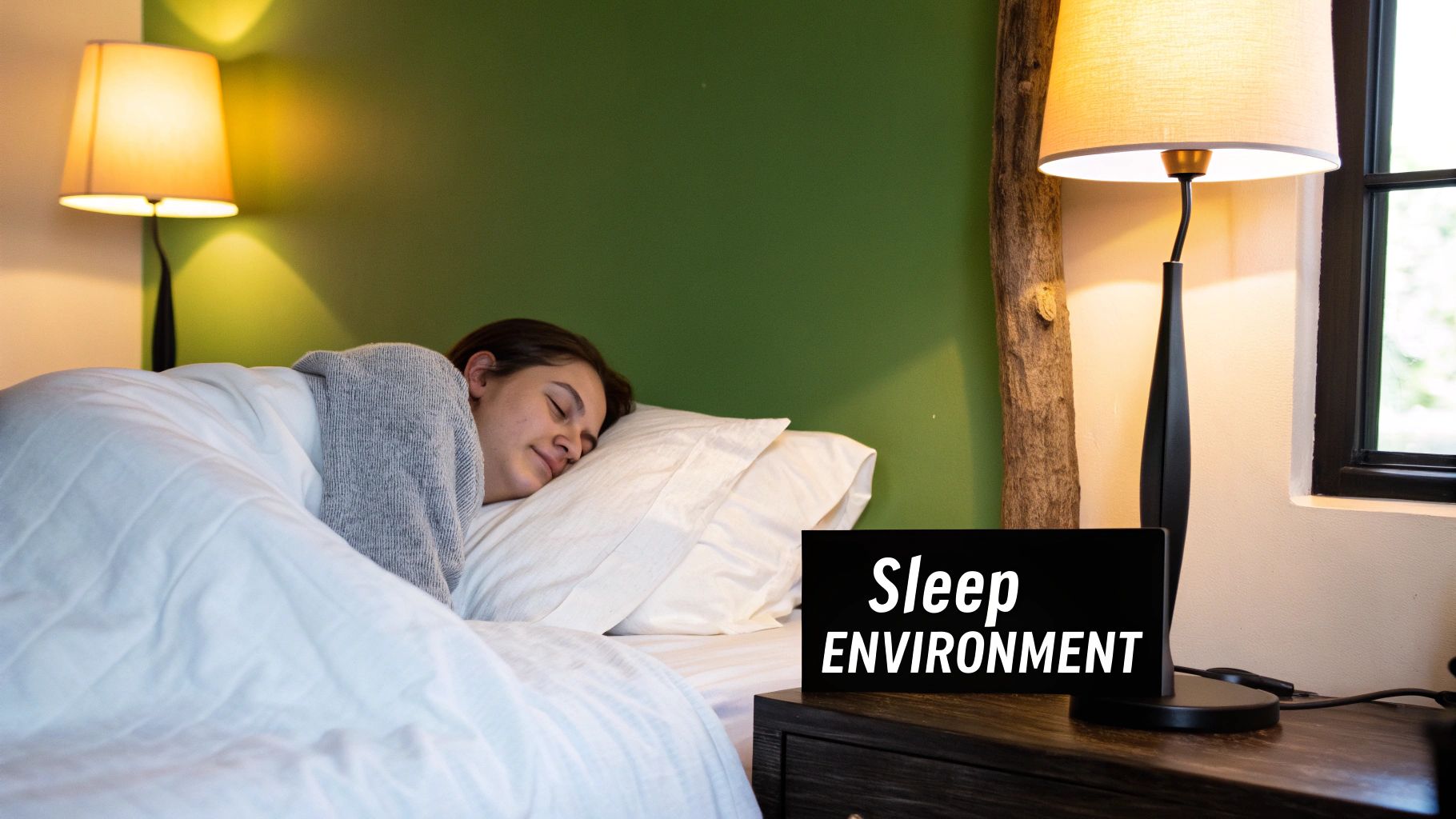
When you arrive for your sleep study, you'll spend the night in a private room that feels like a regular bedroom. The technicians connect you to monitoring equipment and keep an eye on the data throughout the night while ensuring everything works properly.
Interpreting the Data: Finding Answers to Sleep Issues
After your study, a sleep specialist carefully reviews all the collected information. They look for signs of common problems like sleep apnea, insomnia, or restless legs syndrome. Based on what they find, they create a specific treatment plan just for you. This might include changes to your daily habits, therapy sessions, or medical treatments. Having clear data about your sleep helps you and your doctor make smart choices to improve your rest and overall health.
Maximizing Home Sleep Tracking Success
Getting accurate sleep data at home requires understanding how to use sleep tracking tools effectively. Let's explore how to select the right devices and develop good tracking habits that work for you.
Choosing the Right Sleep Tracking Tools
The market offers several consumer sleep tracking options, from wearables to bed sensors. Each type has strengths and limitations when measuring sleep quality. For example, smartwatches are great at detecting movement patterns, while mattress sensors excel at picking up restlessness and position changes. Your choice should match your specific needs and budget.
- Smartwatches and Fitness Trackers: These wrist-worn devices track movement and heart rate to estimate sleep stages and duration. While convenient for daily wear, they may struggle with accurately detecting lighter sleep.
- Smart Rings: Worn on your finger, these focus on heart rate variability (HRV) and blood oxygen levels during sleep. They're less bulky than watches but may miss some movement data.
- Mattress Sensors: These sit under your mattress to detect movement and pressure changes. They're invisible during sleep but can be thrown off by a partner's movements.
- Smartphone Apps: Using your phone's motion sensors, these apps track sleep patterns. They're readily available but generally less precise than dedicated devices.
Combining Tracking Methods for Better Insights
Like sleep labs that use multiple measurement tools, using two or more tracking methods at home can give you better data. For example, pairing a smartwatch's movement tracking with a smart ring's HRV monitoring provides a more complete picture of your sleep quality. When both devices show signs of deep sleep, you can be more confident in the data.
Avoiding Common Sleep Tracking Pitfalls
While sleep tracking tools can be helpful, don't let the numbers control you. Too much focus on tracking can lead to sleep anxiety, where worrying about "perfect" sleep metrics actually makes it harder to rest well. Remember that these devices provide estimates rather than exact measurements. You might be interested in: How to master…
Building Sustainable Sleep Monitoring Habits
Consistent tracking gives the most useful data, but wearing devices every night isn't always practical. Find a routine that fits your lifestyle – maybe track during weekdays and take breaks on weekends. Develop a sustainable routine that helps you understand your sleep without becoming a source of stress. The goal is to use the data to improve your rest, not to chase perfect numbers. In the next section, we'll look at how to make sense of all this sleep data.
Turning Sleep Data Into Actionable Insights
You've been tracking your sleep faithfully, and now you have mountains of data. But what's next? The real challenge is figuring out what those numbers mean for your sleep quality and how to use them to sleep better.
Identifying Meaningful Patterns in Your Sleep Data
Think of yourself as a sleep detective looking for clues. One bad night's sleep doesn't tell the whole story – it's the patterns that matter. When your sleep efficiency stays below 85% for several nights, that's worth investigating. Just like connecting multiple pieces of evidence, repeated sleep patterns point to underlying issues that need attention.
Red Flags vs. Normal Variations: Knowing When to Worry
Your sleep metrics will bounce around naturally, just like your daily heart rate or weight. But some patterns deserve a closer look. If you notice consistently high WASO (time spent awake after falling asleep) along with poor sleep efficiency, you might be dealing with insomnia. The key is knowing your normal ranges so you can spot real problems when they arise.
When to Seek Professional Guidance
While sleep tracking apps provide great insights, they can't replace a doctor's expertise. If you see ongoing issues like taking too long to fall asleep or poor sleep efficiency that doesn't improve with lifestyle changes, it's time to talk to a sleep specialist. This is especially important when sleep problems start affecting your daily life and well-being.
Using Data to Optimize Your Sleep Habits
The best way to improve your sleep is to experiment and track what works for you. Maybe your data shows you sleep better on exercise days, or that afternoon coffee wrecks your night. These personal insights help you build better sleep habits that work for your body. It's like running small experiments – your sleep data reveals which changes actually help you rest better.
Avoiding Critical Sleep Measurement Mistakes
Getting good sleep data can help you rest better, but some common tracking mistakes can actually make your sleep worse. Let's look at what to watch out for so you can use sleep tracking in a helpful way.
When Tech Takes Over
Your sleep tracker is just one tool – not the whole story. While devices give useful information, they're not perfect. Your smartwatch might think you're in light sleep when you're actually just turning over. Getting too wrapped up in the numbers can make you anxious about sleep, which ironically makes it harder to drift off.
Making Sense of Sleep Stats
Looking at your sleep data is like checking the weather – one stormy day doesn't mean there's a climate crisis. Your sleep patterns naturally go up and down, just like everything else in your body. If you notice low sleep quality scores for weeks on end, that's worth investigating. But don't stress about occasional "bad" nights. Learn more in our article about How to master…
When Tracking Becomes an Obsession
Some people develop orthosomnia – they get so focused on hitting perfect sleep scores that it backfires. Checking your stats constantly creates stress that makes good sleep harder to achieve. Remember, the goal is feeling refreshed, not hitting specific numbers.
Smart Ways to Track Your Sleep
Here's how to use sleep tracking wisely without letting it control you:
- Watch Weekly Patterns: Look at your sleep over time instead of fixating on single nights
- Trust Your Body: If you feel tired despite "good" sleep scores, listen to that feedback
- Take Tracking Breaks: You don't need to measure every single night
- Use Multiple Clues: Combine what your device says with how you actually feel
Following these guidelines helps you get valuable insights from sleep tracking while avoiding the pitfalls. This balanced approach leads to genuinely better rest.
Building Your Personalized Sleep Quality Strategy
Getting better sleep starts with understanding your unique needs and finding a monitoring approach that fits your lifestyle. Let's explore how to build an effective strategy that works for you.
Defining Your Sleep Goals and Needs
Start by identifying what you want to achieve with sleep tracking. Are you dealing with frequent wake-ups, feeling tired during the day, or just curious about your sleep patterns? Your specific goals will help determine which tracking methods make the most sense. For instance, if you're concerned about breathing issues during sleep, you'll want to focus on monitoring your breathing patterns.
Selecting the Right Combination of Tools
Professional sleep clinics use multiple tools to get a complete picture of sleep quality, and you can take a similar approach at home. You might pair a smartwatch for tracking sleep stages with a simple sleep diary to note lifestyle factors affecting your rest. Check out our guide on sleep apnea and its causes to learn more about tracking breathing during sleep.
Establishing a Realistic Tracking Routine
While consistent tracking provides the best data, trying to monitor every single night can quickly become too much. Find what fits into your life – maybe that's tracking during weekdays and taking breaks on weekends. The key is creating habits you can maintain long-term without feeling overwhelmed.
Adjusting Your Approach Based on Changing Needs
Your sleep needs will likely change over time. Once you've addressed initial concerns like falling asleep, you may want to focus on improving sleep quality. Be ready to adapt your tracking methods and routine as your goals evolve.
Practical Implementation Steps
Here's how to get started:
- Set Clear Goals: Write down what you want to achieve (better sleep quality, less waking up, etc.)
- Pick Your Tools: Choose tracking methods that match your goals and budget
- Make a Plan: Decide on your tracking schedule
- Track Consistently: Keep regular records of your sleep data
- Review and Adjust: Look for patterns and modify your approach as needed
Maintaining Consistent Monitoring (Without Losing Your Mind)
Sleep tracking should help, not stress you out. Don't get caught up in chasing perfect numbers. Focus on how you feel and take breaks from tracking if you notice yourself becoming anxious about the data. The goal is better sleep, not perfect tracking.
Benchmarks and Progress Evaluation
Set realistic targets for your key sleep metrics based on your personal patterns. Check your progress against these benchmarks regularly to see how your sleep is improving. This helps maintain perspective on your sleep journey.
By finding the right mix of tracking tools and establishing sustainable habits, you can create an approach that helps you achieve truly restful sleep. Want to improve your sleep quality further? Discover how myohab can help with exercises designed to address breathing issues during sleep.

