
Understanding the Power of Optimal Nasal Breathing

Most of us breathe without giving it much thought, but how we breathe makes a real difference to our health. While we can breathe through both nose and mouth, nasal breathing gives us some clear advantages. Think of your nose as nature's air filter and conditioning system – it prepares each breath perfectly before it reaches your lungs by cleaning, warming and moistening the air.
Why Nasal Breathing is Superior
Your nose is built specifically for breathing efficiently. Inside, you have these amazing structures called nasal turbinates – think of them as tiny ridges covered in special membranes that create more surface area for air to flow over. As air passes through, these structures warm it up and add moisture, which protects your lungs. The mucus in your nose also catches dust and other particles you definitely don't want in your lungs. This natural filtering system keeps your breathing clean and smooth.
But here's something really interesting – nasal breathing also triggers the production of nitric oxide, a tiny but powerful molecule your body needs. When you breathe through your nose, this molecule travels with the air into your lungs. It helps your body absorb oxygen better, keeps your blood pressure healthy, and even fights off bacteria. It's like getting a free health boost with every breath.
The Impact of Nasal Breathing on Health and Performance
The benefits of breathing through your nose go way beyond just getting air in and out. Athletes have long known this secret – they often train themselves to breathe nasally to perform better and feel less out of breath during exercise. Better nasal breathing can also help you sleep more soundly and think more clearly.
Your nose breathing also affects your body's natural relaxation system. When you breathe slowly through your nose, it triggers your "rest and digest" response, helping you feel calmer and less stressed. Recent research shows just how powerful this can be. A 2024 study found that people with heart conditions saw big improvements when they breathed through their nose during exercise. 93% of heart failure patients and 80% of patients with chronic coronary issues breathed more efficiently this way. They needed 35% less ventilation for the same activity and their breathing rate dropped by 26%. You can check out more details in the full research paper here. These findings show just how much of a difference proper nasal breathing can make for your overall health and well-being.
Breaking Down Barriers to Better Breathing
Many people struggle with nasal breathing but don't understand why. The first step to improving your breathing is identifying what's getting in the way. Let's look at the common issues that can make nose breathing difficult and what you can do about them.
Structural Issues
The physical shape of your nose can make breathing harder than it should be. A deviated septum, where the wall between your nostrils bends to one side, often narrows the breathing passages. Some people develop nasal polyps – small growths that block airflow. Others have enlarged turbinates, the bony structures in your nose that can swell up and restrict breathing space. These physical barriers often require medical attention to resolve.
Environmental Triggers
Your surroundings have a big impact on how well you breathe. Common allergens like dust, pollen, and pet dander can stuff up your nose. Strong scents, smoke, and chemicals can also irritate your nasal passages and make them swell. Even the amount of moisture in the air matters – very dry air tends to worsen congestion and make breathing uncomfortable.
Lifestyle Factors
Some everyday habits can actually make breathing problems worse. For instance, using decongestant nasal sprays too often leads to rebound congestion – where your nose becomes even more stuffed up over time. Spending long hours in air-conditioned rooms dries out your nasal passages. Even poor posture can compress your chest and make breathing harder. Read also: How to master better breathing
Identifying Your Breathing Obstacles
To improve your breathing, first check if you have these common signs of blocked nasal passages:
- Noticeable congestion: Does your nose feel stuffed up often?
- Mouth breathing: Do you breathe through your mouth, especially at night?
- Snoring: Do you or others notice you snoring?
- Reduced sense of smell: Is it harder to smell things than before?
- Facial pressure or pain: Do you feel pressure around your nose and sinuses?
- Frequent headaches: Do you often get headaches?
Answering yes to several of these questions suggests you likely have some nasal breathing issues. Once you know what's blocking your breathing, you can take steps to fix the underlying problems and breathe more freely through your nose.
Mastering Nighttime Nasal Breathing
Breathing through your nose while sleeping is crucial for waking up feeling refreshed and energized. Many people struggle with nighttime nasal breathing, but with the right approach, you can train your body to maintain clear nasal passages throughout the night. Let's look at simple ways to make nasal breathing easier during sleep.
Preparing for Nighttime Nasal Breathing
Getting your nose ready for sleep is like preparing for any other nighttime routine. A few simple steps before bed can make a big difference in how well you breathe while sleeping.
- Nasal Irrigation: Think of this as giving your nose a gentle shower before bed. Using a simple saline rinse helps wash away dust, pollen, and other irritants that could block your breathing during sleep.
- Humidification: Your nose works best when the air isn't too dry. Running a humidifier in your bedroom adds moisture to the air, making breathing more comfortable. This is especially helpful if you live in a dry climate or use heating during winter.
- Essential Oils: A few drops of peppermint or eucalyptus oil can help open up your airways naturally. Try putting a drop on your pillow or using a diffuser next to your bed.
Optimizing Your Sleep Environment
Your bedroom setup plays a big role in how well you breathe at night. Small changes to your sleep space can have a surprising impact on your breathing quality.
- Pillow Positioning: Adding an extra pillow or using a wedge pillow helps gravity work in your favor. When your head is slightly elevated, mucus drains better and your airways stay clearer.
- Air Quality: Clean air means easier breathing. Keep your bedroom well-ventilated and free of common irritants like dust and pet hair. An air purifier can help keep the air clean while you sleep.
- Temperature Control: Keep your bedroom cool – around 65 degrees Fahrenheit is ideal. When a room is too warm, it can dry out your nasal passages and make breathing harder.
Addressing Underlying Issues
Sometimes nighttime breathing problems point to deeper issues that need attention. Taking care of these root causes often leads to better results than just treating symptoms.
- Allergies: If you often wake up congested, consider getting tested for allergies. Finding out what triggers your symptoms lets you take specific steps to avoid them, whether through medication or lifestyle changes.
- Structural Problems: Physical issues like a crooked septum or nasal polyps can block airflow. Research shows that fixing these problems helps 98% of sleep apnea patients and reduces snoring in 34% of cases. Learn more about the connection between nasal structure and sleep.
- Myofunctional Therapy: This therapy helps strengthen the muscles in your face and mouth. It's particularly helpful for children and can improve issues like tongue position that affect breathing. Think of it as physical therapy for your mouth and airways.
Using these strategies consistently can lead to better nasal breathing at night and more refreshing sleep. Start with one or two changes and build from there as you find what works best for you.
Breakthrough Techniques for Enhanced Nasal Breathing

Getting better at breathing through your nose takes practice and the right techniques. Let's look at some proven methods that combine time-tested practices with modern research to help you breathe more freely through your nose.
Breathing Exercises for Nasal Airflow
Simple breathing exercises can make a big difference in how well you breathe through your nose. Think of these as a daily workout for your breathing muscles.
- Belly Breathing: Place one hand on your chest and another on your stomach. As you breathe in through your nose, feel your belly rise while your chest stays still. Let the air out slowly through your mouth. This helps train your diaphragm and makes nasal breathing feel more natural.
- One Nostril at a Time: This classic yoga technique is simple but effective. Close one nostril with your finger, breathe in through the open nostril, then switch sides to breathe out. You can do this anywhere, and it helps balance your breathing between both sides of your nose.
- Whistle Breathing: Breathe in through your nose, then purse your lips like you're about to whistle and breathe out slowly. This helps you control your breath and works great during exercise or when you feel short of breath.
Nasal Hygiene Practices for Clear Passages
Keeping your nasal passages clean helps you breathe better. These simple cleaning methods can make a big difference.
- Salt Water Rinse: Using a neti pot or nasal rinse bottle with salt water helps wash away mucus and irritants. It's gentle and works well to keep your nose clear.
- Steam Benefits: Breathing in warm steam helps loosen up mucus and moistens dry nasal passages. Try adding a few drops of eucalyptus oil for extra help with congestion.
Targeted Exercises for Nasal Muscle Strengthening
Just like any other muscles, the ones around your nose can get stronger with practice.
- Resistance Training: Special breathing devices provide gentle resistance when you breathe in, helping strengthen the muscles that open your nostrils.
- Face Exercises: Simple moves like flaring your nostrils or wrinkling your nose might look funny, but they help tone the muscles that control your nasal passages.
Creating a Personalized Approach
Everyone's nose is different, so what works for someone else might not work for you. Start by trying one or two of these techniques each day. Pay attention to how your breathing changes and stick with what feels right. With regular practice, you'll notice breathing through your nose becomes easier and more natural.
Creating Your Optimal Breathing Environment

The air you breathe has a huge impact on how well you can breathe through your nose. By making some simple changes to your home and workspace, you can create an environment that supports healthy breathing. Let's look at practical ways to improve the air quality around you.
Managing Air Quality for Optimal Breathing
Clean air is essential for keeping your nasal passages clear and healthy. Common irritants like dust, pollen, and pet dander can block your airways and make breathing difficult. For instance, those tiny dust mites that live in our bedding are one of the main triggers for stuffy noses and allergies.
Here's how to keep your air clean:
- Air Purifiers: Get a good air purifier with a HEPA filter – it can catch even microscopic particles that irritate your nose
- Regular Cleaning: Make dusting and vacuuming part of your weekly routine, especially in bedrooms where you spend 8+ hours breathing
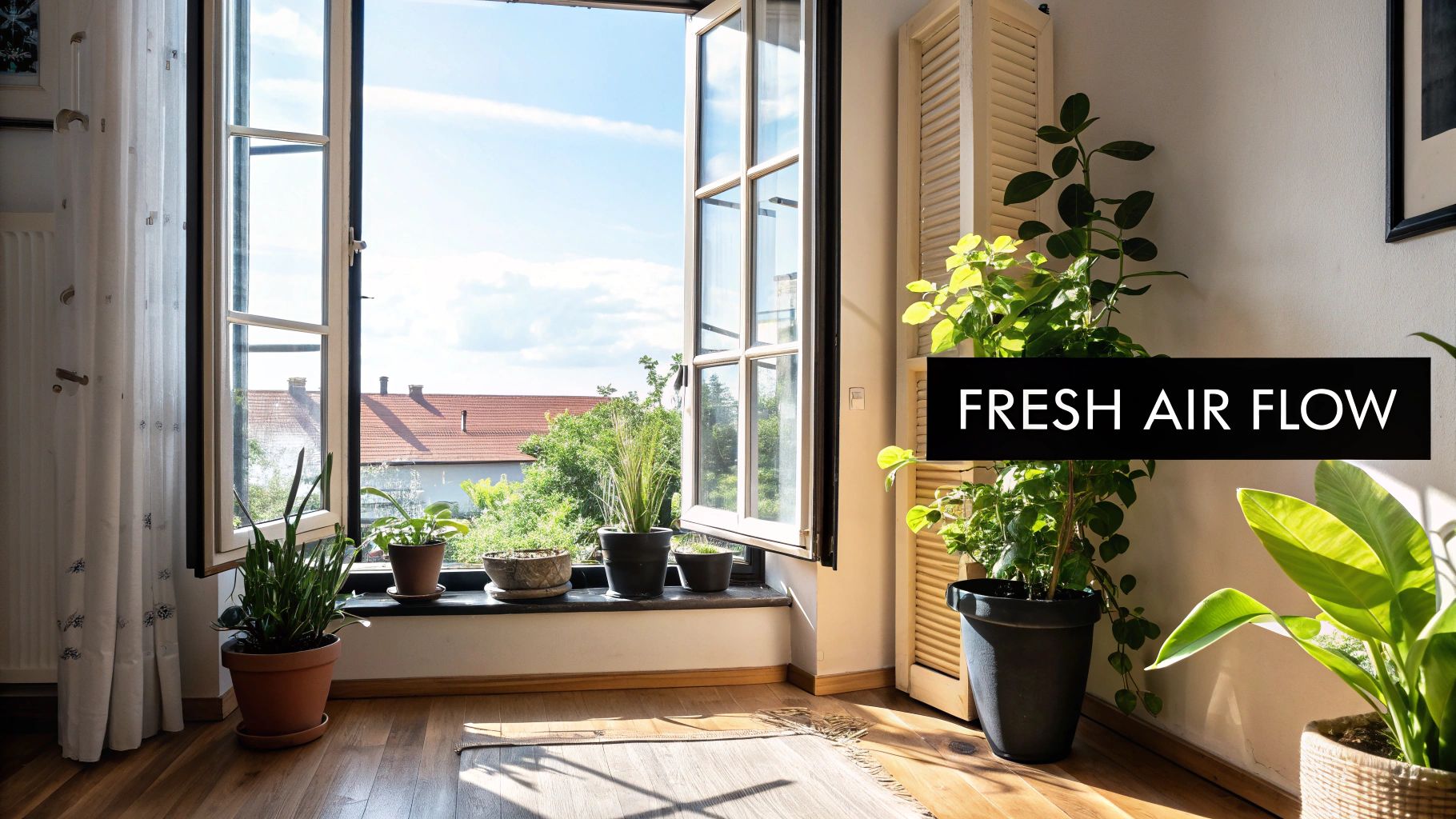
- Fresh Air Flow: Open your windows for 15-20 minutes daily to cycle out stale air, ideally when pollution levels are lowest
Humidity Control for Nasal Breathing
The moisture level in your air makes a big difference for your nose. Too dry, and your nasal passages get irritated and inflamed. Too humid, and you risk mold growth that can trigger breathing problems.
Try these humidity helpers:
- Humidifiers: Add moisture during dry winter months or in dry climates – aim for 30-50% humidity for comfortable breathing
- Dehumidifiers: Remove excess moisture in damp spaces to prevent mold and dust mites
- Natural Methods: Place some leafy plants around your space or set out bowls of water near heat sources to gently increase humidity. Learn more: How to master nasal breathing in various environments
Managing Seasonal Challenges for Improved Nasal Breathing
Different seasons bring different breathing challenges. Spring fills the air with pollen, fall with mold spores, and winter brings dry indoor heating that can irritate your nose.
Here's how to handle each season:
- Allergy Season: Take allergy medicine before symptoms start, keep windows closed when pollen counts are high, and change clothes after being outside
- Nasal Rinses: Use a simple saline rinse daily to flush out irritants – it's like giving your nose a shower
- Winter Care: Run a humidifier at night, and put a thin layer of petroleum jelly just inside your nostrils to protect from dry air
Small changes to your environment can make breathing much easier. By following these practical steps, you'll create spaces where your nose can do its job properly. Remember that consistent habits matter more than perfect solutions – pick one or two changes to start with and build from there.
Experiencing Life Through Better Breathing
When you breathe properly through your nose, you simply feel better – more alive, more energetic, more present. This fundamental shift in breathing impacts everything from your morning alertness to your ability to handle daily challenges. The benefits ripple out into both your work performance and personal connections.
Breathing Easier, Living Better
Good nasal breathing gives your body exactly what it needs – the right amount of oxygen at the right time. This shows up as having more energy throughout your day, thinking more clearly, and feeling more balanced overall. When you breathe well through your nose, you're also better equipped to handle stress. Those challenging moments at work or home become more manageable when you can stay calm and centered through proper breathing.
For example, picture yourself giving an important presentation. With steady nasal breathing, you'll likely feel more composed and focused, rather than getting thrown off by nerves. The same goes for social situations – proper breathing helps you stay engaged in conversations rather than feeling anxious. You might be interested in: How to master more about Myohab categories.
The Ripple Effect of Better Breathing
One of the biggest impacts of improved nasal breathing shows up at night. When you maintain good airflow while sleeping, you wake up feeling genuinely refreshed instead of groggy. This better sleep naturally leads to better moods, sharper focus, and an easier time dealing with daily stress.
Research backs this up, particularly for people who snore. A study of men with snoring issues found major improvements in their quality of life after enhancing their nasal breathing. Before treatment, these men scored 13.5 on the Nottingham Health Profile (NHP), while the control group scored 6.0. After improving their breathing, less than a third scored above 50 – showing real, measurable progress. Their sleep partners also reported sleeping better, showing how one person's improved breathing can benefit others. Learn more about this research here.
Tracking Your Progress and Maintaining Gains
Like any health improvement, keeping track helps you stay on course. Try keeping a simple breathing journal to note when you breathe through your nose versus your mouth. Write down changes in your energy, sleep quality, and overall mood. Remember to celebrate small wins – they add up over time.
Here are some clear signs of progress to watch for:
- More nasal breathing: Notice if you can breathe through your nose for longer periods, both day and night
- Less mouth breathing: Pay attention to how naturally you switch to nose breathing, even during exercise
- Better sleep: Keep track of your sleep hours and morning energy levels
- Lower stress: Notice if you handle tense situations more calmly
By practicing these breathing techniques regularly and tracking how you feel, you can build lasting habits that improve your health and daily life. Ready to breathe better and feel better? See how myohab's personalized myofunctional therapy can guide you toward optimal breathing. Visit myohab.com to start your journey to healthier breathing and improved wellbeing.

