
Understanding the Impact of Tongue Posture
When you're not eating or speaking, where does your tongue naturally rest? This question leads us to oral rest posture – the ideal position of your tongue in your mouth during times of rest. While it may seem like a minor detail, tongue posture deeply affects your facial development, breathing patterns, sleep quality, and even how you speak.
The Connection Between Tongue Posture and Overall Health
The right way to position your tongue is simple but precise – it should rest against the roof of your mouth, with a gentle suction upward and the tip touching just behind your upper front teeth. This placement is especially important for children, as it supports healthy craniofacial development by helping the palate grow properly and encouraging breathing through the nose. When the tongue sits too low in the mouth, it can lead to problems like a narrow palate, crowded teeth, and mouth breathing.
Think of your palate as the foundation of your facial structure. Just as a building needs proper support to grow upward, your face needs the gentle pressure of correct tongue posture to develop outward rather than inward. This is particularly crucial during childhood when facial bones are still growing and forming.
Good tongue posture does more than shape your face – it helps you breathe better through your nose. Nasal breathing filters out particles, warms the air you breathe, and maintains proper humidity levels. It also triggers the production of nitric oxide, which helps regulate blood pressure and support your immune system. In contrast, breathing through your mouth (often linked to poor tongue posture) can dry out your mouth, make you more likely to get sick, and disrupt your sleep.
The Importance of Early Intervention and Long-Term Implications
How long does it take to fix tongue posture? The answer varies based on several factors, with age being the most important. Young children typically see changes within weeks or months since their bodies are still growing and adapting quickly. For adults, the journey usually takes 6 to 12 months because established habits take longer to change and oral structures are less flexible. Learn more about timing expectations at how long it takes to fix tongue posture. You might also find helpful information here: How to master….
This difference in adaptation time shows why it's so important to address tongue posture early in life. When corrected during childhood, proper tongue position can significantly improve both oral health and overall well-being. But don't worry if you're an adult – you can still benefit from better tongue posture, often seeing improvements in your breathing, sleep quality, and facial appearance.
The effects of tongue posture reach far beyond just how you hold your tongue. By understanding these impacts, you can take the first step toward better breathing, improved sleep, and enhanced overall health through proper oral posture.
Mapping Your Current Tongue Position

Before you can improve your tongue posture, you need to know where your tongue naturally rests. Let's walk through a simple self-check that uses the same techniques professionals use to evaluate tongue position. This will help you spot any issues that need attention.
Identifying Common Tongue Posture Problems
There are two main tongue position problems that can affect your oral health and facial development:
-
Tongue Thrust: This happens when your tongue pushes forward against your teeth or sticks out between them when you swallow, speak, or rest. Over time, this can create an open bite where your front teeth don't meet.
-
Low Tongue Position: If your tongue sits at the bottom of your mouth instead of the roof, you're more likely to breathe through your mouth. This can change how your face develops and make it harder to breathe properly.
Self-Assessment Techniques
Here's how to check your tongue position at home:
-
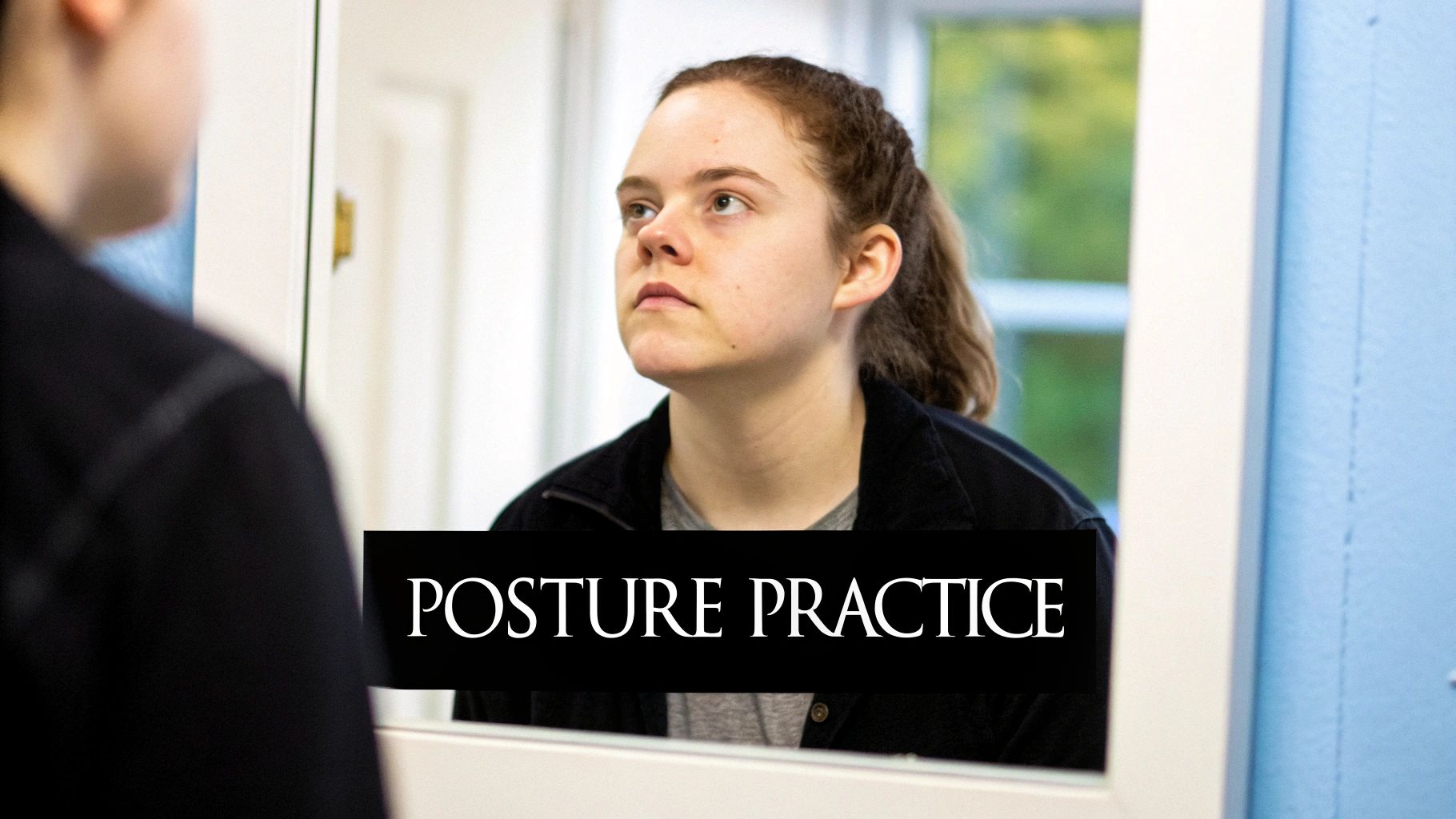
Mirror Check: Find a mirror and sit comfortably. Close your lips gently and relax your jaw. Look at where your tongue sits – is it down low or resting up against the roof of your mouth? The ideal spot is up top.
-
Swallow Check: Pay attention to what your tongue does when you swallow. Does it push against your teeth? If yes, you might have tongue thrust.
-
Feel Test: Put your finger on the roof of your mouth, right behind your top front teeth. That's your tongue's target spot. When your tongue is there, you should feel a gentle suction effect.
Understanding Your Results and Seeking Professional Help
Now that you've checked your tongue position, you have a better idea of what needs work. While some minor issues might get better with practice in just a few weeks, bigger problems like severe tongue thrust often need expert help. A myofunctional therapist can create a plan just for you, with specific exercises to fix any problems.
Some people might need more support, like speech therapy or dental work, especially if they've had these issues for a long time. The key is to be patient and consistent – it's better to take your time and get it right than to rush and create new problems.
Mastering Proper Tongue Positioning
Getting your tongue position right can make a huge difference in your oral health and breathing. Let's walk through exactly how to place your tongue correctly, build good habits both day and night, and strengthen the muscles needed for lasting improvement.
Daytime Tongue Posture: Building Awareness and Habits
Throughout the day, placing your tongue correctly takes focus and practice until it becomes automatic. Think of it like when you first learned to type – at first, you had to look at every key, but eventually your fingers just knew where to go. Here's how to get started:
- Find Your Sweet Spot: Your tongue should rest against the roof of your mouth, with the tip sitting just behind your front teeth. You'll feel a gentle suction when it's in the right spot.
- Practice the Suction Hold: Keep your tongue gently suctioned to the roof of your mouth, like a tiny suction cup. This helps build the muscle strength you need.
- Watch Your Swallow: When you swallow, your tongue should move up toward the roof of your mouth, not push forward against your teeth. This helps retrain poor swallowing habits.
- Set Simple Reminders: Put sticky notes in places you'll see them or set phone alarms to check your tongue position throughout the day. Try checking each time you take a sip of water.
Nighttime Tongue Posture: Maintaining Position During Sleep
Getting your tongue to stay put while you sleep takes extra work, but it's worth it to prevent mouth breathing and snoring. Here are some proven approaches:
- Try Mouth Taping: Using special tape made for this purpose, gently tape your lips closed at night. This encourages breathing through your nose and helps keep your tongue in place.
- Consider an Appliance: If taping isn't for you, talk to a myofunctional therapist about getting an oral device that helps position your tongue and jaw correctly during sleep.
- Sleep on Your Side: Side sleeping naturally helps keep your tongue forward instead of falling back and blocking your airway like it can when you sleep on your back.
Exercises for Strengthening and Coordination
Just like any muscle, your tongue needs specific exercises to get stronger. Here are some effective moves recommended by specialists:
- Tongue Push-Ups: Press your whole tongue firmly against the roof of your mouth and hold for 5 seconds. Do this 10 times to build strength.
- Tongue Sweeps: Move your tongue from front to back along the roof of your mouth, like you're licking an ice cream cone. This improves flexibility and control.
- Click Practice: Make clicking sounds with your tongue against the roof of your mouth. This helps develop the suction strength you need.
Building Muscle Memory and Tracking Progress
Learning proper tongue position takes time and patience – it's more like training for a marathon than a quick sprint. Here's how to make it stick:
- Make It Routine: Set aside specific times each day for tongue exercises, like right after brushing your teeth or during your morning commute.
- Keep Notes: Write down changes you notice in your breathing, sleep quality, or face shape. Having a record helps you see your progress over time.
- Get Expert Help: Working with a myofunctional therapist gives you personalized guidance and someone to troubleshoot problems with. They can adjust your routine as you improve and help you overcome specific challenges.
Remember, changing your tongue position is like learning any new skill – it takes consistent practice and patience. Focus on small improvements each day rather than expecting overnight change.
Overcoming Common Obstacles and Setbacks
Let's face it – improving your tongue posture isn't always straightforward. You'll likely run into some bumps along the way. Understanding these common challenges and having strategies to overcome them will help you stay committed to your goals.
Addressing Underlying Health Conditions
Your body works as an interconnected system, which means health issues in one area can affect your tongue posture progress. For example, problems like nasal congestion or allergies often lead to mouth breathing, making it harder to maintain proper tongue position. Some people even develop this habit after having their tonsils or adenoids removed.
The key is working with your healthcare provider to treat these underlying conditions while practicing proper tongue positioning. As noted in The Importance of Tongue Posture, breathing through your nose is essential for success.
Maintaining Motivation and Consistency
Sticking with any new habit is tough, and tongue posture is no exception. It's easy to get discouraged when you don't see quick results. But remember – real change takes time and regular practice.
Here are some practical ways to stay on track:
- Start Small: Focus on achievable daily goals instead of expecting overnight transformation
- Keep a Log: Write down your daily practice and any improvements you notice
- Find Support: Tell a friend about your goals so they can check in on your progress
- Celebrate Wins: Give yourself credit for small victories along the way
Managing Setbacks and Plateaus
Everyone hits rough patches or periods where progress seems to stall. Don't let these temporary challenges derail your efforts.
Try these strategies when you're stuck:
- Check Your Form: Sometimes small adjustments to your technique can make a big difference
- Get Expert Help: A myofunctional therapist can spot issues you might miss and suggest solutions
- Mix Things Up: If one approach isn't working, try new exercises or change your practice schedule
- Stay Patient: Progress often comes in spurts rather than a steady climb – keep going
Remember that setbacks are normal and expected. What matters most is getting back on track each time and maintaining your commitment to better tongue posture. Focus on building consistent habits, and the results will follow.
Building Long-Term Success Through Daily Practice

Just like learning any new skill, fixing your tongue posture requires patience and consistent practice. Think of it like learning a musical instrument – you need regular, focused practice sessions to build muscle memory and make lasting changes. Let's explore how to create sustainable habits that will help you succeed long-term.
Creating a Sustainable Practice Schedule
Start small and build gradually. Rather than trying to practice for long stretches, begin with 5-10 minute sessions two or three times per day. This makes the habit more manageable and prevents you from getting overwhelmed. Try linking your practice to existing routines – for example, do your exercises right after breakfast, lunch and dinner. Set phone reminders or put sticky notes in places you'll see them regularly to help you remember to practice.
Tracking Progress and Making Adjustments
Keeping track of your progress helps maintain motivation and lets you know what's working. Use a simple notebook or your phone to log your daily practice and any changes you notice. Pay attention to things like: Is your nasal breathing getting easier? Are you sleeping better? Has your jaw tension decreased? These real improvements will encourage you to keep going. If you hit a roadblock, consider working with a myofunctional therapist who can provide expert guidance tailored to your needs.
Maintaining Motivation and Preventing Regression
Even after you start seeing results, staying consistent takes work. Celebrate your wins, no matter how small – maybe you remembered to practice every day this week or noticed your tongue naturally resting in a better position. If you slip up or take a break, don't get discouraged. Like riding a bike, the skill stays with you but might need some tune-ups. Keep doing maintenance exercises even after reaching your goals to make proper tongue posture a permanent part of your daily life.
Building a Foundation for Long-Term Oral Health
The effort you put into fixing your tongue posture now creates lasting benefits for your overall health. When you combine regular practice, careful tracking, and a positive mindset, you build habits that stick. Stay patient with the process and remember that small, consistent actions add up to significant improvements over time. Your dedication to better tongue posture is an investment in your long-term wellbeing.
Professional Intervention and Treatment Options
Getting your tongue posture right often works best with expert help. Let's explore the main treatment options so you can make smart choices about your care.
Myofunctional Therapy: A Personalized Approach
Think of myofunctional therapy (MFT) as physical therapy for your mouth – it helps retrain the muscles in your face, tongue, and jaw. Your therapist will check what you need and create exercises just for you. This approach works especially well for fixing tongue thrust, getting your swallowing back on track, and helping you breathe through your nose naturally.
Orthodontic Interventions: Addressing Structural Issues
Sometimes the root cause of poor tongue posture lies in the structure of your mouth. If you have a narrow palate or teeth that don't line up quite right, orthodontic treatment like braces or palate expanders might be needed. These tools help create the right space for your tongue to sit properly.
Speech Therapy: Improving Articulation and Swallowing
When tongue posture affects how clearly you speak or how well you swallow, speech therapy can make a real difference. A speech therapist teaches you better ways to move your tongue when talking and swallowing. This is particularly helpful for kids who are still developing their speech patterns.
Choosing the Right Professional and Asking the Right Questions
Finding the right expert makes all the difference. When looking for a myofunctional therapist, orthodontist, or speech therapist, check their credentials and what past patients say about them. Here's what to ask during your first visit:
- "Have you treated cases like mine before?"
- "How long might treatment take?"
- "What are the pros and cons of treatment?"
- "Will my insurance cover this?"
Get more guidance in our comprehensive tongue posture guide.
Treatment Timelines and Insurance Considerations
Every person responds differently to treatment. MFT usually takes a few months, though you might notice changes within weeks. For orthodontic work, expect one to three years depending on what needs fixing. Talk about costs and insurance coverage early on – many plans help pay for these treatments when they're medically needed.
Your path to better tongue posture might include one or more of these treatments. Take time to understand your options and ask questions – it's your first step toward better oral health.
Want personalized help? Myohab offers custom myofunctional exercises to improve your tongue posture, breathing, and facial appearance. Check out our program to start your journey to better oral health today.

