
Understanding Why Your Posture Matters (And What's At Stake)
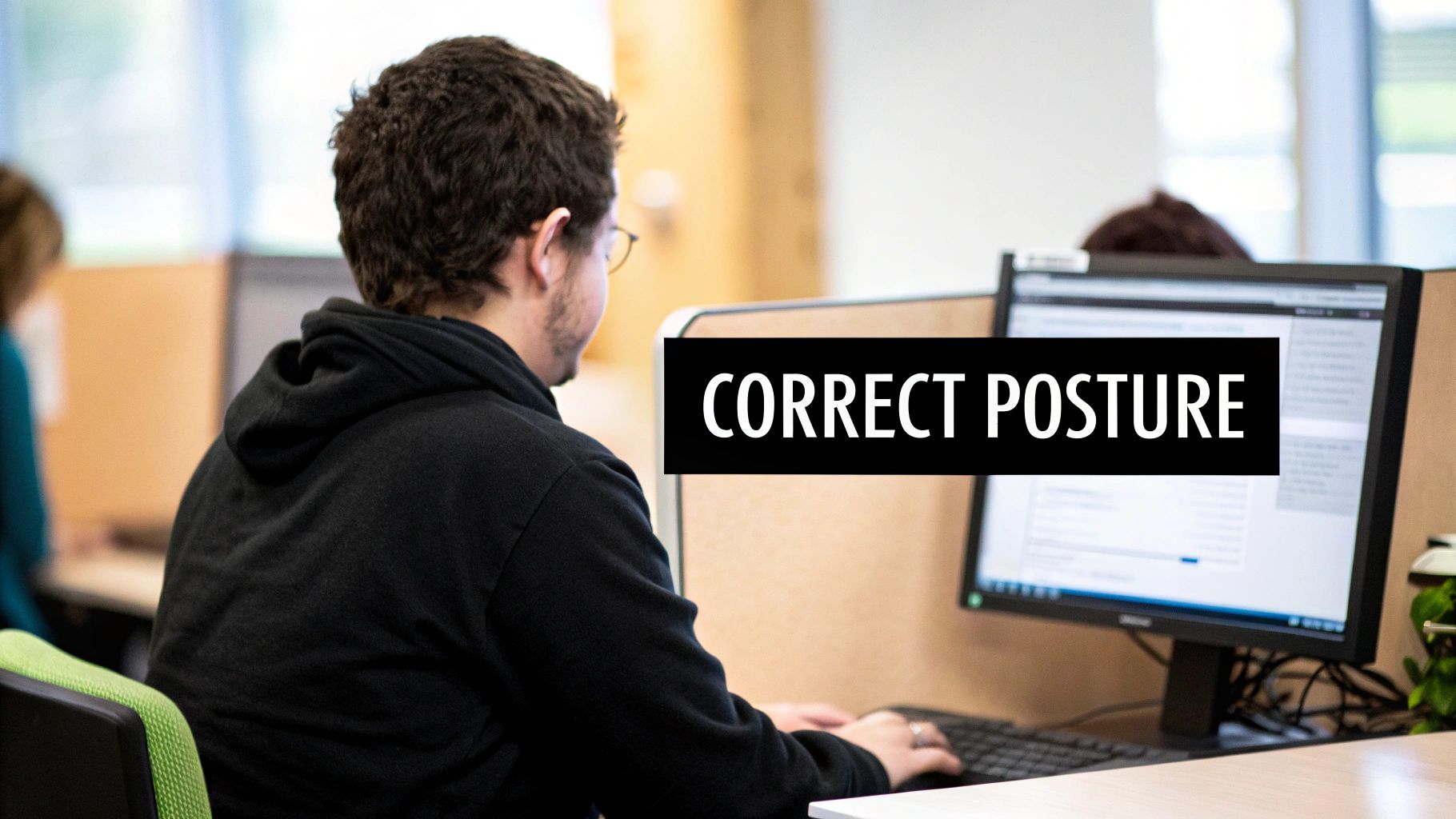
Your posture affects every aspect of your health and daily life, yet many of us don't realize its importance until problems arise. Poor posture, particularly forward head position, has become extremely common as we spend more time hunched over phones and computers. Let's explore why maintaining good posture matters and what can happen when we neglect it.
The Silent Epidemic of Forward Head Posture
The numbers are striking – research shows that up to 73% of students and office workers now display forward head posture. Think about it: when you're focused on your screen, your head naturally creeps forward, straining your neck muscles hour after hour. This seemingly small shift creates a cascade of effects throughout your body. Many people develop persistent neck pain, frequent headaches, and even dizzy spells. The good news? Understanding these patterns is the first step to fixing them.
The Cost of Poor Posture
Bad posture does more than just make you look slouched – it can seriously impact your health over time. When your head sits too far forward, it throws off your body's natural alignment. This can lead to jaw problems like TMJ disorders and even affect how well you breathe. Your shoulders often roll forward too, creating a rounded upper back. It's like a line of dominoes – once one part is off, the rest follow. And the longer these patterns persist, the harder they become to correct.
Why Quick Fixes Often Fail
We've all seen those "5-minute posture fix" videos, but lasting change takes more than a few simple stretches. Think of it like straightening a bent tree – you need to address the root cause, not just prop up the branches. Real posture correction means targeting several things at once: strengthening weak muscles, stretching tight ones, and most importantly, becoming more aware of how you hold your body throughout the day. Quick fixes might feel good momentarily, but they rarely create lasting change.
Early Warning Signs and Long-Term Impacts
Your body often sends subtle hints before major problems develop. That slight morning neck stiffness or those occasional tension headaches? They're like warning lights on your car's dashboard – ignore them at your peril. Without attention, these minor annoyances can grow into persistent pain and reduced mobility. They affect your mood, drain your energy, and can make simple activities uncomfortable. The good news is that by catching these signs early, you can prevent many long-term problems and help your body return to proper alignment.
The Science-Backed Recovery Protocol That Actually Works

There's a big difference between temporary fixes and real, lasting solutions for forward head posture. The key is targeting what's actually causing the problem – muscle imbalances and ingrained movement patterns. Recent research shows just how effective the right exercises can be. For example, scientists analyzed seven different clinical studies with 627 participants and found that specific therapeutic exercises significantly improved neck positioning and reduced pain. This tells us that with the right approach, we can make real progress. Let me break down exactly what works, based on solid scientific evidence.
Targeting the Root of the Problem: Muscle Imbalances
When you look at why forward head posture develops, it often comes down to a tug-of-war between different muscle groups. The muscles at the base of your skull (suboccipitals) and sides of your neck (anterior scalenes) get tight and pull your head forward. Meanwhile, the deep muscles that should keep your head balanced become weak and can't do their job properly. Think of it like a suspension bridge – if some cables are too tight and others too loose, the whole structure gets pulled out of alignment. By working on both stretching the tight spots and strengthening the weak areas, we can rebuild that balanced support system your neck needs.
Key Exercises for Effective Correction
Here's a straightforward program that works on both stretching and strengthening to fix those muscle imbalances:
- Chin Tucks: This is your foundation exercise. Imagine making a slight double chin as you draw your chin straight back. Do this 10-15 times, holding each for a few seconds. This wakes up those deep neck muscles that keep your head in the right spot.
- Neck Retractions: Like chin tucks but with more emphasis on sliding your head back horizontally. Picture sliding your head along a wall. Again, aim for 10-15 reps to build strength in those deep neck muscles.
- Upper Trapezius and Scalene Stretches: These target those tight muscles pulling your head forward. Gently tilt your head sideways, bringing your ear toward your shoulder. Hold for 30 seconds each side to help release that tension.
- Scapular Retractions: This helps fix your upper back position, which directly affects your neck. Simply squeeze your shoulder blades together, hold 5-10 seconds, and repeat 10-15 times.
Building a Sustainable Routine and Tracking Progress
Making lasting changes means being consistent with these exercises. Start small and build up gradually. A study from Adesh University found that while 73% of students had forward head posture, only 8.21% had serious pain. This shows why it's smart to work on your posture before it causes major problems. To stay motivated, track your progress by taking side-view photos and measuring the angle between your ear and shoulder – this gives you clear evidence that your work is paying off. Also, make sure your workspace supports good posture throughout the day. By combining regular exercises with smart daily habits, you're much more likely to see lasting improvements in both your posture and how you feel.
Transforming Your Daily Habits for Better Posture
Good posture requires more than just occasional stretching – it needs consistent daily habits that address the underlying causes of poor alignment. Like maintaining any healthy habit, improving your posture takes conscious effort and the right environmental support. Let's explore practical ways to build posture-supporting routines into your everyday life.
Optimizing Your Workspace for Ergonomic Alignment
Most of us spend hours each day at our desks, making workspace setup crucial for good posture. Research shows that students who use computers for 3+ hours daily have an 85% chance of developing forward head posture. To prevent this, position your monitor at eye level to keep your head balanced above your shoulders. Place your keyboard close to avoid reaching, and choose a chair with proper lower back support. These simple adjustments help maintain your spine's natural curves throughout the workday.
The Power of Micro-Breaks and Movement
Our bodies need regular movement, even with perfect ergonomics. Taking short breaks every 30 minutes gives your muscles a chance to reset and prevents tension from building up. Stand up, walk around, and do some gentle stretches focusing on the exercises we covered earlier. This not only helps your posture but also improves blood flow and mental focus. Think of these micro-breaks as "posture reset buttons" throughout your day.
Tech-Savvy Posture: Mindful Phone and Computer Use
The way we use phones and computers often leads to forward head posture, but small changes in how we interact with devices can make a big difference. Instead of hunching over your phone, bring it up to eye level. When using a computer, check your posture regularly and practice chin tucks to strengthen your neck muscles. Being mindful of your tech habits helps prevent the "tech neck" that causes so many posture problems.
Building a Posture-Supportive Lifestyle
Good posture extends beyond your desk – it matters during every activity, from driving to watching TV. Pay attention to how you hold yourself throughout the day. Are you slouching on the couch? Leaning forward while reading? These small habits add up over time. By staying aware of your posture during daily activities and making corrections when needed, you reinforce the benefits of your exercises and create lasting change. Remember, good posture is a lifestyle, not just an exercise routine.
Advanced Treatment Approaches and Professional Solutions

Sometimes home exercises alone aren't enough to fix forward head posture, particularly when dealing with ongoing pain, restricted movement, or other health issues. Let's explore when and how to get professional help to ensure you get the most effective treatment for your specific situation.
When to Seek Professional Help
Have you been doing all the right exercises but still struggling with neck pain or limited mobility? It might be time to consult an expert. Pay attention to warning signs like persistent headaches, dizziness, or jaw discomfort – these could indicate that your forward head posture is part of a bigger problem. For instance, if you're experiencing jaw pain, you might have temporomandibular joint (TMJ) issues that need specialized care. A thorough professional assessment will help identify what's really causing your posture problems and determine the best path forward.
Exploring Advanced Treatment Methods
When basic stretches and exercises aren't cutting it, several proven treatment options can help. One effective approach is Disclusion Time Reduction (DTR), which focuses on aligning your jaw and bite. Research backs this up – a five-year study found that DTR significantly improved head position and reduced perceived head weight in patients. Another helpful technique is hands-on manual therapy, where trained professionals work to loosen tight muscles, improve joint movement, and correct alignment through specific manipulation techniques.
Choosing the Right Professional and Treatment Plan
Finding the right care provider takes some homework. Start by looking for qualified physical therapists, chiropractors, or osteopaths who specialize in posture correction. Don't be shy about asking questions – How much experience do they have with forward head posture? What results have they achieved with similar cases? Consider practical matters too, like whether they accept your insurance and how long treatment might take. For those interested in facial muscle therapy, MyoHab offers connections to specialized therapists and guided home exercises. Think of it as having a personal coach for your face and neck muscles, available whenever you need guidance. Remember, the best results often come from combining professional treatment with consistent practice at home.
Building Your Complete Posture Recovery System
Fixing forward head posture is like building a house – you need a solid foundation and all the pieces working together. It's not enough to do a few neck stretches and call it a day. Real, lasting improvement comes from creating habits and systems that support good posture throughout your daily life.
Combining Targeted Exercises with Daily Habits
Think of posture exercises like brushing your teeth – they work best when done consistently and paired with good everyday habits. You might do perfect chin tucks in the morning, but if you spend the rest of the day slouched over your phone, you're undoing all that good work. The key is weaving posture awareness into everything you do – how you sit, stand, walk and work. For instance, set a timer to check your posture while working, or practice keeping your ears aligned with your shoulders while watching TV.
Creating a Supportive Environment
Your workspace setup can make or break your posture goals. Take a look around – is your computer screen forcing you to crane your neck? Does your chair support your lower back properly? Small tweaks to your environment can make maintaining good posture feel natural instead of forced. Position your monitor at eye level, invest in a chair that encourages proper alignment, and take regular movement breaks. Just like a garden needs the right conditions to flourish, your posture needs the right setup to thrive.
Long-Term Maintenance Strategies for Lasting Results
We've all been there – starting strong with a new health habit, only to slide back into old patterns weeks later. That's why having a game plan for maintaining good posture long-term is crucial. Try setting phone reminders to check your alignment, building stretch breaks into your daily schedule, or finding an accountability buddy who shares your posture goals. Think of it like maintaining a car – regular tune-ups and attention prevent bigger problems down the road.
Addressing Related Postural Issues and Preventing Future Problems
Forward head posture rarely travels alone – it often brings friends like rounded shoulders and a weak core along for the ride. A complete recovery plan needs to address these connected issues too. For example, strengthening your upper back helps support proper neck position, while core exercises improve overall posture stability. Pay attention to how stress affects your posture and build in relaxation techniques that help you maintain good alignment. This bigger-picture approach not only fixes your current posture problems but helps prevent new ones from developing.
Tracking Progress and Maintaining Your Gains
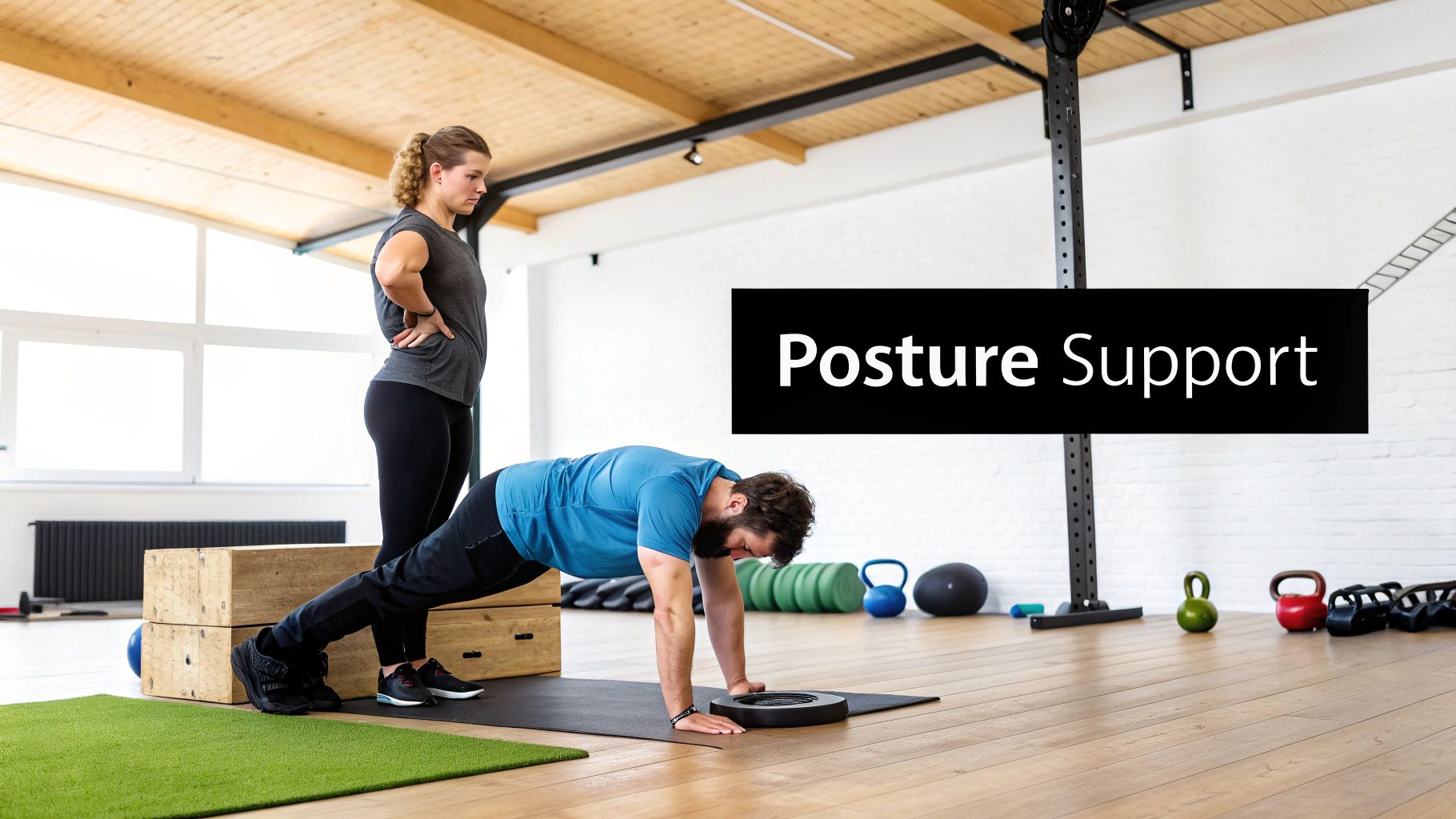
Curious about whether your efforts to fix forward head posture are paying off? While reduced neck pain is great, it's just one piece of the puzzle. Let's explore how to effectively track your progress and make sure those hard-earned improvements stick around for the long haul.
Measuring Your Craniovertebral Angle at Home
The craniovertebral angle (CVA) tells you exactly how far forward your head sits compared to your shoulders. While doctors use X-rays for precise measurements, you can get a good estimate at home. Simply have someone take a side photo of you standing against a wall. Look for two key lines – one from your ear canal and another along your neck. The angle where these meet is your CVA. Take photos every few weeks, and you should see this angle getting larger as your posture gets better.
Assessing Mobility and Range of Motion
Your neck's flexibility is another clear sign things are working. Pay attention to how far you can turn your head to each side – is it getting easier? Does your neck feel less stiff in the morning? Try some gentle movements: turn side to side, tilt up and down. Keep a simple log of these movements along with your CVA photos. Together, they'll show you exactly how far you've come.
Setting Realistic Goals and Milestones
Remember, fixing posture is more like a marathon than a sprint. A recent study from Adesh University found that while many people have forward head posture, severe pain isn't as common – showing why it's smart to address this early and stick with it. Break down your goals into smaller chunks. Maybe aim to add 2-3 degrees to your CVA each month, or work on holding good posture a bit longer each day. These small wins add up and keep you going.
Identifying True Progress and Preventing Regression
Good posture shows up in many ways – less pain, better movement, improved CVA, and stronger neck muscles that let you maintain proper alignment longer. For instance, if you used to get tired after 10 minutes of good posture but can now go for an hour, that's real progress. But watch out for old habits sneaking back in. Hunching over your phone or slumping at your desk can undo your progress quickly. Make posture exercises part of your daily routine and stay mindful of how you hold yourself throughout the day.
For extra help strengthening the muscles that support good posture, check out myofunctional therapy. Myohab connects you with expert therapists and provides custom programs to improve your posture, breathing, and overall health. Visit https://myohab.com/ to learn more and start your journey to better posture today.

