
Understanding Your Unique Facial Asymmetry Journey

We all have facial features that make us unique. While many of us wish for perfect symmetry, the truth is that most people's faces naturally differ from one side to the other. You might notice one eye appears slightly larger, one eyebrow sits higher, or your smile lifts more on one side. These small differences aren't flaws – they're what make each face distinctly human.
Why Perfect Symmetry Is a Myth
Think about your body for a moment – one foot might be a bit bigger than the other, or you might favor your right hand over your left. Our faces follow similar patterns, shaped by our genes, daily habits, and life experiences. Research shows that facial asymmetry, including uneven jawlines, is incredibly common. Studies have found it affects between 12% and 85% of people, depending on how it's measured. Learn more about these findings in this detailed research paper.
Factors Contributing to Jawline Asymmetry
Your jawline's shape comes from a mix of nature and nurture. While genes set the foundation for how your jaw develops, everyday habits play a big role too. Simple things like always chewing on one side of your mouth or sleeping in the same position night after night can gradually affect your jaw's alignment. Understanding these factors helps create a better plan for improving jaw symmetry.
Assessing Your Unique Asymmetry
Every person's face tells its own story, and that includes how their jawline developed. Professional assessment uses careful visual examination and detailed imaging to map out exactly how your facial features align. This careful analysis reveals the specific patterns in your facial structure, helping create the most effective plan for improving jaw symmetry. With this information, you can make informed choices about ways to enhance your facial balance.
Getting Professional Guidance That Actually Helps

Getting help for an asymmetrical jawline starts with finding the right medical expert. While the process may seem overwhelming at first, understanding what to expect and knowing which specialists to consult can make a big difference in your journey toward facial balance.
Finding the Right Specialist
Different medical professionals specialize in treating jaw asymmetry issues. Orthodontists focus on teeth and jaw alignment through braces and other dental appliances. For more complex cases, maxillofacial surgeons offer surgical solutions to correct skeletal problems. You may also benefit from working with myofunctional therapists at centers like myohab, who help address muscle imbalances affecting jaw position. The best specialist for you depends on what's causing your asymmetry and how severe it is.
What to Expect During a Consultation
Your first appointment sets the foundation for successful treatment. The specialist will carefully examine your facial structure and listen to your concerns. They'll likely take detailed measurements and images, including cephalometric X-rays and 3D scans to get a complete picture of your facial anatomy. These tools help them analyze key facial points like the glabella, subnasal point, and philtrum to determine how far your features deviate from the midline. For a deeper look at how specialists assess facial asymmetry, check out this detailed overview of the assessment process and treatment planning.
Asking the Right Questions
Taking an active role in your treatment leads to better results. Come prepared with questions about treatment options, possible risks, and expected outcomes. Ask about the specialist's experience treating cases similar to yours and their success rates with different approaches. Good questions might include how long treatment typically takes, what kind of results you can realistically expect, and what you can do to support the process. Clear communication with your specialist helps ensure you're both working toward the same goals.
Non-Surgical Solutions That Deliver Results
Dealing with an asymmetrical jawline doesn't always require surgery. Several effective non-surgical methods can help create a more balanced appearance by retraining facial muscles and making subtle adjustments. Let's look at proven approaches that can help fix jawline asymmetry without going under the knife.
Myofunctional Therapy: Retraining Your Facial Muscles
Think of myofunctional therapy as physical therapy for your face. This specialized approach helps correct muscle imbalances that may be causing your jawline asymmetry. For instance, if you tend to chew more on one side, these exercises can help redistribute the workload more evenly between both sides of your face. Myohab offers customized therapy programs that target these specific muscle patterns through guided exercises designed to create better symmetry over time.
Injectable Treatments: Subtle Reshaping for Enhanced Balance
Two popular options for reshaping the jawline are dermal fillers and Botox. Fillers can add volume to areas that look uneven or underdeveloped, while Botox can help relax overactive muscles that might be pulling your face out of alignment. For example, if one side of your jaw appears larger due to muscle overuse, targeted Botox injections can help even things out. While these treatments show quick results, you'll need occasional touch-ups to maintain the effects.
Combining Approaches for Maximum Impact
Using multiple non-surgical treatments together often produces better results than relying on just one method. You might pair myofunctional therapy with strategic filler placement to both strengthen weak muscles and fill in areas that need more volume. This combined strategy addresses both the visible signs of asymmetry and the underlying muscle patterns that created it.
Choosing the Right Non-Surgical Approach
Finding the best solution starts with understanding what's causing your asymmetry. Is it primarily muscle-related? Bone structure? Soft tissue differences? A thorough evaluation by a qualified professional can pinpoint the main factors and help create a treatment plan that targets your specific needs.
Understanding Realistic Expectations and Maintenance
While non-surgical treatments can make noticeable improvements to your jawline symmetry, it's important to keep your expectations in check. These methods won't create as dramatic a change as surgery, and most require ongoing maintenance. You'll likely need regular appointments for treatments like Botox or fillers to keep your results looking fresh.
The key to success lies in picking the right combination of treatments for your situation and committing to the maintenance schedule. Working with an experienced professional who understands facial anatomy and these various treatment options will help you achieve the most natural-looking improvements in your jawline symmetry.
Surgical Innovations and Advanced Treatment Options

When non-surgical treatments aren't enough to fix jaw asymmetry, especially when the problem lies in the bone structure rather than soft tissues, surgery becomes the next step. Let's explore the surgical options available and what you can expect from these procedures.
Understanding Surgical Approaches for Jaw Asymmetry
The main surgical procedures focus on reshaping or moving the jaw bones to create better alignment. Orthognathic surgery helps fix misaligned jaws that cause both visual asymmetry and functional problems like difficulty chewing or speaking. For those whose asymmetry mainly affects their chin area, genioplasty offers a targeted solution by reshaping just that portion of the jaw. Your surgeon will recommend the best approach based on your specific case and goals.
Modern Techniques and Technologies in Jaw Surgery
Surgery has come a long way thanks to better tools and methods. For instance, 3D imaging and virtual planning help surgeons map out the entire procedure beforehand, much like having a detailed blueprint before building a house. This means more precise results and fewer surprises during surgery. Plus, newer techniques use smaller cuts and less invasive methods, which means you'll heal faster and have less visible scarring.
Evaluating Surgical Options and Recovery
The success of your surgery depends heavily on choosing the right path forward. Key factors include finding a surgeon with proven experience, understanding what the procedure involves, and weighing the potential benefits against risks. Most patients see major improvements within 3-4 weeks, though complete healing takes several months. During recovery, you'll need to follow a soft food diet and take special care of the surgical site. Your surgeon will give you specific instructions to ensure the best possible outcome.
Managing Expectations and Preparing for Surgery
Before surgery, it's important to understand what results are possible for your specific case. Perfect symmetry isn't always achievable, but significant improvement usually is. Take time to discuss your goals with your surgeon and ask plenty of questions about what to expect. Good preparation includes getting a thorough health check-up and possibly adjusting some daily habits. Think of it as laying the groundwork for your best possible outcome.
Transform Your Daily Habits for Better Facial Balance
The way you live your daily life shapes your facial symmetry in surprising ways. Small habits like sleeping position and stress levels directly affect your facial muscles and jawline. By making conscious changes to these routines, you can start addressing asymmetrical jaw concerns naturally.
The Impact of Posture and Sleeping Position
Your posture affects more than just your back – it plays a key role in facial symmetry. When you slouch or tilt your head frequently, it strains your neck and facial muscles in ways that can create uneven development. The same goes for your sleeping habits. Think about how sleeping on one side night after night puts prolonged pressure on that side of your face. Just as pressing your hand into a pillow leaves an indent, your facial muscles and jaw can be gradually shaped by your sleep position. To support better symmetry, try sleeping on your back or alternating sides regularly.
Managing Jaw Tension and Stress
Physical tension from stress often shows up in your jaw muscles first. If you catch yourself clenching or grinding your teeth during tense moments, you may be creating muscle imbalances that affect your jaw alignment. This can even lead to painful TMJ problems over time. The good news is that simple stress relief practices make a real difference. Taking breaks for deep breathing, gentle meditation, or stretching helps release jaw tension naturally. Working with providers like myohab for targeted muscle exercises – similar to physical therapy for your face – can retrain tense muscles to work together smoothly.
Building a Routine for Facial Harmony
Making lasting improvements to facial symmetry works best with small, consistent changes. Here are key practices to work into your daily schedule:
- Quick Posture Checks: Set phone reminders to notice and adjust your head position and shoulder tension
- Better Sleep Setup: Find pillow heights and positions that keep your face pressure-balanced
- Regular Relaxation: Take short breaks for deep breathing and jaw relaxation
- Targeted Exercises: Use myohab's specialized movements to strengthen weak areas and release tight spots
While each change may seem minor, combining these habits creates meaningful results over time. The key is sticking with them long enough to make them automatic parts of your routine. With patience and consistency, you can guide your facial muscles toward better natural balance.
Sustaining Your Success: Long-Term Care Strategies
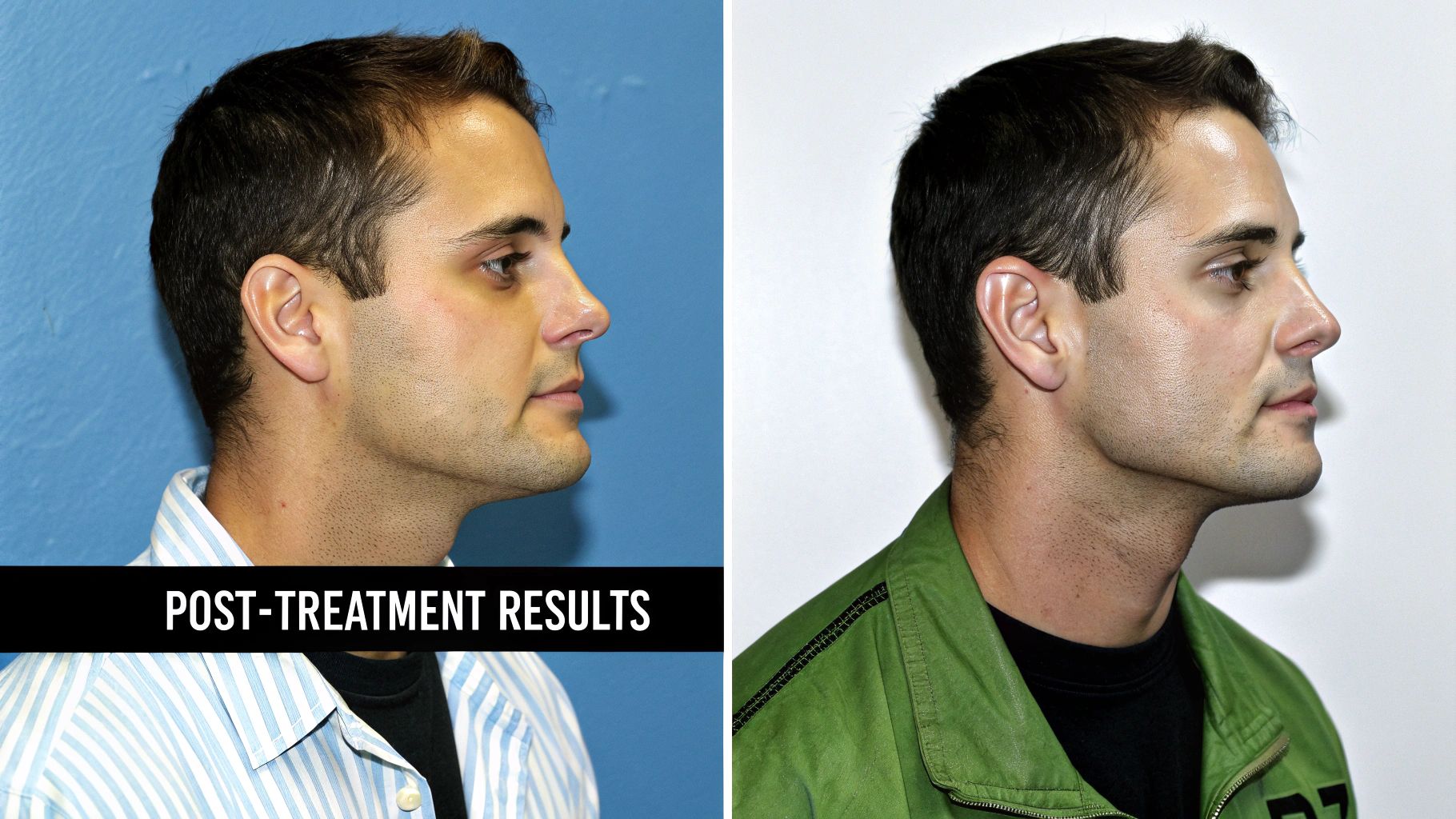
Getting a balanced jawline is just the first step – keeping those results takes ongoing dedication and care. Whether you've had surgery or non-surgical treatments, you'll need a solid plan to maintain your improved facial symmetry over time.
Developing a Sustainable Maintenance Routine
Your daily habits play a huge role in preserving your facial symmetry results. For instance, practicing myofunctional exercises helps keep your facial muscles strong and balanced – kind of like going to the gym for your face. If you've had fillers, you'll need regular touch-up appointments to keep those contours looking fresh. And for those who've had surgery, following your doctor's recovery instructions to the letter is essential for proper healing and preventing any issues down the road.
Monitoring Changes and Addressing Setbacks
Our faces naturally change as we age, so keeping an eye on your progress is key. Taking regular photos from different angles helps you spot any subtle shifts in your jawline early on. This way, if things start drifting back to their old position, you can catch it quickly and work with your specialist to get back on track. Think of it like regular car maintenance – catching small issues before they become big problems.
Continuing to Improve Facial Balance Over Time
Maintaining your results doesn't mean staying static – you can actually keep improving things bit by bit. Simple habits like watching your posture and sleeping position make a real difference in jaw alignment. Plus, finding ways to manage stress can prevent teeth grinding and jaw clenching that might undo your progress. It's all about building on the foundation you've created.
Tools and Tips for Ongoing Success
Keeping a photo diary of your progress isn't just satisfying – it's a practical way to track changes over time. Working with experts like myofunctional therapists can help you develop exercises tailored to your needs. Regular check-ups with your surgeon or specialist ensure everything stays on the right track.
Ready to take control of your facial symmetry and achieve lasting results? Myohab provides personalized myofunctional therapy programs to strengthen and balance your facial muscles, contributing to a more harmonious and symmetrical appearance. Discover how myohab can help you maintain your improved jawline and achieve long-term facial balance.

