
The Evolution of Facial Exercises: From Fad to Science

The history of facial exercises is quite fascinating, starting as simple beauty tips before gaining more mainstream acceptance. Early adopters like fitness legend Jack LaLanne saw facial muscles as just another muscle group to be strengthened. In the mid-20th century, facial workouts became part of standard fitness routines, though their effectiveness was often debated.
From Jack LaLanne to Modern Methods
Famous figures have promoted facial exercises over the decades, from Jack LaLanne to current sports star Cristiano Ronaldo. While many claim these exercises improve muscle tone and reduce wrinkles, researchers want more proof. The scientific community points out we need solid evidence beyond personal stories. For a deeper look at what science says, check out Healthline's analysis of facial exercises.
The Rise of Evidence-Based Approaches
Recent years have brought a shift toward scientific testing of facial exercises. Studies now use controlled trials with larger groups of people and precise ways to measure muscle changes. This careful research helps separate real benefits from wishful thinking. Researchers track specific changes in muscle activity and skin appearance to understand what works.
The Role of Technology and Personalized Training
New tech tools are changing how people learn and practice facial exercises. Mobile apps and online platforms now offer step-by-step guidance and progress tracking. Better ways to study facial muscles have also improved our understanding of which exercises target specific areas. This knowledge helps create more effective workout plans that can lead to visible improvements. The combination of science and technology makes it easier than ever to follow a proper facial exercise routine.
Understanding the Science: What Research Really Reveals
With so many claims about facial exercises floating around online, it's important to look at what scientific research actually tells us. Let's explore what studies reveal about "facial exercises before after" results and separate fact from fiction.
The Importance of Scientific Rigor
While before-and-after photos and personal stories can be inspiring, they don't replace solid scientific evidence. To truly understand if facial exercises work, we need randomized controlled trials – studies that compare people doing the exercises to a control group that doesn't. This helps researchers determine what changes are actually caused by the exercises themselves.
Evaluating Existing Research on Facial Exercises
Research has shown some promising results. A notable 2018 study in JAMA Dermatology found that participants had fuller cheeks after 20 weeks of consistent facial exercises. This suggests that regular practice may create visible changes. However, many studies have limitations that make it hard to draw firm conclusions about how well facial exercises work for everyone.
The scientific community remains cautious about making broad claims. A review in the Aesthetic Surgery Journal pointed out major flaws in how many facial exercise studies were conducted. You can read more details about this research here. Better-designed studies are needed to fully understand the effects.
The Future of Facial Exercise Research
Scientists continue studying facial exercises using new methods and tools to measure muscle and skin changes more precisely. This ongoing research should help determine which specific exercises work best and who is most likely to benefit from them.
Understanding Muscle Activation and Facial Structure
Facial exercises aim to strengthen and tone specific muscles, similar to working out other parts of your body. Strong facial muscles can improve definition and shape the overlying skin. However, everyone's facial structure and genetics are different, which affects how they respond to exercises. More research is needed to develop personalized recommendations based on individual facial features and needs.
Before and After: Analyzing Real Transformation Stories
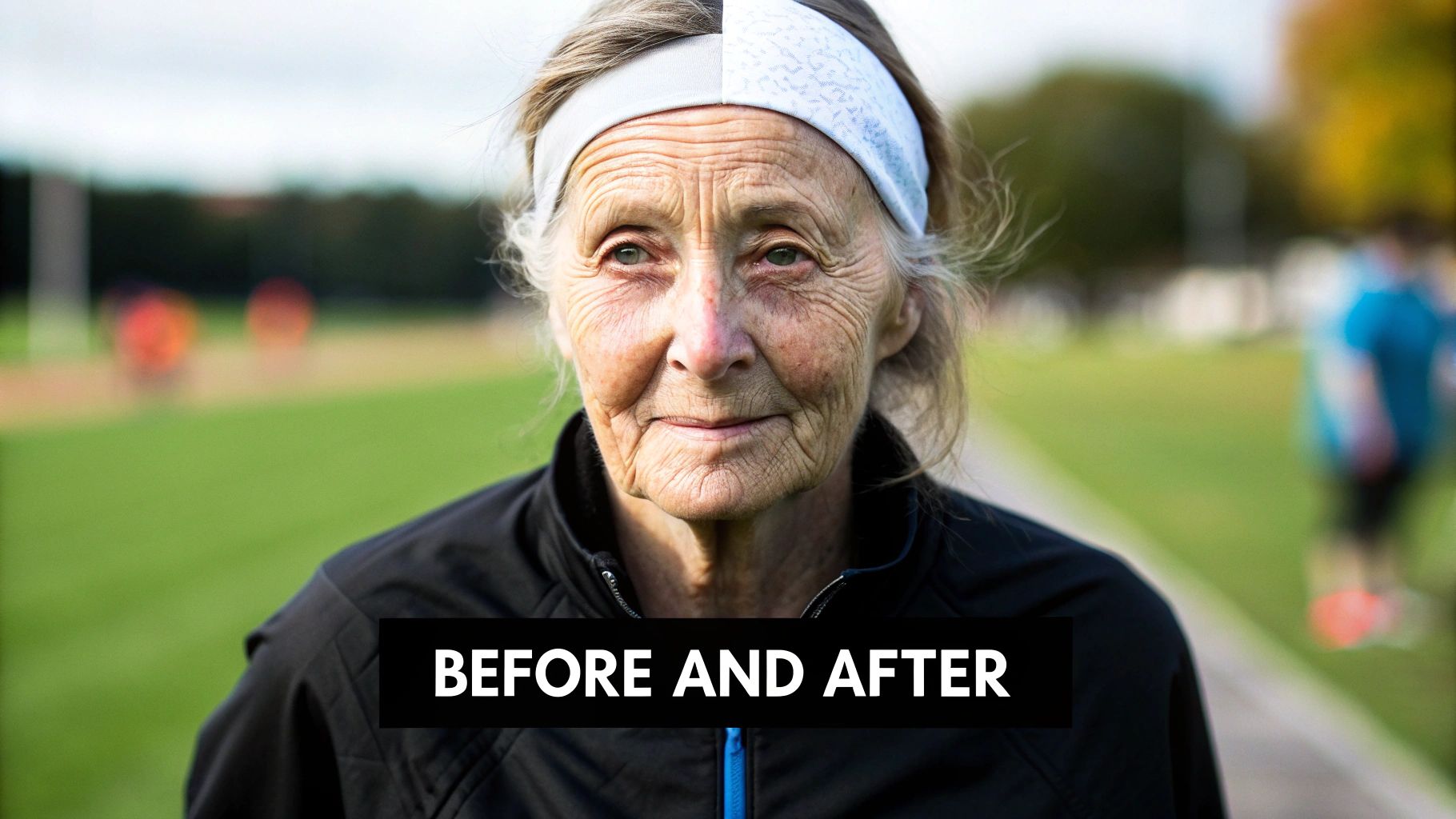
Let's look at real examples of facial exercise results to understand what actually works. By examining documented experiences, we can learn valuable lessons about which approaches get results and which fall short.
The Power of Documentation: Photos and Testimonials
Good before-and-after photos are essential for tracking progress with facial exercises. When combined with personal stories and experiences, they give us a realistic picture of what's possible. For instance, weekly photos taken in consistent lighting can reveal gradual improvements in muscle tone that might otherwise go unnoticed.
Deciphering Success Stories: Consistency and Technique
Success with facial exercises comes down to two key factors: consistency and proper form. Just like going to the gym, doing the exercises regularly – even for short periods – beats sporadic intense workouts. Getting the movements right is just as important. Poor technique won't deliver results, no matter how often you practice. Think of it like learning a new sport – practice and proper form are everything.
Addressing Challenges and Managing Expectations
Not everyone sees dramatic changes from facial exercises. Individual facial structure, genetics, and dedication all play a role in results. A notable 2018 study in JAMA Dermatology involving 27 women aged 40-65 found improvements in cheek fullness and an estimated 3-year reduction in perceived age. However, many participants dropped out, and the study lacked a control group. Learn more about the research here. This highlights why it's important to set realistic goals.
Documenting Your Own Progress: Practical Tips
To track your facial exercise journey effectively, take clear photos in the same lighting and position each time. Keep a simple log of which exercises you do and for how long. Note any changes you observe, both positive and challenging. This detailed record helps you adjust your routine based on what works best for your face. Having concrete data makes it easier to stay motivated and make smart changes to your approach.
Mastering Effective Facial Exercise Techniques

Now that we've seen the results, let's focus on proper technique. Getting the form right is essential for seeing real benefits from facial exercises. We'll cover proven methods, common mistakes to avoid, and ways to adapt exercises for your unique facial structure.
Understanding Precise Movements and Muscle Engagement
Just like regular fitness, facial exercises target specific muscle groups. The key is knowing exactly which muscles to work and how to isolate them. Take the cheek lifter exercise – you'll want to smile wide while gently pressing your fingers against your cheekbones. Focus only on the cheek muscles and avoid engaging your forehead or jaw, as this can reduce the exercise's effectiveness.
Optimal Pressure Points: The Key to Effective Stimulation
The right pressure makes all the difference. Think of it like a gentle massage – too much force can cause strain, while too little won't give you results. Your fingertips should provide just enough resistance to feel the muscles working. Focus on key pressure points around your cheeks, jawline and temples to boost circulation and muscle tone.
Common Technique Errors and How to Avoid Them
Many people make simple mistakes that limit their progress. Using too much force is a big one – this can actually create more wrinkles instead of reducing them. Poor posture is another common error. Keep your spine straight and shoulders relaxed while doing facial exercises. Most importantly, stay consistent – sporadic practice won't give you the results you want.
Modifications for Different Facial Structures
Everyone's face is unique, so exercises need to be adjusted accordingly. If you have a narrow face, you might focus more on building cheek volume. Those with wider faces may want to emphasize exercises that define the jawline. People with TMJ disorders should be extra careful and may need to modify certain movements. Myohab offers specialized exercises designed for different facial types and conditions.
Creating a Personalized Facial Exercise Routine
Building an effective routine starts with knowing your goals. Take time to:
- Identify your main concerns
- Choose exercises that target those areas
- Start with basic movements
- Gradually increase intensity as you build strength
- Maintain consistent practice
Just as a gym routine needs structure, your facial exercises should follow a clear plan. Resources like Myohab can help create a program that matches your specific needs and facial structure. With proper form and regular practice, you'll be well on your way to visible improvements.
Creating Your Complete Facial Rejuvenation Strategy
Let's explore how to create an effective approach to facial rejuvenation that goes beyond just exercises. By thoughtfully combining different methods and making smart lifestyle choices, you can maximize your results and create lasting improvements.
Combining Facial Exercises With Other Treatments
Just like a good fitness plan combines different types of workouts, facial rejuvenation works best when you mix complementary approaches. Microcurrent treatments, which use gentle electrical stimulation, can enhance muscle tone when paired with facial exercises. Tools like gua sha help boost circulation and reduce puffiness, making them great companions to your exercise routine.
The Importance of Lifestyle Factors
Your daily habits play a huge role in how your face looks and ages. Getting enough sleep helps your body repair and rebuild. Drinking plenty of water keeps your skin plump and smooth. Eating a balanced diet rich in antioxidants protects against skin damage. These simple but powerful habits amplify the benefits of your facial exercises.
Building a Synergistic Routine
The order and timing of your treatments matter. Start with gua sha to warm up facial tissues and boost blood flow. Follow with targeted exercises, then finish with microcurrent to further activate muscles. For extra support, explore myofunctional therapy through platforms like Myohab to improve muscle function and facial appearance.
Developing a Sustainable Long-Term Strategy
The secret to lasting results is building habits you can maintain. Just like going to the gym once won't give you abs, occasional facial exercises won't create lasting change. Start with 5 minutes daily and slowly build up as your muscles get stronger. Take progress photos to track changes and stay motivated. Remember – small, consistent efforts add up to big improvements over time.
Tracking Progress and Sustaining Long-Term Results
Let's explore how to monitor your progress with facial exercises effectively. With the right tracking methods, you can build a routine that grows with you.
Documenting Your Transformation: Photography and Measurements
Just like tracking fitness goals at the gym, documenting facial exercise progress is essential. Take before-and-after photos in consistent lighting and angles to capture subtle changes over time. You can also measure specific facial features – like cheek circumference or the distance between key points – to track improvements with real numbers.
Using Digital Tools to Track Changes
Several apps now make it easier than ever to monitor facial exercise progress. These tools can overlay your progress photos to highlight gradual changes that might be hard to spot day-to-day. By analyzing which exercises give you the best results, you can fine-tune your routine for maximum impact.
Modifying Your Routine as You Progress
Your facial exercise plan should evolve as you get stronger. Check your progress photos and measurements regularly to identify areas that need more attention or exercises that are working well. For instance, once you achieve fuller cheeks, you might want to focus more on defining your jawline. Being flexible with your routine ensures you keep seeing results.
Making Results Last: The Power of Consistency
Like any fitness routine, maintaining facial muscle tone requires regular practice. Make facial exercises part of your daily habits – even a few minutes can add up to significant changes over time. Think of it like brushing your teeth – it should become an automatic part of your day. Regular check-ins with photos and measurements help keep you motivated and on track.
Ready to start your facial fitness journey? Myohab offers personalized myofunctional therapy programs designed to improve muscle function and facial appearance.

