
Understanding the Science Behind Tongue Exercises and Sleep Apnea
Sleep apnea disrupts breathing when your airway collapses during sleep. This common condition often occurs because throat muscles relax too much, there's extra tissue in the way, or your tongue falls backward. While it may seem surprising, the strength of your tongue actually plays a key role in keeping your airway open while you sleep.
How Tongue Exercises Impact the Airway
When you do tongue exercises, you work out specific muscles that control where your tongue sits and how it moves. A stronger tongue is better at staying in place instead of blocking your airway. For instance, simple movements like sliding your tongue along your teeth or pushing it against the roof of your mouth help strengthen the genioglossus muscle – the main muscle that keeps your airway from collapsing.
These exercises don't just target your tongue – they also build up the muscles in your face, mouth and throat. Working all these muscles together creates better support for your airway. As a result, air flows more smoothly when you breathe, reducing those concerning pauses in breathing that happen with sleep apnea.
Oral myofunctional therapy (OMT) has emerged as an effective treatment that uses tongue exercises to help people with sleep apnea. This therapy focuses on teaching proper tongue position and strengthening exercises. Studies show it can reduce sleep apnea from moderate to mild levels, and some people even find they no longer need their CPAP machines. Learn more about this therapy here: Sleep Apnea Treatment Options
The Benefits of a Stronger Tongue
Building tongue strength does more than just help keep your airway open. You may notice improvements in swallowing, less snoring, and even clearer speech. Keep in mind though – tongue exercises work best as part of a complete treatment plan that might include CPAP therapy or lifestyle changes, rather than using them alone.
Making tongue exercises part of your daily routine can help you sleep better and reduce sleep apnea symptoms over time. Better sleep means more energy during the day and lower risk of health problems linked to sleep apnea. By combining these exercises with other treatments your doctor recommends, you can take real steps toward breathing and sleeping better.
Master the Most Effective Tongue Exercises for Sleep Apnea Relief
Sleep apnea symptoms can be improved through targeted tongue exercises that build strength and control. Instead of just building muscle mass, these movements help retrain your tongue to maintain proper positioning and keep your airway open while you sleep. Let's explore some proven exercises that can make a real difference.
Essential Tongue Exercises to Combat Sleep Apnea
Start with these basic movements to develop foundational tongue strength and control. As you get more comfortable, gradually increase the number of repetitions.
-
Tongue Slide: Place your tongue tip behind your upper front teeth. Slowly slide it forward along the roof of your mouth until you reach just behind your bottom teeth. Return to start and repeat. Think of your tongue moving like an elevator going up and down.
-
Tongue Tip Touch: Practice precise control by touching different spots on the roof of your mouth with your tongue tip. Start at the front behind your teeth and work your way back, as if you're drawing invisible dots with your tongue.
-
Tongue Roof Push: Press your entire tongue firmly against the roof of your mouth. Hold for 5 seconds while maintaining gentle, even pressure, then release. This builds overall tongue strength.
-
Tongue Rolling: Form your tongue into a "U" shape by curling the sides upward. Hold this position as you slowly move your tongue forward and back. This improves flexibility and control.
-
Tongue Extension: Stick your tongue out and down toward your chin as far as possible. Hold for 5-10 seconds before relaxing back to normal position. This classic exercise strengthens the main tongue muscles.
Research supports the effectiveness of these exercises. A 2015 study in the journal Chest found that people who did regular tongue and throat exercises reduced their snoring frequency by 36% and intensity by 59%. You can read more about this research here.
Advanced Techniques for Enhanced Airway Control
Once you've mastered the basics, try these more challenging exercises to further improve your tongue strength and control:
-
Tongue Resistance: Push your tongue against a clean finger or tongue depressor while extending it outward. This added resistance helps build strength more quickly.
-
K Sound Practice: Make repeated "k" sounds, focusing on lifting the back of your tongue to touch your soft palate. This targets the muscles used in swallowing.
-
Circular Tongue Movements: With your mouth closed, trace the outside of your teeth with your tongue in both directions. This works a wider range of tongue muscles.
-
Singing Exercises: Vocal warm-ups and singing exercises naturally engage and strengthen the tongue and throat muscles.
-
Wind Instrument Practice: Playing instruments like the flute or trumpet provides excellent tongue exercise while improving muscle control.
Combining basic and advanced exercises gives you a complete workout for the muscles that keep your airway open during sleep. For best results, practice these exercises for a few minutes each day. Remember to check with your doctor or a myofunctional therapist before starting any new exercise routine, especially if you have severe sleep apnea.
Building Your Personalized Exercise Routine for Success
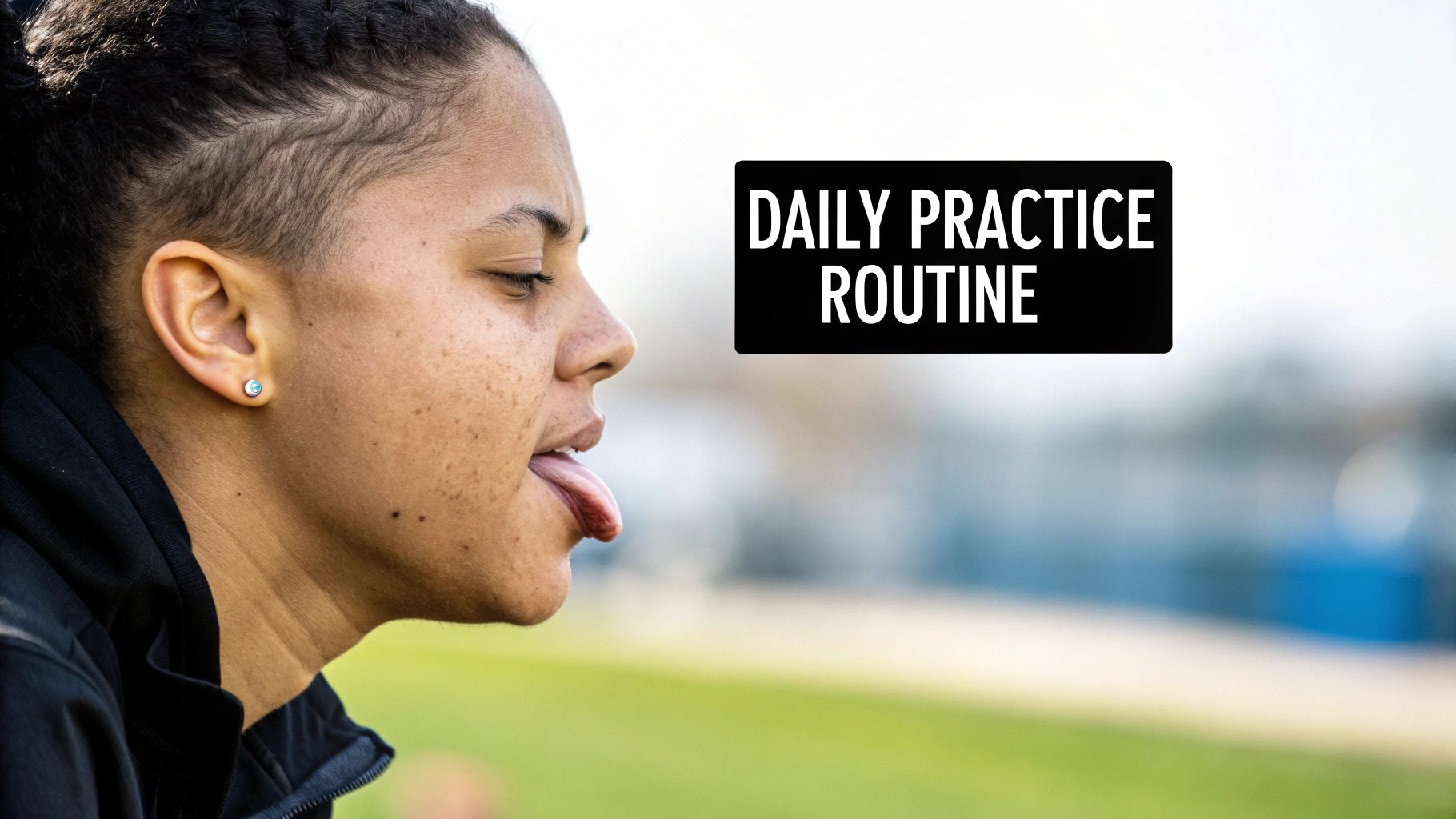
Getting tongue exercises into your daily routine takes some planning, but it's much like building any other healthy habit. Think of it as adding a new step to your daily self-care routine, similar to how you already brush your teeth or take vitamins. The key is finding what works best for your schedule and lifestyle.
Scheduling for Consistency
Just like going to the gym, regular practice leads to the best results with tongue exercises. Set aside 10 minutes each day for these exercises. You don't need to do them all at once – try 5 minutes in the morning and 5 minutes before bed. A helpful trick is to pair the exercises with something you already do daily. For example, do them right after brushing your teeth or during your morning shower.
Maintaining Motivation and Overcoming Obstacles
Starting a new habit isn't always easy. Finding someone to check in with can make a big difference – whether it's a family member or someone else dealing with sleep apnea. On days when you don't feel like doing the exercises, remind yourself why you started. Picture how much better you'll feel with improved sleep and fewer symptoms. Those small daily wins add up to meaningful changes over time.
Research backs up the benefits of these exercises, known as oropharyngeal muscle exercises or myofunctional therapy. These techniques work by strengthening the muscles in your mouth, throat and tongue that help keep your airway open. Studies show that doing these exercises for 10 minutes daily over three months can help reduce snoring and improve sleep apnea symptoms. Want to learn more? Check out this detailed guide on mouth exercises for snoring.
Adapting Your Routine Over Time
Your exercise routine shouldn't be set in stone. As you get stronger, you might need to make the exercises more challenging or try new variations. Pay attention to what's working well and what isn't. Maybe morning exercises work better than evening ones, or perhaps shorter, more frequent sessions fit your schedule better. The most effective routine is one that you can stick with long-term while seeing real improvements in your symptoms.
Tracking Your Progress and Celebrating Success
Just like tracking your workouts at the gym, monitoring your progress with tongue exercises gives you a clear picture of your improvements over time. A systematic approach to tracking helps you stay committed to your routine and see the real impact these exercises have on your sleep apnea symptoms.
Traditional Tracking Methods: Staying Grounded
A simple but powerful way to monitor your progress is keeping a progress journal. Write down which exercises you do each day, including the number of repetitions and how long you practice. Make notes about changes in your sleep – like whether you're snoring less or feeling more refreshed in the morning. Looking back through your journal entries shows your growth over time.
Testing your tongue strength and endurance regularly gives you concrete numbers to work with. Try timing how long you can hold certain positions or counting repetitions until muscle fatigue sets in. These measurements tell a clear story – for example, going from holding your tongue against the roof of your mouth for 10 seconds to 30 seconds shows real improvement in muscle strength.
Tech-Savvy Tracking: Making Use of Tools
Many modern sleep monitoring apps and wearable devices can track your sleep patterns in detail. While they don't measure tongue strength directly, they show important changes in your sleep quality, like how long you spend in different sleep stages and how often you wake up during the night. This data helps paint the bigger picture of how tongue exercises affect your sleep.
Some specialized apps focused on myofunctional therapy now offer guided exercise routines with built-in tracking features. These apps often include clear visual instructions and feedback on your form, which helps ensure you're doing the exercises correctly while staying motivated.
Recent research adds weight to the value of tracking progress. A 2022 study looked at people who did tongue elevation training for 6 weeks. While the study didn't find major changes in sleep apnea severity scores, participants reported feeling less sleepy during the day and showed better tongue endurance. Read more details here: Tongue Elevation Training and Sleep Apnea
Recognizing and Celebrating Success: The Journey to Better Sleep
Progress often shows up in small ways at first – maybe you notice less snoring or wake up feeling a bit more refreshed. Over time, these small gains add up to bigger improvements in your sleep quality and daytime energy levels.
Take time to celebrate your wins, no matter how small they seem. Marking your progress – whether by treating yourself to something special or sharing good news with family – helps reinforce these healthy habits. Remember that every step forward, even a tiny one, brings you closer to better sleep and improved health.
Maximizing Results Through Integrated Treatment Approaches

Tongue exercises can help manage sleep apnea, but they work best when combined with other treatments. By taking a comprehensive approach and using multiple methods together, you'll have a better chance of getting quality sleep and managing your symptoms effectively.
Combining Tongue Exercises with CPAP Therapy
Continuous Positive Airway Pressure (CPAP) therapy is a common first-line treatment where you wear a mask that pushes air into your airways while you sleep. Adding tongue exercises to your CPAP routine makes a lot of sense – stronger tongue and throat muscles can help the CPAP work better. Some people even find they can use a lower pressure setting, which makes the mask more comfortable to wear through the night.
Integrating Tongue Exercises with Dental Appliances
Many people use mandibular repositioning appliances (MRAs) or oral appliances to treat their sleep apnea. These devices shift your jaw forward to keep your airway open while you sleep. Doing tongue exercises alongside wearing an MRA can boost how well it works – your stronger tongue helps maintain that open airway position. You can read more about how these treatments work together here: Explore MRA and Tongue Exercise Research.
Enhancing Treatment with Lifestyle Changes
Simple changes to your daily habits can make a big difference too. Focus on losing excess weight, getting regular exercise, and avoiding alcohol and sleep medications before bed. These steps work hand-in-hand with tongue exercises. For example, carrying less weight around your neck means less pressure on your airway, which helps your tongue exercises work even better at keeping that airway open.
Coordinating Your Treatment Plan: Timing and Communication
When you do your tongue exercises matters. Try practicing in the morning and again before bed to help keep your tongue properly positioned all day and night. Stay in close touch with your healthcare team – your doctor, sleep specialist, and myofunctional therapist can help create a plan that fits your needs. They'll make sure all your treatments support each other for the best results. Remember that like any exercise program, you'll see the most improvement if you stick with it consistently over time.
Overcoming Common Challenges and Expert Q&A

When you first start tongue exercises for sleep apnea, it's normal to have questions and face some hurdles along the way. Let's look at practical advice from sleep specialists and people who have successfully used these exercises to manage their symptoms.
Common Roadblocks and Solutions
Most people run into a few common challenges when starting tongue exercises. Here's what you might experience and how to handle it:
- Muscle soreness: Just like starting a new workout, your tongue and throat muscles may feel sore at first. Start with gentle exercises and slowly build up your strength. Focus on using the right form to prevent strain.
- Schedule conflicts: You only need 10 minutes per day to see benefits. Try doing exercises during daily activities like your morning commute or while watching your favorite shows.
- Staying motivated: Keep a simple log of your progress – even small improvements count. Join an online support group or partner with a friend who's also working on sleep apnea exercises.
- Form confusion: Working with a myofunctional therapist can help ensure you're doing exercises correctly. They'll show you proper technique and create a plan that fits your needs.
- Progress slowdown: If you stop seeing improvements, try mixing up your routine. Add new exercises or increase the challenge of current ones. A therapist can suggest adjustments to keep you moving forward.
Expert Q&A: Addressing Your Concerns
Sleep specialists often hear these questions about tongue exercises:
- Q: When will I notice changes? A: Results vary by person. Many people notice less snoring within a few weeks. Bigger improvements in sleep apnea symptoms usually take several months of regular practice.
- Q: Can these exercises replace my CPAP? A: While exercises can help, talk to your doctor before changing your CPAP use. Some patients find they can use lower pressure settings after strengthening their muscles.
- Q: Do different types of sleep apnea need different exercises? A: The basic exercises help most types of sleep apnea, but a myofunctional therapist can customize your program based on your specific needs.
- Q: How can I tell if my form is right? A: Use video guides and written instructions as references. A therapist can check your form and make corrections to help you get the most benefit.
Building Long-Term Success: Tips and Strategies
To keep making progress with your exercises:
- Keep goals simple: Look for steady improvement rather than quick fixes. Each small step forward counts toward better sleep.
- Build a routine: Do your exercises at the same time each day, like right after brushing your teeth. Regular practice leads to lasting results.
- Keep learning: Read up on sleep apnea research and treatment options. Understanding your condition helps you make good choices about your care.
- Get expert help: Check in with sleep specialists and myofunctional therapists when needed. Their knowledge can help you adjust your approach for better results.
The key to success with tongue exercises is steady practice, good information, and professional guidance when you need it.
Want to improve your sleep apnea symptoms with proven exercises? Learn more about personalized myofunctional therapy at myohab.com. Our programs include targeted tongue exercises to help you breathe better and sleep more soundly.

