
Tired of CPAP? Explore These Alternatives
Sleep apnea treatment changed forever in the 1980s with the introduction of CPAP (Continuous Positive Airway Pressure) therapy. Before CPAP, surgery was often the only option for obstructive sleep apnea – a condition where breathing repeatedly stops during sleep, leading to poor rest and serious health risks. While CPAP's constant airflow has helped millions breathe easier at night, many find the mask uncomfortable, the noise disruptive, and the overall experience challenging. This has sparked growing interest in alternative approaches that target the underlying causes of disordered breathing.
The key to any effective sleep apnea treatment is keeping the airway open throughout the night. While CPAP uses air pressure, other methods focus on building muscle strength, fixing structural issues, adjusting sleep positions, and developing better breathing patterns. These alternatives range from oral devices and lifestyle changes to targeted exercises and new therapeutic techniques. They reflect our improved understanding of how breathing, sleep quality, and overall health are deeply connected. For those dealing with sleep apnea, snoring, jaw pain, or related issues, exploring these options can open new paths to better rest.
This guide examines various CPAP alternatives – how they work, what benefits they offer, and who they might help most. Whether you're an adult with sleep apnea looking for other options, a parent concerned about your child's breathing during sleep, or a healthcare provider wanting to expand treatment possibilities, you'll find practical insights into the many ways to address sleep-disordered breathing without CPAP.
1. myohab
myohab helps people improve their breathing and sleep through simple exercises that strengthen the muscles in the face and mouth. Unlike CPAP machines, this therapy works naturally with your body to address problems like sleep apnea and snoring.
How it Works:
You'll connect with an expert therapist who evaluates your needs and creates a custom exercise plan. The exercises focus on proper tongue position, swallowing, and breathing patterns. Everything is delivered through an easy-to-use online platform so you can practice at home.
Who Can Benefit:
This approach works well for several groups:
- Adults with sleep or breathing issues: The exercises can reduce sleep apnea and snoring
- Parents helping children: Programs for kids address tongue-tie, mouth breathing and speech concerns
- People with jaw pain: Exercises help improve TMJ and jaw function
- Those seeking facial improvements: Better breathing habits support facial development
- Medical professionals: A natural option to recommend to patients
Main Features:
- Custom plans: Each program matches your specific goals
- Expert guidance: Work directly with certified therapists
- At-home practice: Fit exercises into your daily routine
- Natural approach: No devices or surgery needed
- Multiple benefits: Better sleep, breathing, posture and appearance
Pros:
- No medications or invasive treatments
- Individualized programs
- Easy online access
- Addresses root causes
Cons:
- Requires dedication to daily exercises
- Pricing varies – contact directly for details
- Results differ by person and condition
- May not replace CPAP for severe cases
Getting Started:
- Book a consultation to discuss your needs
- Follow your exercise plan consistently
- Stay in touch with your therapist to track progress
Website: https://myohab.com/
myohab stands out by offering a natural way to improve breathing and sleep without machines. The program strengthens key muscles to create lasting benefits rather than just managing symptoms. While it's not right for everyone, many find it helps them breathe and sleep better. Check with your doctor to see if this approach fits your needs.
2. Inspire Sleep Therapy
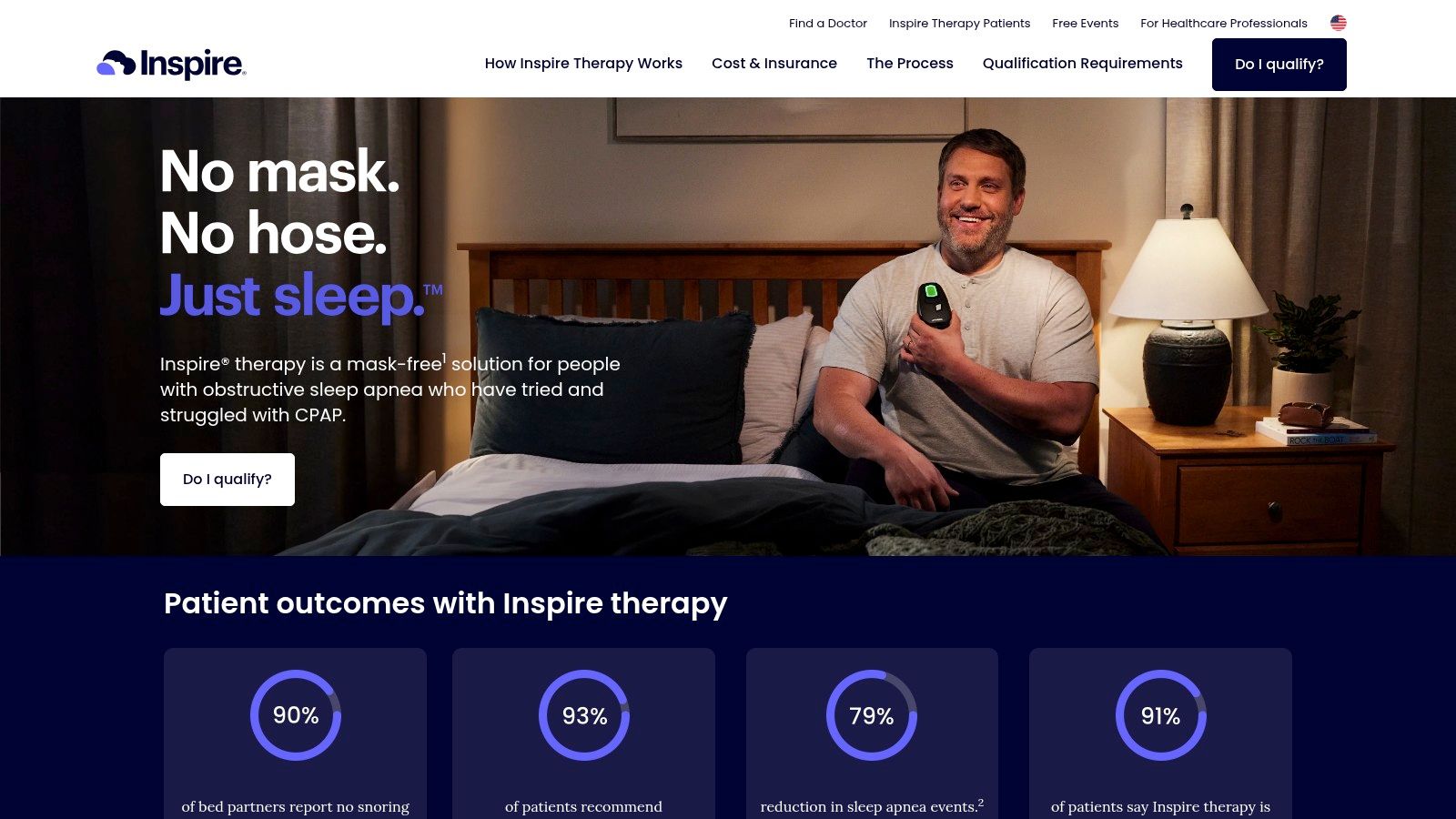
Inspire Sleep Therapy takes a completely different approach to treating sleep apnea compared to traditional CPAP machines. Instead of using external masks and air pressure, this system works from inside your body to keep your airway open during sleep. For people who struggle with CPAP masks, this offers a welcome alternative.
The system works through a small implanted device placed under the skin in your chest and neck. This device monitors your breathing patterns and gently stimulates the nerve controlling your tongue muscles when you inhale, keeping your airway clear. You manage everything with a simple remote control – just turn it on at bedtime and off in the morning.
This treatment option is specifically designed for people with moderate to severe sleep apnea who haven't had success with CPAP therapy. However, not everyone qualifies. You may not be a candidate if you have certain soft palate issues, need a pacemaker, or have specific neuromuscular conditions. A thorough evaluation by sleep specialists determines if this option is right for you.
Key Benefits:
- Complete freedom from masks and hoses
- High patient satisfaction rates in clinical studies
- Simple, discreet operation
- Adjustable settings for comfort
- Long-lasting battery (10-11 years)
Main Advantages:
- No external equipment needed
- Strong patient satisfaction scores
- Easy on/off control
- Better sleep quality reports
Important Considerations:
- Requires surgery for implantation
- Cost ranges from $30,000-$40,000 (check your insurance coverage)
- Not suitable for all sleep apnea patients
- Standard surgical risks apply, though complications are rare
Getting Started:
The process involves two main steps. First, you'll have a detailed evaluation to check if you're a good candidate. If approved, the device is surgically implanted. After recovery, you'll learn how to use the remote and get your device settings adjusted. Regular check-ups help ensure everything continues working properly.
While CPAP remains the standard treatment for sleep apnea, Inspire offers an effective alternative for those who can't tolerate CPAP masks. Though it requires surgery upfront, many users find it gives them more freedom and comfort during sleep.
This solution stands out because it provides a proven, mask-free option for sleep apnea treatment. For people who've struggled with CPAP therapy, it can open the door to better sleep and improved daily life.
Learn more: Inspire Sleep
3. ProVent Sleep Apnea Therapy
ProVent offers a fresh take on treating mild to moderate obstructive sleep apnea (OSA) and snoring. Instead of using a CPAP machine's forced air approach, ProVent uses small nasal inserts with special MicroValve technology. These valves create gentle resistance when you breathe out, which helps keep your airway open during sleep – directly addressing what causes OSA.
How ProVent Works: Simply stick the adhesive vents to your nostrils before bed. The valves open easily when you breathe in. During exhaling, they partially close to create a mild pressure that keeps your airway open through the night. This simple mechanism helps prevent apnea episodes.
Best For:
- Frequent travelers: The small, disposable design makes it perfect for trips – no bulky equipment needed
- CPAP mask alternatives: Much less noticeable than full face masks for a better sleep experience
- Mild to moderate OSA: Works well for less severe cases of sleep apnea
- Simple solutions: No machines or power needed – just apply and sleep
Key Benefits:
- Easy to take anywhere
- Works without electricity
- Simple application
- Good results for mild/moderate OSA
Things to Consider:
- Daily replacement adds up ($2-4 per pair, around $700 yearly)
- Not suitable for severe OSA
- Some may have minor skin reactions to adhesive
Usage Tips:
- Clean and dry nostrils before applying
- Follow instructions exactly for placement
- Give yourself time to adjust to the feeling
Comparison: While basic nasal dilators just widen nostrils, ProVent's valve system actively maintains airway pressure during sleep. This targeted approach sets it apart from simpler alternatives.
ProVent provides an easy alternative to traditional CPAP therapy, especially for those with mild to moderate sleep apnea or CPAP difficulties. Though ongoing costs need consideration, its simplicity and portability make it worth exploring. Learn more at ProVent Therapy.
4. Bongo Rx
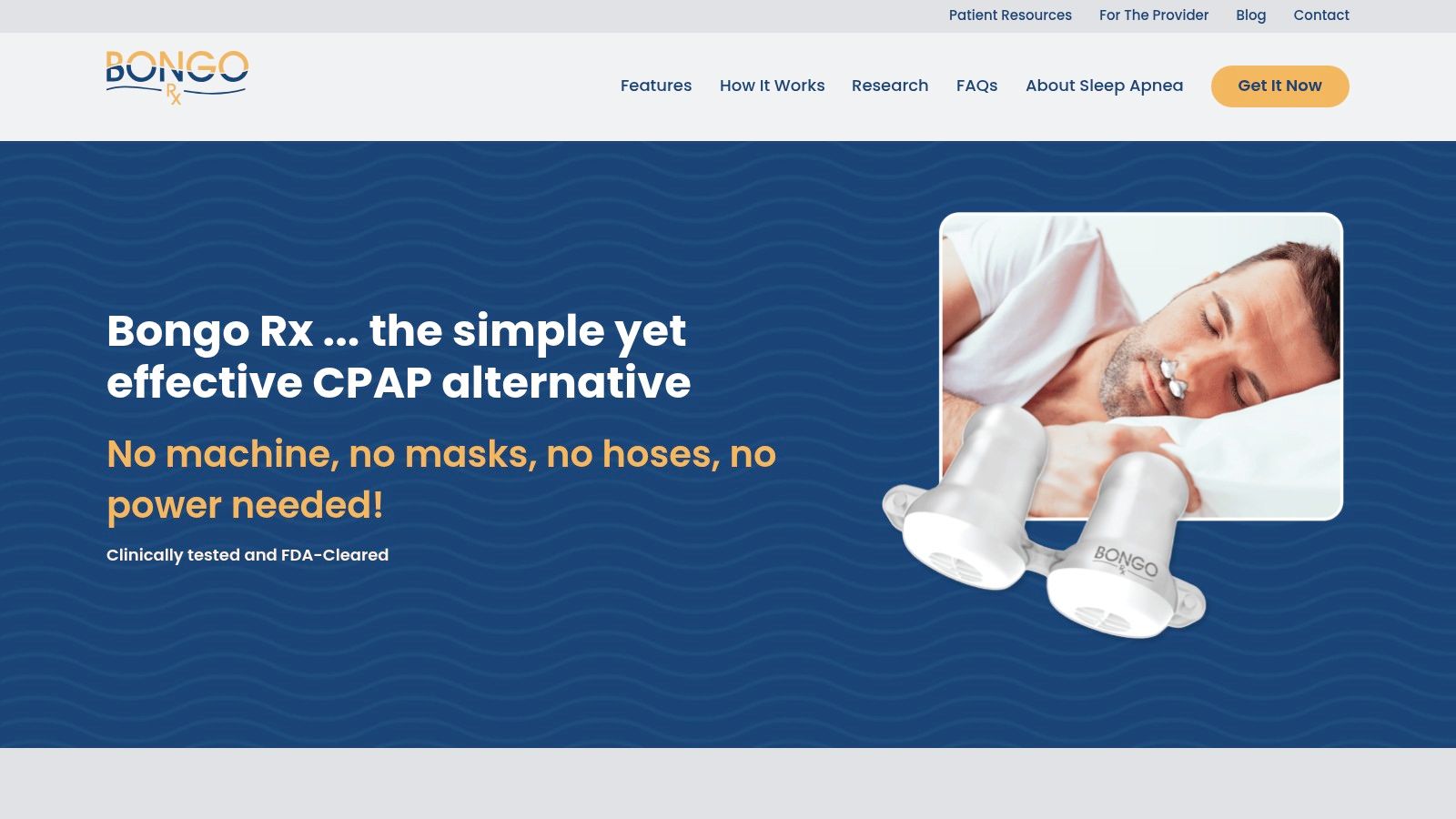
Looking for a simpler alternative to CPAP therapy? The Bongo Rx might be worth exploring. This small nasal device uses expiratory positive airway pressure (EPAP) to help manage sleep apnea and snoring. Unlike traditional CPAP machines, it fits directly in your nostrils without any electricity or bulky equipment – perfect for travel and everyday use.
How it Works: The device creates resistance when you breathe out, producing back pressure that helps keep your airway open. Made from soft silicone and available in multiple sizes, the Bongo Rx prioritizes comfort through proper fitting.
Who Should Consider It? The Bongo Rx works best for:
- Adults with mild to moderate sleep apnea
- People who breathe through their nose
- Frequent travelers needing a portable solution
- Those looking to improve nasal breathing
Note that it's not suitable for mouth breathers or severe sleep apnea cases. Always check with your doctor first to see if it's right for you.
Getting Started: Using the Bongo Rx is straightforward – just pick your size and insert it before bed. Cleaning takes minimal effort – simply wash with soap and water.
Key Benefits:
- Budget-friendly: No ongoing costs for supplies like masks and filters
- Easy maintenance: Quick daily cleaning keeps it hygienic
- Ultra-portable: Compact size makes it ideal for travel
Potential Drawbacks:
- Takes time to get used to the feeling
- Only works for nose breathers
- May not help severe sleep apnea
Cost & Availability: The Bongo Rx typically costs less than standard CPAP machines. Visit AirAvant Medical for current pricing and ordering details.
Compared to Alternatives: While other EPAP devices use adhesive strips or larger inserts, the Bongo Rx stands out for its simple, comfortable design. It offers a different approach from oral appliances for those seeking non-machine treatment options.
For nose breathers with mild to moderate sleep issues looking for a simple solution, the Bongo Rx deserves consideration. However, success varies by individual – discuss with your healthcare provider to determine if it matches your needs.
5. Winx Sleep Therapy System

The Winx Sleep Therapy System is a smart alternative to standard CPAP machines for people dealing with sleep apnea and snoring. Instead of using a full face mask, it features a small mouthpiece connected to a compact vacuum pump. The pump creates a gentle suction that helps keep your airway open while you sleep by pulling your soft palate and tongue forward. Many users find this more comfortable than wearing a traditional CPAP mask.
How it Works & Who Can Benefit:
This system works best for people with mild to moderate sleep apnea or snoring caused by tongue and soft palate issues. Its small size makes it perfect for travelers who need their sleep therapy on the go. People with TMJ pain often prefer the mouthpiece over a CPAP mask. Some users even notice better facial posture over time since the device helps position their tongue correctly. For parents looking into treatment options for children with breathing issues, it's worth discussing the Winx system with your doctor.
Key Features:
- Near-Silent Operation: The quiet design won't disturb you or your partner
- Compact Mouthpiece: Much smaller than a CPAP mask, reducing face marks and skin irritation
- Travel-Friendly: Easy to pack and carry anywhere
- No Mask Required: Great for people who feel trapped by CPAP masks
Pros & Cons:
- Advantages: More comfortable than CPAP, perfect for travel, no face marks
- Drawbacks: May not work for severe sleep apnea, needs regular charging, costs more upfront than other oral devices
Price & Requirements:
Check the official Apnicure website for current pricing. The system needs a standard power outlet for charging the pump. Full technical specs and warranty details are available from the manufacturer.
Getting Started:
Take time to read through the setup guide when your Winx system arrives. Getting the right fit with your mouthpiece is essential for the best results. You might need a few nights to get used to wearing it. Using it consistently helps you get the most benefit. Talk to a sleep doctor or dentist who knows about sleep apnea treatment for personal advice on whether Winx is right for you.
How it Compares:
Unlike other oral devices, Winx uses active suction to keep your airway open, which can work better for some people. However, simpler devices like mandibular advancement appliances might be cheaper options worth considering. Always get professional medical advice to find the best treatment for your situation.
The Winx Sleep Therapy System stands out as a solid choice for many sleep apnea patients who want something different from CPAP. While it's not perfect for everyone, its smart design and ease of use make it worth considering.
6. Oral Appliance Therapy (Custom Dental Devices)
For people with mild to moderate sleep apnea, snoring, or other breathing issues during sleep, Oral Appliance Therapy (OAT) offers an alternative to CPAP machines. This treatment uses a custom-made dental device, similar to a mouthguard, that gently adjusts the position of your jaw and tongue to keep your airway open while you sleep. The simple design and comfort level make it a popular choice for many patients.
OAT devices work by moving your lower jaw slightly forward, which prevents your tongue and throat tissues from blocking your airway during sleep. Some devices also help keep your tongue in place. By maintaining open airways, these devices reduce breathing interruptions and shallow breathing episodes, helping you get better sleep.
Key Features:
- Each device is custom-made by a dental specialist using impressions of your teeth
- Adjustable settings let your dentist fine-tune the positioning for best results
- Built from long-lasting, safe materials meant for years of use
- Various designs available to match different needs – some focus on jaw position, others on tongue placement
Advantages:
- Most patients find it comfortable and easy to use, leading to consistent nightly wear
- Perfect for travel – compact size, no electricity needed
- Works anywhere – great for camping or areas without reliable power
Potential Drawbacks:
- Some initial jaw soreness is common but usually temporary
- Regular dental check-ups needed for adjustments and monitoring
- Upfront costs range from $1,000-$3,000, though insurance may help cover this
Getting Started:
- Find a dentist who specializes in dental sleep medicine for an evaluation
- Get dental impressions made for your custom device
- Schedule follow-up visits to adjust fit and check effectiveness
Types of Devices:
The two main types are Mandibular Advancement Devices (MADs) and Tongue Retaining Devices (TRDs). MADs adjust your jaw position, while TRDs focus on holding your tongue forward. Your dentist will recommend the best option for your specific situation.
Who Should Consider OAT?
This therapy works well for adults with:
- Mild to moderate sleep apnea
- Chronic snoring
- CPAP intolerance
- TMJ issues (in some cases)
Some dentists are also exploring OAT for children with certain breathing or tongue position problems that affect sleep. Always check with a healthcare provider to see if OAT suits your needs.
Want to Learn More? Visit the American Academy of Dental Sleep Medicine for additional information about oral appliance therapy.
7. Airing Micro-CPAP
The Airing Micro-CPAP takes a fresh approach to sleep apnea treatment by ditching traditional CPAP masks. This small device fits directly into your nostrils using tiny blowers, making it an attractive option for those who find regular CPAP machines too bulky or uncomfortable.
How it Works: The device uses micro-blowers powered by a small battery to deliver air pressure that keeps airways open during sleep. Since it's disposable, you don't need to clean it daily like traditional CPAP machines.
Key Benefits and Uses:
- Perfect for Travel: Its tiny size lets you easily pack it in any bag
- More Comfortable: Great for people who can't tolerate regular CPAP masks
- Easy to Use: No cleaning needed – just dispose and replace
Comparing to Standard CPAP: While the Airing device wins on portability and ease of use, traditional CPAP machines offer more adjustable pressure settings. The Airing's effectiveness for different types of sleep apnea still needs more testing.
Getting Started: Using the Airing is straightforward – simply insert it into your nostrils. The lack of hoses and masks makes setup much simpler than regular CPAP machines.
Cost and Availability: Pricing isn't set yet, but since it's disposable, long-term costs may be higher than reusable CPAP equipment. The product is still in development, so it's not widely available yet.
Main Advantages:
- Extremely portable
- No cleaning needed
- More comfortable than masks
Main Drawbacks:
- Limited availability currently
- Potentially higher costs over time
- Battery life may be limited
Why We Included It: The Airing Micro-CPAP offers a truly different solution for sleep apnea treatment. Its focus on comfort and portability could help more people stick with their therapy. While it may not work for everyone, it shows real promise as an alternative for the right patients.
Website: Airing Micro-CPAP
Remember to talk with your sleep doctor about whether this device would be a good fit for treating your sleep apnea. They can help determine if it's appropriate based on your specific condition and needs.
8. Remedē System
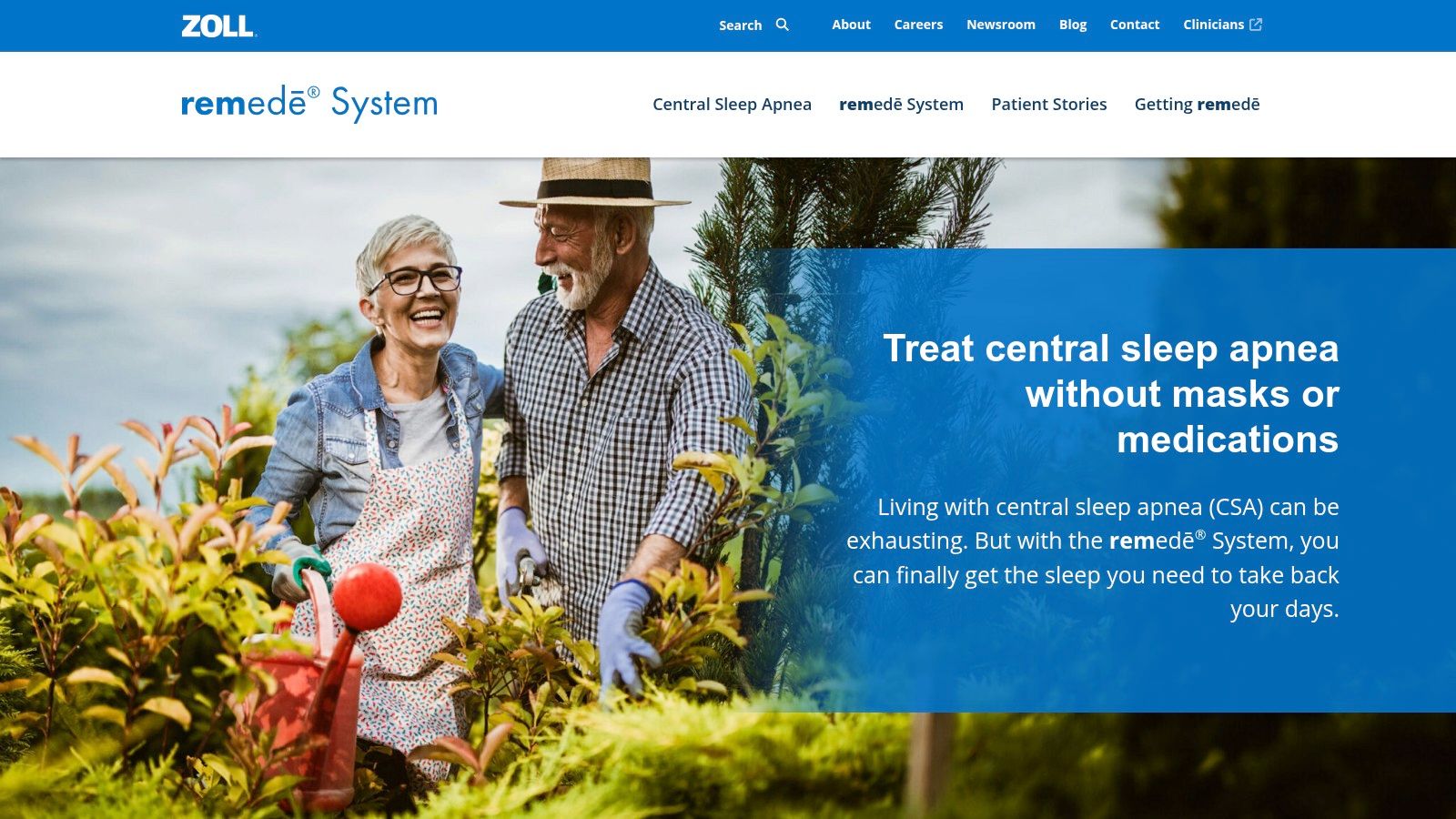
The Remedē System provides a fresh approach to sleep apnea treatment, made specifically for patients with central sleep apnea. Unlike traditional treatments, this system is implanted in the body and works by stimulating the phrenic nerve to control breathing through the diaphragm. For people who struggle with other treatments, this offers a welcome alternative.
The system delivers gentle electrical signals to the phrenic nerve, helping restore natural breathing patterns during sleep. It turns on by itself when you fall asleep and adjusts throughout the night as needed. Doctors can monitor how well it's working and make adjustments to provide the best results.
This device is designed exclusively for people diagnosed with central sleep apnea, where the brain doesn't send proper signals to control breathing. It's not meant for obstructive sleep apnea, which happens when airways become physically blocked. Getting the right diagnosis from a sleep specialist is essential before considering this option.
Key Features:
- Sleep-activated operation: Works on its own without manual controls
- Custom settings: Treatment adjusted for each person's needs
- Permanent solution: Long-term treatment unlike temporary devices
- Performance tracking: Provides data to optimize treatment
- Internal device: No external equipment needed
Benefits:
- Hands-free operation: No nightly setup required
- Hidden treatment: Nothing visible or external
- Targeted therapy: Specifically helps central sleep apnea
Drawbacks:
- Surgery needed: Requires medical procedure
- High cost: Investment in tens of thousands of dollars, insurance coverage varies
- Limited use: Only helps central sleep apnea
Getting Started:
A qualified surgeon must implant the device. After surgery, medical staff program the settings. Regular checkups help ensure everything works properly and allow for adjustments when needed.
How It Compares: Unlike CPAP machines or mouth devices that mainly keep airways open, the Remedē System fixes the core problem in central sleep apnea by restoring the brain's natural breathing control.
Why We Include It: The Remedē System gives hope to central sleep apnea patients who haven't found relief elsewhere. Though it requires surgery and costs more, the potential for better breathing, improved sleep, and enhanced daily life makes it worth considering.
Learn More: Visit Respicardia's website
Comprehensive Comparison of 8 CPAP Alternatives
| Tool | Ease of Use | AI Capabilities | Output Quality | Pricing | Best For | Standout Feature |
|---|---|---|---|---|---|---|
| myohab🏆 | ★★★★ | N/A | ★★★★★ | 💰💰 | Personalized therapy | Custom exercises & expert guidance |
| Inspire Sleep Therapy | ★★★ | N/A | ★★★★ | 💰💰💰 | Sleep apnea (implant) | Implanted device with remote control |
| ProVent Sleep Apnea Therapy | ★★★★★ | N/A | ★★★ | 💰 | Disposable nasal device | MicroValve technology |
| Bongo Rx | ★★★★ | N/A | ★★★★ | 💰 | Reusable EPAP solution | Portability & affordability |
| Winx Sleep Therapy System | ★★★★ | N/A | ★★★★ | 💰💰 | Vacuum pressure therapy | No mask; travel-friendly |
| Oral Appliance Therapy (Custom Dental Devices) | ★★★★ | N/A | ★★★★ | 💰💰 | Jaw advancement | Custom-fitted design |
| airing Micro-CPAP | ★★★ | N/A | ★★★ | 💰💰 | Ultra-portable CPAP | Miniaturized, maskless design |
| Remedē System | ★★★ | N/A | ★★★★★ | 💰💰💰 | Central sleep apnea | Automatic nerve stimulation |
Breathing Easier: Choosing the Right CPAP Alternative
Selecting a CPAP alternative can feel daunting given the many options available. From myofunctional therapy to surgical solutions, each method comes with its own advantages and limitations. The key is finding what works best for your specific situation.
Your sleep apnea severity should guide your choice of treatment. Mild cases often see good results with oral appliances or myofunctional therapy, while more serious conditions may require advanced solutions like surgical implants. Consider how the treatment fits into your daily life – frequent travelers might prefer portable options that are easy to pack and use on the go.
Cost considerations matter too. Surgical procedures and implants typically have high initial expenses and insurance requirements. More accessible options like myofunctional therapy often use subscription models with lower upfront costs. Be sure to calculate ongoing expenses like maintenance and replacements when comparing options.
Think about how the treatment will fit into your routine. Some approaches require daily practice and dedication, while others need regular medical check-ups. Be honest with yourself about the time and effort you can commit to following the treatment plan properly.
Key Points to Remember:
- Get Professional Guidance: Speak with a sleep specialist before starting any new treatment
- Match to Severity: Choose an option appropriate for your condition's intensity
- Consider Your Schedule: Pick a solution that aligns with your daily habits
- Review All Costs: Factor in both immediate and long-term expenses
- Stay Consistent: Success depends on following the prescribed treatment plan
Looking for a natural way to improve your breathing and sleep? myohab's myofunctional therapy targets the root causes of sleep apnea, snoring and TMJ issues through specialized exercises. Discover better rest and improved facial muscle tone with a program designed specifically for you. Start your myohab journey today

